
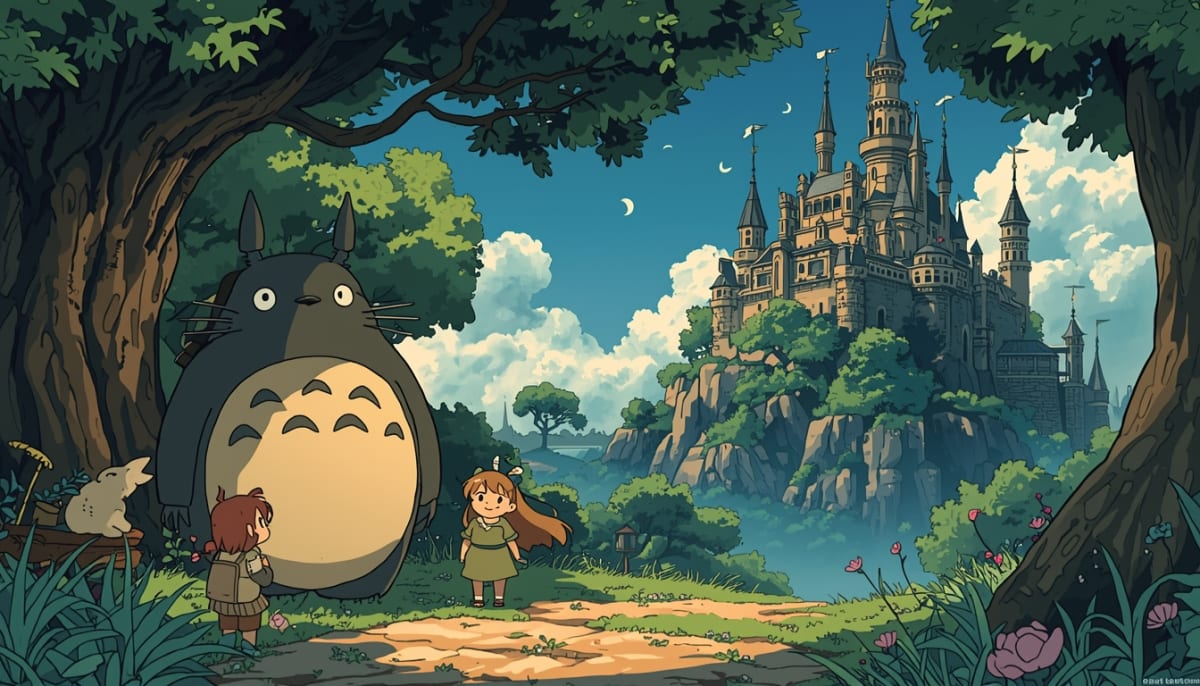
Studio Ghibli Complete Guide 2026: All Films Ranked, Explained & Watch Order
Studio Ghibli created animation masterpieces. For over four decades, this legendary Japanese studio has produced some of the most beautiful, emotionally resonant, and critically acclaimed animated films ever made. From the magical worlds of Spirited Away to the heartbreaking realism of Grave of the Fireflies, Ghibli films have captured hearts worldwide and redefined what animation can achieve. Here's the complete 2026 guide to all their films, ranked and explained.
Studio History: From Vision to Global Icon
Studio Ghibli was founded on June 15, 1985, in Tokyo, Japan, by directors Hayao Miyazaki and Isao Takahata, and producer Toshio Suzuki. The studio was established with funding from the publishing company Tokuma Shoten, following the critical and commercial success of Miyazaki's pre-Ghibli film Nausicaä of the Valley of the Wind (1984).
The founders aimed to create high-quality, richly animated feature films with meaningful, complex stories, distinct from the mass-produced animation prevalent in the industry at the time. They wanted to "blow a new wind through the anime industry," which inspired the studio's name, derived from the Arabic name for the hot Sahara wind (and an Italian warplane Miyazaki admired).
Key Milestones
1986 saw the release of Castle in the Sky, the first official Studio Ghibli film. In 1988, the studio released both My Neighbor Totoro and Grave of the Fireflies simultaneously, solidifying the studio's dual creative pillars (Miyazaki and Takahata). Totoro became the studio mascot and remains one of the most recognizable characters in animation.
1997 marked a major breakthrough when Princess Mononoke became the first animated film to win the Japan Academy Prize for Picture of the Year and achieved major international distribution. The studio gained massive global recognition in 2001 with Spirited Away, which broke Japanese box office records and later won the Academy Award for Best Animated Feature (2003), a breakthrough moment for non-English language animation globally.
In 2001, the Ghibli Museum opened in Mitaka, Tokyo, becoming a major cultural destination. 2014 saw Hayao Miyazaki announce his retirement (initially), leading to a brief production pause. The studio released Earwig and the Witch in 2020, its first full 3D CG animated film. In 2022, Ghibli Park, a themed amusement park, opened in Japan.
2023 was a landmark year: The Boy and the Heron was released, winning the studio's second Academy Award for Best Animated Feature. Studio Ghibli became a subsidiary of Nippon Television Holdings, Inc. (NTV) to secure its future management and legacy. In 2024, Studio Ghibli became the first production company to receive an honorary Palme d'Or at the Cannes Film Festival.
Evolution and Current State
The studio has evolved from a small, independent production house to a global cultural icon, yet has largely maintained its core commitment to hand-drawn animation. Initially an independent entity funded by Tokuma Shoten, it briefly became a subsidiary of Tokuma Shoten and then an independent company again. In October 2023, it was acquired by NTV to ensure stability and management succession, with NTV handling business operations to let the creative team focus on filmmaking.
The studio has seen different creative eras, predominantly defined by the works of its main directors, Miyazaki and Takahata, and later by directors like Yoshifumi Kondō, Hiromasa Yonebayashi, and Gorō Miyazaki. While known for its traditional cel animation, Ghibli has pragmatically integrated computer graphics (CG) for effects and digital compositing since Princess Mononoke, blending technology seamlessly with hand-drawn art rather than replacing it.
Major Achievements
Studio Ghibli's achievements include critical acclaim, commercial success, and a profound global impact on the animation industry. The studio has won two Academy Awards for Best Animated Feature (Spirited Away, The Boy and the Heron), with Spirited Away being the first non-English-language animated film to win this award. They have received five additional Oscar nominations for Animated Feature, an Academy Honorary Award for Lifetime Achievement for Hayao Miyazaki in 2014, a Golden Bear at the Berlin International Film Festival (Spirited Away), and a Golden Globe for Best Animated Feature Film (The Boy and the Heron).
The studio popularized anime in the West and helped legitimize animation as an art form for adult audiences. They influenced major Western filmmakers and studios, including Pixar and Guillermo del Toro. Known for a strict "no-edits" policy for international releases, ensuring artistic integrity, a response to heavy edits of Nausicaä in the US release as Warriors of the Wind.
Key Figures
Hayao Miyazaki, co-founder, director, screenwriter, and manga artist, is the creative force behind most of the studio's highest-grossing and most famous films, including My Neighbor Totoro, Spirited Away, and The Boy and the Heron. He shaped the studio's aesthetic and thematic focus on environmentalism, pacifism, and strong heroines.
Isao Takahata, co-founder and director, brought narrative depth and a different artistic approach to the studio. His notable works include the powerful anti-war film Grave of the Fireflies and the unique, experimental My Neighbors the Yamadas and The Tale of the Princess Kaguya.
Toshio Suzuki, co-founder and producer, often described as the business mind of Ghibli, was crucial in securing funding, navigating partnerships (like the one with Disney for international distribution), and managing the studio's direction. Joe Hisaishi, though not a founder, has created the iconic soundtracks for most of Miyazaki's films, his music being integral to the Ghibli experience.
Animation Style: Visual Excellence and Innovation
Studio Ghibli's animation style is renowned for its commitment to traditional, hand-drawn cel animation, characterized by intricate details, vibrant color palettes, and fluid motion. The style features lush, detailed backgrounds, expressive characters with distinct facial expressions and body language, and a strong sense of place. There is a balance between highly realistic natural settings (forests, water, fire) and fantastical, imaginative elements.
It is distinct from many other anime studios by emphasizing smooth, meticulous animation over speed, often requiring years to produce a single film with countless hand-drawn frames. This meticulous approach creates an immersive, almost painterly quality.
Visual Techniques
The core technique is hand-drawing every frame, though modern approaches integrate digital compositing and effects to enhance the visuals, such as the naturalistic flicker of a flame in The Boy and the Heron. Backgrounds are often extensive, richly detailed paintings that create immersive worlds, from natural forests to fantastical bathhouses.
Ghibli films use vibrant, specific color palettes to convey mood and atmosphere. For example, bright, warm colors for whimsical films like Ponyo and more muted, somber tones for films like Grave of the Fireflies. The studio employs sophisticated cinematography techniques, including effective use of lighting, depth of field, and movement, that rival live-action films.
While CGI is used for practical enhancements like digital compositing and certain effects, it is integrated carefully to support, not replace, the hand-drawn elements, often making it seamless to the viewer.
What Makes Ghibli Unique
What sets Ghibli animation apart is its balance of artistic integrity, emotional depth, and meticulous craftsmanship. The studio prioritizes quality and artistic expression, a contrast to the faster, cheaper 3D animation trend in many Western studios.
Signature elements include "living" worlds with meticulous attention to background details that make the worlds feel real and lived-in, naturalistic movement where characters and natural elements (wind, water) move in a highly fluid, believable manner, and a focus on character expressions where subtle emotions are often conveyed through detailed facial animation.
Ghibli was one of the first studios to expertly blend traditional animation with digital techniques without sacrificing the classic feel. The studio's influence extends to inspiring a renewed appreciation for handcrafted art in an AI-driven age.
Evolution and Strengths
The style has matured and become more refined with each film, showcasing incremental improvements in technical skill while adhering to the core philosophy. Comparing early films like Castle in the Sky with The Boy and the Heron shows significant strides in detail and technical polish, with more sophisticated visual effects and digital compositing in modern works.
Ghibli excels at using visuals to convey narrative and emotion without relying solely on dialogue. The sheer quality of the hand-drawn animation is a major strength, showcasing incredible skill and patience. The studio creates immersive, imaginative worlds that resonate with global audiences and handles various genres, from high fantasy (Spirited Away, Howl's Moving Castle) to grounded historical drama (Grave of the Fireflies, The Wind Rises), each rendered with distinct and appropriate visual flair.
All Films Ranked: Complete Studio Ghibli Filmography
Here is a comprehensive ranking of Studio Ghibli's films, based on a consensus of critical and audience reception as of late 2025/early 2026. Note that Nausicaä of the Valley of the Wind (1984) and The Red Turtle (2016) are included due to their close association, despite Nausicaä preceding the official studio founding and The Red Turtle being a co-production.
#1: Grave of the Fireflies
Director: Isao Takahata
Year: 1988
Synopsis: A devastating tale of two siblings, 14-year-old Seita and his four-year-old sister Setsuko, struggling to survive in the final months of World War II Japan after their mother is killed in an air raid. The story follows their descent from hope to tragedy as they battle starvation and indifference in a society collapsing around them.
Why It's Great: Its profound honesty and raw emotional depth make it one of the most powerful anti-war films ever made, animated or otherwise. It presents the human cost of war without melodrama, focusing on personal suffering and resilience.
Themes: War and its devastating impact on civilians, the fragility of life, the bond of family and sibling love, and the loss of innocence.
Best For: Mature audiences interested in history and powerful, serious drama. Not suitable for young children due to its intense, heartbreaking subject matter.
Key Features: Its poignant opening narration reveals the fate of the protagonists immediately, framing the entire film as a tragic flashback. The use of fireflies as a fleeting symbol of light and life in darkness is a memorable motif.
Animation Highlights: Takahata's realistic tone and art style create a haunting authenticity. The contrast between vibrant moments of joy and the grim reality of wartime Japan is visually striking.
Where to Watch: Due to unique licensing, it is not on Max/HBO Max or general Netflix libraries. It is available to stream on Hulu in the US, and for rent/purchase on platforms like Amazon Prime Video.
2026 Status: Remains a timeless, essential piece of cinema, frequently shown in special theatrical screenings as part of events like Ghibli Fest 2025.
#2: Spirited Away
Director: Hayao Miyazaki
Year: 2001
Synopsis: Ten-year-old Chihiro, an unhappy and bored girl, gets lost in a magical world while moving to a new home. Her parents are turned into pigs, and she must work in a bathhouse for spirits to survive and find a way to free herself and return to the human world.
Why It's Great: It is a dazzling, enchanting, and gorgeously drawn fairy tale filled with imagination and wonder. The complex, nuanced world-building and character development are masterful.
Themes: Self-discovery, courage, resilience, the transition from childhood to adolescence, environmentalism (the polluted river spirit), and critiques of greed/capitalism.
Best For: All ages, but especially captivating for those who appreciate immersive fantasy worlds and complex storytelling.
Key Features: Features iconic characters like No-Face and the river spirit Haku. It was the first non-English language animated film to win an Academy Award.
Animation Highlights: A visual spectacle, known for its vibrant colors, fluid character animation, and intricate designs of the bathhouse and various spirits. The sequence where Chihiro cleans the river spirit is a visual highlight.
Where to Watch: Stream on Max in the U.S. and on Netflix in many international territories.
2026 Status: Continues to be one of the studio's most beloved and accessible films, maintaining its legacy as a modern animated classic.
#3: My Neighbor Totoro
Director: Hayao Miyazaki
Year: 1988
Synopsis: Two young sisters, Satsuki and Mei, move to an old house in the countryside with their father while their mother recovers from an illness in a local hospital. They discover and befriend friendly forest spirits, including the large, lovable creature known as Totoro, who takes them on magical adventures.
Why It's Great: It is a heartwarming, sentimental masterpiece that perfectly captures the simple grace and wonder of childhood innocence. The film's gentle pacing and focus on everyday magic and familial love make it incredibly enduring.
Themes: Childhood wonder, family bonds, connection with nature, innocence, and finding comfort in difficult times.
Best For: The perfect Ghibli entry point for young children and families.
Key Features: Introduced the world to the character Totoro, who became the Studio Ghibli logo. Memorable scenes include the bus stop sequence and the Catbus.
Animation Highlights: Known for its lush green landscapes, soft color palettes, and charming character animation that brings the fantastical creatures to life in a grounded world.
Where to Watch: Stream on Max in the U.S. and on Netflix internationally.
2026 Status: A cornerstone of the Ghibli library, remaining universally adored and essential viewing.
#4: Princess Mononoke
Director: Hayao Miyazaki
Year: 1997
Synopsis: A young Emishi prince, Ashitaka, is cursed while defending his village from a demonized boar god. He travels to the West to seek a cure and becomes embroiled in the conflict between a human mining town, Iron Town (led by Lady Eboshi), and the powerful animal gods and forest spirit who defend their home.
Why It's Great: An epic, complex story that avoids simple black-and-white morality, showcasing morally gray characters on both sides of the conflict. It's a landmark in animation for its mature themes and breathtaking scale.
Themes: Environmentalism and ecological balance, the cost of industrialization, war/pacifism, the balance between humanity and nature, and coexistence.
Best For: Older children, teens, and adults due to some fantasy violence and intense situations.
Key Features: One of Ghibli's more action-oriented films with blood and battles. Nature isn't just a backdrop; it's a sacred, living system with agency.
Animation Highlights: Breathtaking visuals of nature's beauty contrasted with industrial destruction. The character designs of the animal gods (wolves, boars) and the Forest Spirit are iconic. The integration of early CG elements was revolutionary for its time.
Where to Watch: Stream on Max in the U.S. and on Netflix internationally.
2026 Status: A critical success that helped popularize Ghibli in the West, its environmental message remains highly relevant.
#5: Kiki's Delivery Service
Director: Hayao Miyazaki
Year: 1989
Synopsis: Kiki, a 13-year-old witch, leaves her family and flies to a new seaside town with her black cat Jiji to spend a year alone, as is tradition for young witches. She starts a flying delivery service but soon faces challenges like loneliness, self-doubt, and temporary loss of her powers.
Why It's Great: A heartwarming and gentle story about independence, self-discovery, and finding one's place in the world. It captures the realistic struggles of growing up and overcoming creative blocks.
Themes: Coming of age, independence, loneliness, friendship, creativity, perseverance, and the magic in everyday life.
Best For: A perfect film for all ages, particularly resonant with young people navigating new phases of life.
Key Features: A slice-of-life narrative with gentle pacing. Features a classic, catchy soundtrack by Joe Hisaishi.
Animation Highlights: The picturesque, European-inspired seaside town is beautifully rendered. The flying sequences are fluid and evocative.
Where to Watch: Stream on Max in the U.S. and on Netflix internationally.
2026 Status: Often featured in Ghibli Fest theatrical re-releases and remains a fan favorite for its comforting, optimistic tone.
#6: The Boy and the Heron
Director: Hayao Miyazaki
Year: 2023
Synopsis: After his mother dies in a hospital fire during WWII, young Mahito moves to the countryside with his father and new stepmother. Struggling with grief and a complex family situation, a talking gray heron leads him to an abandoned tower and a fantastical, surreal world where he confronts his inner feelings and explores his legacy.
Why It's Great: A profound, visually stunning, and deeply personal film, often considered Miyazaki's reflection on his life, legacy, and themes he holds dear. Its narrative is less conventional and more dreamlike than other Ghibli films.
Themes: Grief and trauma, legacy, self-discovery, creation and destruction, the cycle of life, and finding one's purpose.
Best For: Teens and adults; its mature themes and abstract narrative may not hold the attention of young children.
Key Features: Won the Academy Award for Best Animated Feature. Released in Japan with minimal promotion or synopsis, relying solely on a single poster.
Animation Highlights: Showcases Ghibli's peak animation quality, blending meticulous hand-drawn animation with seamless modern digital effects. The sequences within the magical world are incredibly imaginative and detailed.
Where to Watch: Stream on Max in the U.S. and on Netflix internationally.
2026 Status: A recent success that assures the studio's continuing relevance into the mid-2020s.
Other Notable Studio Ghibli Films
Studio Ghibli has produced over 20 feature-length films, each with its own unique charm and artistic vision. Other essential films include:
Howl's Moving Castle (2004): A magical tale of a young woman transformed into an old woman, featuring one of Ghibli's most imaginative fantasy worlds and a powerful anti-war message.
Castle in the Sky (1986): The first official Ghibli film, a steampunk adventure about a floating castle and two children's quest to protect it.
Ponyo (2008): A delightful, colorful retelling of The Little Mermaid, perfect for young children with its vibrant animation and simple, heartwarming story.
The Wind Rises (2013): Miyazaki's final film before his brief retirement, a biographical drama about aircraft designer Jiro Horikoshi, exploring the moral complexities of creating beautiful machines used for war.
The Tale of the Princess Kaguya (2013): Takahata's final film, a visually stunning adaptation of a Japanese folktale with a unique watercolor aesthetic.
Only Yesterday (1991): A mature, realistic drama about a woman reflecting on her childhood, showcasing Takahata's ability to tell grounded, emotional stories.
Whisper of the Heart (1995): A coming-of-age story about a young girl discovering her passion for writing, directed by Yoshifumi Kondō.
When Marnie Was There (2014): A haunting, emotional story about friendship and memory, directed by Hiromasa Yonebayashi.
Porco Rosso (1992): A unique film about a World War I pilot cursed to look like a pig, combining adventure with romance and anti-war themes.
Nausicaä of the Valley of the Wind (1984): While technically pre-Ghibli, this film established Miyazaki's environmental themes and led to the studio's founding.
Watch Order Guide: How to Experience Studio Ghibli
The best way to approach the Studio Ghibli catalog depends on the viewer's preferences. Here are some suggested approaches.
Chronological Watch Order
Watching films by their release date allows viewers to witness the evolution of the studio's animation techniques and thematic maturity over time. The order begins with Nausicaä of the Valley of the Wind (1984), followed by Castle in the Sky (1986), My Neighbor Totoro & Grave of the Fireflies (1988), Kiki's Delivery Service (1989), Only Yesterday (1991), Porco Rosso (1992), Princess Mononoke (1997), Spirited Away (2001), Howl's Moving Castle (2004), Ponyo (2008), The Wind Rises & The Tale of the Princess Kaguya (2013), and The Boy and the Heron (2023).
Thematic Watch Order
Grouping films by theme allows for a deeper dive into the studio's core messages. For environmentalism focus, watch Nausicaä of the Valley of the Wind, Princess Mononoke, Pom Poko, Spirited Away (River Spirit story), and Howl's Moving Castle (War-torn landscapes).
For coming-of-age and self-discovery themes, watch Kiki's Delivery Service, Whisper of the Heart, The Cat Returns, and When Marnie Was There. For war and pacifism themes, watch Grave of the Fireflies, Howl's Moving Castle, Porco Rosso, and The Wind Rises.
Best Entry Points
For newcomers, starting with the most universally beloved and accessible films is recommended. My Neighbor Totoro is gentle, pure, and suitable for everyone. Kiki's Delivery Service offers a simple, charming story of independence. Spirited Away is a grand, imaginative adventure that showcases the best of Ghibli's fantasy elements.
There is no single "correct" order; the best approach is the one that fits your interests. Consider the MPAA ratings, as films like Grave of the Fireflies or Princess Mononoke are intense and not for all ages. Ghibli films are known for moments of stillness and observation of everyday life, so take time to appreciate the detailed animation and emotional depth.
Themes Analysis: Understanding Ghibli's Core Messages
Studio Ghibli films are rich with universal and deeply personal themes that resonate with global audiences. They use whimsical fantasy elements to explore profound, real-world issues.
Common Themes
Recurring themes include environmentalism, pacifism and anti-war messages, childhood wonder, self-discovery, and the importance of family and community.
Environmentalism
Environmentalism is perhaps Miyazaki's most famous recurring theme. The films often depict nature as a sacred, living entity that is harmed by human greed and industrialization. The message is consistently one of coexistence and balance, rather than human domination over nature.
Key examples include Nausicaä of the Valley of the Wind, where the "Toxic Jungle" is revealed to be purifying the polluted earth, challenging human perceptions of what is a threat. Princess Mononoke features the conflict between Iron Town's industrial needs and the forest gods as the central plot, with Ashitaka acting as a bridge between the two sides. In Spirited Away, the heavily polluted River Spirit that Chihiro must cleanse shows the impact of waste on nature.
Coming of Age
Many Ghibli protagonists are young people embarking on journeys of personal growth and self-discovery. These films explore the transition from innocence to experience. Kiki's Delivery Service follows Kiki as she navigates loneliness and challenges to find her independence and identity. Whisper of the Heart shows Shizuku finding her aspirations and first love as she figures out her future path. The Boy and the Heron follows Mahito as he must process grief and navigate a surreal world to grow and accept his new reality.
Other Important Themes
Pacifism and Anti-War Messages: Influenced by the founders' experiences, many films critique violence and war, often reflecting on Japan's past. Grave of the Fireflies is the starkest example, while Howl's Moving Castle and The Wind Rises use fantasy/biography to explore the moral complexities of conflict.
The Power and Resilience of Women: Ghibli films are famous for their strong, capable female protagonists who drive the narrative, rather than waiting to be rescued (Nausicaä, San, Chihiro, Kiki, Sophie).
The Romanticization of the Mundane: Ghibli often highlights the beauty in everyday tasks like cooking, cleaning, or farming, encouraging an appreciation for the present moment.
Theme Evolution
While core themes remain consistent, their presentation evolves. Early films presented environmentalism in more stark, confrontational terms (Nausicaä, Mononoke). Later films integrated the message more subtly into the background or character arcs (Spirited Away, Ponyo). Recent films, such as The Boy and the Heron, have become more introspective and focused on legacy and personal trauma, perhaps reflecting Miyazaki's age and focus on his own life's work.
Miyazaki vs Takahata: Two Creative Visions
Hayao Miyazaki and Isao Takahata were the two principal creative pillars of Studio Ghibli, each possessing a distinct style, thematic focus, and approach to animation that, while complementary, often represented contrasting philosophies in filmmaking.
How They Differ
Miyazaki generally focused on traditional narrative structures, rich fantasy, and meticulously planned character animation. Takahata, in contrast, was a relentless experimenter who prioritized realism in observation, used varied, often simpler or painterly art styles, and tackled harsher, more grounded social and historical dramas.
Miyazaki built detailed, immersive fantasy worlds with a consistent house style. Takahata reinvented his visual style for nearly every film, adapting the aesthetic to suit the specific story he was telling. Miyazaki excelled at creating universal, optimistic adventures, while Takahata excelled at capturing nuanced, mundane reality and exploring deep, often somber human drama.
Miyazaki's Style
Miyazaki's style is characterized by "optimistic escapism" and a blend of Japanese Shinto folklore with European-inspired landscapes and technology. His characteristics include fluid motion, strong female protagonists, flying sequences, environmental concerns, and a clear moral compass.
His techniques involve meticulous storyboards that often evolve during production, highly detailed background art, and a consistent, recognizable visual aesthetic across his films. His themes focus on pacifism, environmentalism, the balance of nature and technology, the strength of young girls/women, and the joy of flight.
Takahata's Style
Takahata's style is defined by a commitment to realism, emotional honesty, and narrative experimentation. His characteristics include more grounded stories (even when historical), slower pacing that observes the minutiae of life, and artistic styles that vary wildly from ultra-realistic (Grave of the Fireflies) to abstract, watercolor aesthetics (My Neighbors the Yamadas, The Tale of the Princess Kaguya).
His techniques often started production without a finalized storyboard, relying more on script development and experimentation during the process. He favored techniques that emphasized the "feeling" of reality, using muted color palettes or minimalist line work. His themes focus on the harsh realities of war, the quiet moments of daily life, memory, cultural tradition, and the tragedy of human indifference.
Their Contributions
Miyazaki defined the visual and thematic identity of Studio Ghibli globally, popularized anime as a high art form in the West, and created universally recognized characters like Totoro. Takahata pushed the boundaries of what animation could be by applying it to mature, serious drama (Grave of the Fireflies) and experimental art styles (Princess Kaguya). His challenging films provided a crucial counterbalance to Miyazaki's escapist fantasies, ensuring Ghibli was recognized for both beauty and artistic depth.
Miyazaki's films feel like grand adventures you want to live in, while Takahata's films often feel like profound experiences you live through. They worked together to give the studio a versatile range. In 1988, their simultaneous release of My Neighbor Totoro (Miyazaki's family fantasy) and Grave of the Fireflies (Takahata's war tragedy) perfectly encapsulates their contrasting, yet equally impactful, approaches to filmmaking.
Legacy & Impact: Ghibli's Influence on Animation
Studio Ghibli's legacy is defined by its unwavering commitment to artistic integrity and the belief that animation is a medium capable of serious, complex storytelling for all ages. They proved that hand-drawn animation could compete with and surpass live-action films in terms of critical acclaim, box office returns, and emotional depth.
Industry Influence
Ghibli broke the perception of animation as merely children's entertainment, especially outside of Japan. Major studios like Pixar and Disney have cited Ghibli as a massive influence (e.g., John Lasseter helped secure their US distribution deal with Disney). Toshio Suzuki's insistence that international distributors could not edit Ghibli films set a new standard for respecting the director's cut in international distribution.
Most Influential Films
Spirited Away was the game-changer that won the Oscar and brought global mainstream attention to Japanese animation. Princess Mononoke showcased the commercial viability of mature, epic anime in Western markets. My Neighbor Totoro created an instantly recognizable, positive icon for the studio that has a global reach in merchandise and cultural recognition. Grave of the Fireflies was influential for its use of animation to tell a brutal, realistic war story, challenging genre boundaries.
Industry View and Cultural Impact
Studio Ghibli is viewed with immense respect and reverence as a benchmark for quality animation. It holds a near-mythical status among animators, directors, and critics. The studio is seen as an auteur-driven haven that prioritized artistic vision over commercial mandates, a reputation solidified by its numerous international awards and the 2024 honorary Palme d'Or at Cannes.
Studio Ghibli's cultural impact extends far beyond the film industry. Their films have introduced millions to Japanese culture, folklore, and sensibilities. Their focus on environmentalism, empathy, and peace resonates across borders and generations. The Ghibli Museum and the new Ghibli Park are major cultural destinations, demonstrating how the studio's worlds have crossed into physical reality. Ghibli's imagery and music have become instantly recognizable parts of global pop culture.
FAQ: Common Studio Ghibli Questions
What is Studio Ghibli? Studio Ghibli is a highly acclaimed Japanese animation film studio known for its beautiful, hand-drawn films with deep storytelling and universal themes.
What are Ghibli's best films? Critically acclaimed films often cited as the best include Spirited Away, My Neighbor Totoro, Grave of the Fireflies, and Princess Mononoke.
What is Ghibli's animation style? Their style is primarily hand-drawn, characterized by meticulous detail, lush visuals, and seamless integration of limited computer graphics.
Where should I start with Ghibli? Good entry points for newcomers are generally considered My Neighbor Totoro, Kiki's Delivery Service, or Spirited Away.
Why is Ghibli so popular? Ghibli films are popular due to their artistic excellence, emotional depth, relatable characters (often strong female protagonists), and exploration of universal themes that resonate globally.
When was Studio Ghibli founded? Studio Ghibli was founded on June 15, 1985.
Who founded Studio Ghibli? It was founded by directors Hayao Miyazaki and Isao Takahata, and producer Toshio Suzuki.
What does Ghibli mean? "Ghibli" (pronounced 'Jibli') comes from an Arabic word for a hot desert wind (sirocco), chosen by Miyazaki to signify blowing a "new wind" through the anime industry.
How many films has Ghibli made? As of 2026, the studio has produced over 20 feature-length films, including its latest, The Boy and the Heron.
Where is Studio Ghibli located? The main studio is in Koganei, Tokyo, Japan. The studio also runs the Ghibli Museum in Mitaka and the Ghibli Park in the Aichi Prefecture.
What is Ghibli's best film? While subjective, Spirited Away is often cited as the pinnacle, winning the Academy Award and a Golden Bear. Many fans also rank Grave of the Fireflies as one of the best animated films ever made.
What is Ghibli's most popular film? Spirited Away is widely considered the most popular globally, but My Neighbor Totoro has the most recognizable character/mascot.
Who is Hayao Miyazaki? A co-founder, director, and creative heart of Ghibli, known for universally beloved films like Spirited Away and Totoro.
Who is Isao Takahata? The other co-founder and director, known for more realistic, grounded, and experimental films like Grave of the Fireflies and The Tale of the Princess Kaguya.
What order should I watch Ghibli films? You can watch them in chronological order of release (starting with Castle in the Sky or Nausicaä), by thematic groupings (e.g., environmental films), or simply by starting with a popular entry point.
Do Ghibli films need to be watched in order? No, nearly all Ghibli films are standalone stories and can be enjoyed independently.
Future Outlook: What's Next for Studio Ghibli
Studio Ghibli's future looks bright, with the studio securing its legacy through the NTV acquisition in 2023. The success of The Boy and the Heron demonstrated that Miyazaki's creative vision remains as powerful as ever, and the studio continues to be a cultural force.
While no new film has been officially confirmed for 2026 as of late 2025, the studio remains active with the Ghibli Museum, Ghibli Park, and ongoing theatrical re-releases through events like Ghibli Fest. The studio's commitment to hand-drawn animation and artistic integrity ensures that any future projects will maintain the high standards that have defined Ghibli for over four decades.
As the studio continues to evolve, expect more high-quality films that blend traditional craftsmanship with modern techniques, innovative storytelling that explores universal themes, and continued influence on the global animation industry. The blend of artistic excellence and emotional depth that defines Studio Ghibli will likely continue to inspire audiences and animators for generations to come.
Conclusion: The Enduring Magic of Studio Ghibli
Studio Ghibli has created some of the most beloved and influential animated films in history. From the magical worlds of Spirited Away to the heartbreaking realism of Grave of the Fireflies, Ghibli films have proven that animation is a powerful medium capable of telling complex, meaningful stories for audiences of all ages.
With 2026 bringing continued appreciation for their timeless classics and the promise of future masterpieces, now is the perfect time to explore or revisit the Studio Ghibli catalog. Whether you start with the gentle wonder of My Neighbor Totoro, the epic fantasy of Princess Mononoke, or the emotional depth of Grave of the Fireflies, each film offers a unique journey into worlds of imagination, emotion, and profound human truth.
Studio Ghibli's legacy as animation's gold standard is secure, and their films will continue to inspire, move, and enchant audiences for generations to come.