
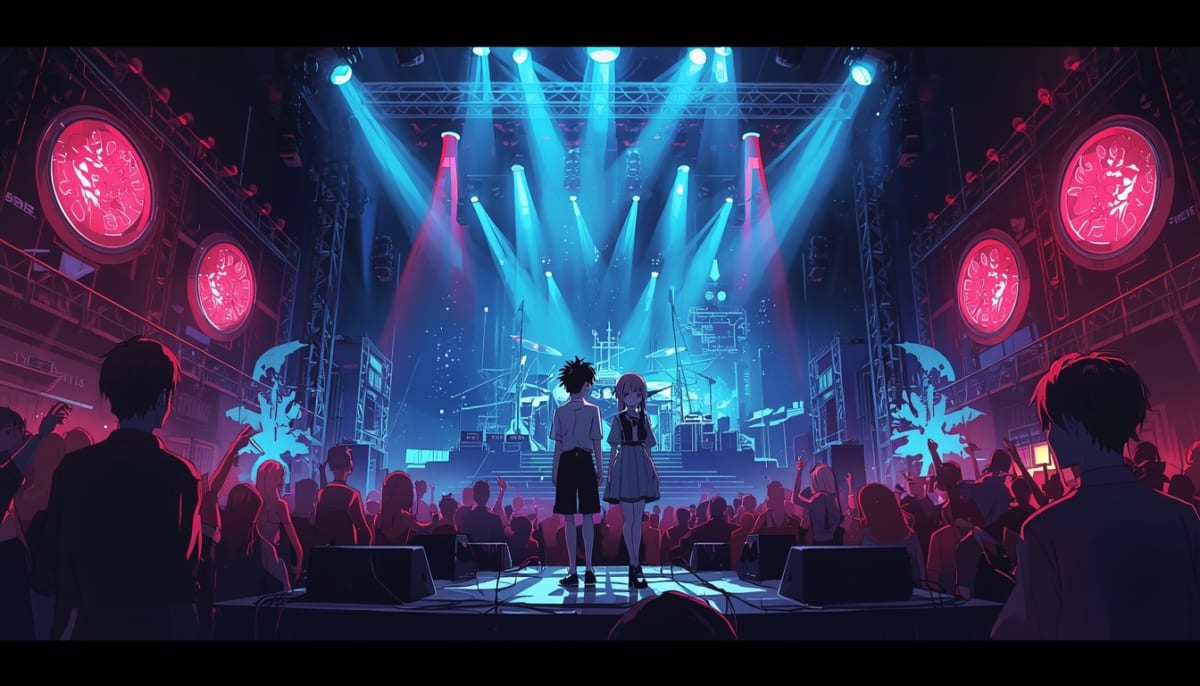
OSHI NO KO Themes Explained: Dark Side of Entertainment Industry & Social Commentary
OSHI NO KO isn't just an idol anime—it's a scathing critique of the entertainment industry that pulls back the curtain on exploitation, manipulation, and the psychological toll on young talents. Through its unique reincarnation premise and character-driven revenge plot, the series exposes systemic flaws and real-world parallels that make it one of the most thought-provoking anime of recent years.
This comprehensive guide explores every major theme in OSHI NO KO, from the dark practices of the entertainment industry to the complex questions of identity, revenge, and justice. Whether you're looking to understand the idol industry critique, analyze the symbolism, or explore the real-world parallels, this analysis provides the insights you need to fully appreciate the series' depth and social commentary.
Quick Navigation
Click to jump directly to a section:
- Entertainment Industry Critique
- Idol Industry Analysis
- Revenge & Justice Themes
- Identity & Reincarnation
- Fame & Celebrity Culture
- Family & Relationships
- Social Commentary
- Symbolism & Metaphors
- Character Arc Themes
- FAQ: Common Theme Questions
- Future Outlook
Entertainment Industry Critique: Understanding the Dark Side
OSHI NO KO provides a stark, critical portrayal of the entertainment industry, focusing on exploitation, manipulation, and the psychological impact on young talents. The series uses its unique reincarnation premise to explore themes of identity and a character-driven revenge plot to expose the industry's systemic flaws and real-world parallels.
What Is OSHI NO KO's Critique of the Entertainment Industry?
OSHI NO KO critiques the industry as a machine that prioritizes profit and a "flawless image" over the well-being and authenticity of its artists. The industry is portrayed with a glamorous facade that hides a dark, cutthroat reality. It is a system built on lies and the commodification of young talent.
The series exposes low pay for minor artists, brutal competition, director interference, cyberbullying, and the extreme consequences of obsessive fan culture, including stalking and violence. Entertainers, particularly idols, are exploited financially (meager wages despite success) and emotionally, pressured to maintain a fake persona and sacrifice their personal lives for their careers.
Agencies and the media control public narratives, manipulating artists' images and emotions for profit. The core issue is a system where a few powerful figures benefit while the majority of talent suffers, and where human value is often tied to marketability and fan count.
How Does the Series Show Exploitation?
Exploitation is shown in various forms, primarily financial and psychological. Ai Hoshino, despite her rising popularity, worries about money because royalties are split and concerts are often not profitable without merchandise sales. Idols must suppress their true feelings and maintain a "professional smile," leading to mental health struggles.
The lack of protection from obsessive fans (stalkers) leads to tragic consequences, as seen in Ai's murder. Young, vulnerable talents are the primary victims, exploited by powerful producers, agency heads, and the public's insatiable demand for a perfect product. The portrayal is highly realistic, drawing inspiration from real-life events and issues within the Japanese and K-pop idol industries.
What Manipulation Tactics Are Shown?
Manipulation is central to the industry's operation in the series. Idols are trained to present a specific, appealing personality, and their interactions with fans are carefully managed to foster intense, one-sided (parasocial) relationships. Agencies meticulously control information, creating a gap between the idol's true self and their public persona.
Agencies orchestrate the narrative, using contracts and strict rules to ensure compliance and minimize "scandal risks." The media is used to amplify fame but also to spread rumors and incite public outrage, often without regard for the truth. Characters like Aqua manipulate others by using their vulnerabilities and desires to get information or push their own agenda, often blurring moral lines.
What Dark Practices Are Exposed?
The series delves into several unethical and sometimes illegal practices. Widespread use of social media for targeted harassment (cyberbullying leading to suicide attempts), leveraging young actors into potentially compromising situations, and poor compensation models are all exposed.
The show reveals the immense pressure on set, the desperation of fading child stars like Kana Arima, and the casual cruelty of powerful industry figures. It highlights that "genuine" moments are often scripted or edited for effect, and that success is rarely a result of pure talent alone. The author has stated the stories are inspired by plausible real-life events and experiences shared by industry insiders, making them feel authentic.
How Does the Series Critique the System?
The series critiques the entire ecosystem as a self-perpetuating cycle of exploitation and superficiality. The system rewards image over substance and fosters a toxic environment where artists are disposable commodities. Powerful producers, network heads, and major agency executives benefit the most. The young talents, their mental health, and their personal lives suffer immensely.
The series suggests the problems are deeply ingrained in consumerist society and the nature of fame, implying that radical change is difficult, and perhaps only individual change or awareness is possible. The critique is not just of the industry itself, but of the society that enables and demands such a system.
Idol Industry Analysis: Real-World Parallels and Problems
OSHI NO KO's portrayal of the idol industry is heavily inspired by real events and K-pop/J-pop industry practices, making it a powerful piece of social commentary that resonates with audiences familiar with real-world scandals and issues.
What Are the Real-World Parallels?
The show is heavily inspired by real events and K-pop/J-pop industry practices. Ai's murder by a stalker mirrors the real-life stabbing of Japanese idol Mayu Tomita by an obsessive fan in 2016. The cyberbullying arc is an almost direct parallel to the suicide of reality TV star and pro-wrestler Hana Kimura after online harassment.
The low pay, strict contracts, and pressure to maintain a "pure" image are all widely documented issues in the K-pop and J-pop worlds. The author drew on various anecdotes and news stories to build the world of OSHI NO KO, creating a narrative that feels both fictional and disturbingly real.
What Problems Does the Idol Industry Have?
The series highlights numerous systemic issues. An industry model that runs on creating emotional bonds with fans for profit leads to the objectification of idols. Idols face grueling training, minimal time off, and intense pressure to perform and maintain a specific image at all times.
The constant scrutiny, pressure to be perfect, and social media hate lead to significant mental health problems, including anxiety, depression, and suicide ideation. The core ethical problem is the commodification of human beings and the enabling of obsessive fan behavior for commercial gain. The industry treats idols as products rather than people, with their value determined by marketability and fan count rather than their humanity.
How Does the Series Portray Idol Culture?
Idol culture is portrayed with brutal honesty, showing the vast difference between the dazzling public image and the harsh reality. Idols are expected to be flawless, perpetually happy, and available to their fans, but never in a real relationship. Ai Hoshino, for instance, is the perfect, loving idol who must hide her children and her true, somewhat empty self from the world.
The series shows how idols must suppress their authentic selves to maintain the image fans expect, creating a life lived as a performance both on and off stage. The pressure to maintain this facade leads to psychological damage and a loss of genuine human connection.
What Scandals and Controversies Are Addressed?
The series addresses a range of scandals: idols secretly having children, dating scandals, "sweetheart deals" (sleeping with directors for roles), and cyberbullying controversies. Scandals are career-ending events. Agencies go into crisis management to control the narrative, often at the idol's expense, and the media frenzy can destroy an idol's reputation and mental health instantly.
The portrayal of how scandals are handled reveals the industry's priorities: protecting the brand and image over the well-being of the individual. The series shows how quickly an idol can fall from grace and how little support they receive when they're no longer profitable.
How Does the Idol System Work in OSHI NO KO?
The system is a business first and foremost, focused on managing a marketable product. Agencies scout young talent, often minors, and put them through rigorous training. Idols sign restrictive contracts that dictate behavior, often including no-dating clauses and severe penalties for "betraying" the fan base.
The system is designed to create dependency, with idols having little power or agency over their careers. Their success is measured by metrics like fan count and merchandise sales rather than artistic merit or personal fulfillment. The system treats idols as investments that must be carefully managed and protected, but also as disposable assets that can be replaced if they become problematic.
Revenge & Justice Themes: Aqua's Quest and Morality
Aqua's quest for revenge drives much of the series' plot, but it also serves as a vehicle for exploring complex questions about justice, morality, and the consequences of pursuing vengeance.
What Is Aqua's Quest for Revenge?
Aqua (Dr. Gorou) seeks revenge for the murder of Ai, and by extension, his own past self. His goal is to find and kill his biological father, whom he deduces is the only person who could have known about Ai's secret children and leaked the information to the stalker. He enters the entertainment industry to use its network and secrets for his investigation. He manipulates people, uses his intelligence, and sometimes compromises his own morality.
His quest is not just about justice for Ai, but about finding meaning in his own death and rebirth. The revenge plot consumes him, becoming the sole focus of his existence and driving him to make increasingly questionable choices.
How Is Justice Explored in the Series?
Justice is a central, morally gray theme. The series constantly questions if revenge is truly justice. Aqua is consumed by his quest, suggesting that revenge is a destructive, rather than a restorative, path. Does a criminal like his father deserve due process, or is Aqua's extrajudicial killing the only true way to get "justice" for Ai's forgotten life?
The series doesn't provide easy answers. It shows that the legal system may not be sufficient to address the wrongs committed, but it also shows that revenge corrupts the seeker. The question of what true justice looks like remains open, forcing viewers to grapple with their own moral positions.
What Are the Moral Implications of Aqua's Actions?
Aqua's actions are morally ambiguous. He is driven by a deep sense of loss, but his methods are manipulative and harmful to those around him, including his sister Ruby and friends like Kana and Akane. His actions force other characters into difficult situations and highlight the ethical compromises necessary to survive and succeed in the industry he despises.
The series shows that even when motivated by a desire for justice, the pursuit of revenge can turn a good person into someone willing to hurt others. Aqua's moral decline is a central tragedy of the series, showing how the entertainment industry and his quest for revenge corrupt even those with good intentions.
What Are the Consequences of Revenge?
Revenge is shown to be a corrosive force that harms the seeker. Aqua becomes isolated, cold, and willing to hurt himself and others. The pursuit of revenge detracts from his new life and prevents him from truly moving on. The ultimate consequence is a life unfulfilled and potentially his own death in the pursuit of his target.
The series suggests that revenge, even when justified, is ultimately self-destructive. It consumes the person seeking it, leaving them unable to find happiness or peace. The cost of revenge is not just the target, but the seeker's own humanity and future.
How Does the Series Explore Morality?
Morality is explored through a world without clear good or bad guys, only people with desires who are exploited by a broken system. Even loathsome characters are shown to have inner lives and motivations. The series suggests that the system itself is the primary evil, not necessarily every individual within it.
The series forces viewers to question their own moral positions. Is Aqua justified in seeking revenge? Is the entertainment industry inherently evil, or are individuals within it making bad choices? The lack of clear answers makes the series more thought-provoking and realistic.
Identity & Reincarnation: What It Means to Be Reborn
The reincarnation premise is central to OSHI NO KO, serving not just as a plot device but as a way to explore complex questions about identity, second chances, and what it means to be reborn.
How Does Reincarnation Work in OSHI NO KO?
Reincarnation is a supernatural plot device that adds depth to the characters' motivations. Characters are reborn with their memories intact, but in a new body and life. The mechanism itself is not deeply explained but serves a symbolic purpose. It allows the protagonists a second chance at life and a unique, adult perspective on a childhood in the industry.
The reincarnation allows Aqua and Ruby to navigate the entertainment industry with the wisdom and experience of their past lives, while also forcing them to confront questions about who they really are and what their past lives mean for their current existence.
What Does It Mean to Be Reborn?
It means reconciling a past, fully-lived life with a new existence as a child. Aqua and Ruby must navigate being a child actor/idol with the mind of an adult. They keep their core personalities but their environment and goals change who they become. The reincarnation forces them to question whether they are their past selves or new people entirely.
The series explores whether a second chance means starting over completely or carrying forward the burdens and lessons of the past. The characters must decide how much of their past lives to hold onto and how much to let go of in order to live their new lives fully.
What Identity Questions Are Explored?
The series questions who the characters truly are: their past selves or their current ones. Are they Gorou and Sarina, or Aqua and Ruby Hoshino? They struggle to balance their past attachments with their current reality. The message is about second chances and learning to define oneself in the present rather than being trapped by the past.
The identity crisis is particularly acute for Ruby, who must reconcile her past self's crush on Dr. Gorou with her current relationship with Aqua, her twin brother. This creates a complex dynamic that explores the boundaries of identity and relationships.
How Does Reincarnation Affect Relationships?
It creates complex and unusual relationship dynamics. The most prominent example is Ruby's lingering childhood affection for Gorou (now Aqua), a dynamic the series addresses as strange but central to her character's motivation. The reincarnation complicates all relationships, as characters must navigate connections that exist across lifetimes.
The series shows how past relationships can both enrich and complicate new ones. The characters must decide how much to reveal about their past lives and how to form genuine connections in their new existence while honoring their past.
What Is the Symbolism of Reincarnation?
Reincarnation symbolizes second chances and the cyclical nature of dreams and ambitions within the entertainment world. It allows the story to explore whether characters can break free from past traumas or if they are doomed to repeat the same mistakes, either through their own actions or the system's flaws.
The reincarnation also serves as a metaphor for the entertainment industry itself, where stars are constantly reborn through new roles, new images, and new personas. The series suggests that in the entertainment world, identity is fluid and constructed, much like the reincarnation premise.
Fame & Celebrity Culture: The Price of Fame
OSHI NO KO offers a scathing critique of celebrity culture, showing the high price of fame and the vast gap between public perception and reality.
What Is the Price of Fame in OSHI NO KO?
The price of fame is shown to be high, often involving a loss of authenticity, privacy, and safety. Characters sacrifice their true selves, their relationships, and often their mental health. Ai sacrifices her right to love and have a family openly. The cost is the constant pressure to maintain a perfect image, leading to a life lived as a performance, both on and off stage.
The primary danger is the obsessive fan culture that can escalate to stalking and violence, as tragically demonstrated by Ai's murder. The series shows that fame comes with a loss of basic human rights: the right to privacy, the right to love, and even the right to safety.
How Is Public Perception Portrayed?
Public perception is portrayed as a fickle, easily manipulated force. Celebrities are viewed less as human beings and more as products to be consumed and judged. The series highlights the vast chasm between the curated public image and the raw, often messy, reality of an entertainer's life.
Social media and news outlets are shown to easily manipulate public opinion for ratings or clicks, often without regard for the truth or the individual's well-being. The series shows how quickly public opinion can turn, destroying careers and lives in an instant.
What Is the Reality of Celebrity Life?
The reality is a high-pressure environment of constant scrutiny, competition, and emotional suppression. Idols and actors face grueling schedules, low pay, intense fan expectations, and the ongoing threat of "cancellation" due to a single mistake or rumor. The struggles, mental health issues, and true feelings of the artists are hidden behind a facade of glitz and glamour.
The series shows that celebrity life is often lonely and isolating, with genuine relationships difficult to form and maintain. The constant performance required of celebrities makes it hard to know who they really are, even to themselves.
How Does Fame Affect Characters?
Fame has profound psychological effects on the characters. It can lead to a fragmented sense of self (as seen in Ai's struggle with genuine love), anxiety, depression, and a loss of trust in others. Characters cope in various ways, such as Aqua's detachment and focus on revenge, or Ruby's initial eagerness to embrace the idol life, only to later face its harsh reality.
The series shows that fame doesn't solve problems—it often creates new ones. The characters must navigate the psychological toll of living in the public eye while dealing with their own personal struggles and traumas.
What Does the Series Say About Celebrity Culture?
The series offers a scathing critique of celebrity culture. It suggests that modern celebrity culture is toxic, encouraging the dehumanization of stars and a consumerist approach to human relationships (parasocial interactions). The message is a warning about the dangers of demanding perfection from imperfect human beings.
The series shows how celebrity culture creates unrealistic expectations and fosters unhealthy relationships between fans and stars. It critiques a society that treats celebrities as commodities rather than people, and shows the human cost of this approach.
Family & Relationships: Aqua/Ruby Dynamic and Family Themes
Family and relationships are central to OSHI NO KO, with the complex bond between Aqua and Ruby serving as the emotional core of the series.
What Is the Aqua/Ruby Relationship?
The Aqua/Ruby relationship is a central, complex bond based on shared trauma, the mystery of their past lives, and their current existence as twins. They share a deep, protective, but also secretive, bond rooted in their past lives where Gorou was Sarina's doctor. The reincarnation theme adds a unique layer of complexity, as Ruby's childhood crush on Gorou translates into affection for her twin brother, which creates an unusual dynamic.
The relationship becomes strained as Aqua gets deeper into his revenge plot and Ruby becomes more focused on her idol career and finding their father herself. Despite their conflicts, their bond remains strong, showing how family connections can survive even the most difficult circumstances.
What Family Themes Are Explored?
The series explores themes of unconventional families, loss, and the search for belonging. The Hoshino "family" is untraditional—a single mother idol with two reincarnated children. The primary conflict is the search for their biological father, which drives the entire plot and creates tension between Aqua and Ruby as their approaches differ.
Ai's dream of a true family life is what makes her death so tragic. For Aqua and Ruby, finding their biological father is about getting justice for their mother and understanding their own origins. The series shows how family can be both a source of strength and a source of conflict.
How Do Relationships Work in the Series?
Relationships are often transactional and complicated by the industry's demands and the characters' hidden pasts. Trust is a major challenge due to the pervasive manipulation and secrecy in their world. Genuine relationships are rare and precious, making them all the more meaningful when they do occur.
The series shows how the entertainment industry makes it difficult to form genuine connections, as everyone has an agenda and relationships are often used as tools for advancement or manipulation. Despite this, the series also shows that genuine love and connection are possible, even in the darkest of circumstances.
What Is the Role of Family in the Story?
Family is the core motivation for the main characters. Ai's dream of a true family life is what makes her death so tragic. For Aqua and Ruby, finding their biological father is about getting justice for their mother and understanding their own origins. Family serves as both motivation and refuge in a world that is otherwise cold and transactional.
The series shows how family bonds can survive even the most difficult circumstances, including death, reincarnation, and the pressures of the entertainment industry. The love between family members is shown as one of the few genuine things in a world built on lies.
How Does Reincarnation Affect Family Relationships?
Reincarnation complicates family relationships immensely. The characters live double lives, honoring both their past families and their current ones, leading to internal conflict and unusual relationship dynamics. The series shows how past relationships can both enrich and complicate new family bonds.
The reincarnation creates a unique family structure where the characters must navigate relationships that exist across lifetimes, creating a complex web of connections that defies traditional definitions of family.
Social Commentary: Real-World Issues and Industry Problems
OSHI NO KO is a vehicle for sharp social commentary on various real-world issues, making it more than just entertainment—it's a critique of modern society and the entertainment industry.
What Real-World Issues Does OSHI NO KO Address?
The series is a vehicle for sharp social commentary on various real-world issues. It addresses cyberbullying, toxic fan culture, stalking, mental health crises among youth, and the exploitation of workers in creative industries. The series shows how these issues are interconnected and how they create a system that is harmful to both entertainers and society as a whole.
The portrayal of these issues is realistic and grounded in actual events, making the social commentary all the more powerful. The series doesn't just show these problems—it forces viewers to confront their own complicity in enabling them.
What Industry Problems Are Highlighted?
The series highlights deep structural and ethical problems within the entertainment sector. Power imbalances (producers leveraging their position), low wages for new talent, lack of mental health support, and the lack of worker protection from abuse and harassment are all key problems addressed. The series shows how these problems are systemic rather than individual, requiring systemic solutions.
The portrayal of these problems is detailed and realistic, showing how they affect real people in real ways. The series doesn't just critique the industry—it shows the human cost of these problems.
What Social Commentary Is Made?
The series critiques a society that values the spectacle of fame over human welfare. It argues that as a society, consumers are often complicit in the exploitation of entertainers by demanding constant access and perfection, leading to a system that inevitably breaks people. The series forces viewers to question their own role in enabling the system.
The social commentary extends beyond the entertainment industry to critique modern society's relationship with celebrity, social media, and the commodification of human relationships. The series shows how these issues are not limited to the entertainment industry but are part of a larger cultural problem.
What Real-World Parallels Exist?
As mentioned previously, the parallels are strong and intentional. The suicide arc is a direct reference to the Hana Kimura tragedy, making the portrayal chillingly accurate and a powerful piece of social commentary. Ai's murder parallels the Mayu Tomita stalking and stabbing incident, showing how the series draws directly from real-world events.
These parallels make the series more than just fiction—it's a reflection of real problems in the real world. The accuracy of the portrayal makes the social commentary all the more powerful and relevant.
What Solutions or Alternatives Are Suggested?
The series is more about exposing problems than providing easy solutions. The narrative suggests that systemic change is incredibly difficult. The only alternative shown is perhaps finding genuine connection outside of the industry's manipulative structure, and an increased awareness from the public about the humanity of performers.
The series suggests that change must come from both within the industry and from society as a whole. It shows that individual awareness and action are important, but that systemic problems require systemic solutions.
Symbolism & Metaphors: Deeper Meanings
OSHI NO KO is rich with symbolism and metaphors that add layers of meaning to the narrative, enhancing the themes and providing visual cues for complex emotional and societal issues.
What Does the Star Symbolize?
The star is the primary symbol in the series. The star in the eye symbolizes an idol's "spark" or "charisma" and their potential to shine brightly. It also represents the lies and constructed image of an idol's life. White stars often represent innocence or a dream, while black stars can represent a corrupted soul or revenge.
The star symbolism is central to understanding the characters and their journeys. As characters develop and change, their stars change, reflecting their inner state and the impact of the entertainment industry on their souls.
What Do the Eyes Symbolize?
The eyes symbolize perception, lies, talent, and hidden truths. They represent the ability to see through the facade of the industry, as Aqua's eye allows him to notice lies, and Ruby's developing star eyes show her growth as an idol and a person who understands the dark side.
The eyes serve as windows into the characters' souls, showing their true nature and the impact of their experiences. The series uses eye symbolism to show how characters see the world and how the world sees them.
What Other Symbols Are Important?
The Stage: The stage is a metaphor for life as a performance, a place where reality and image collide. It represents the public face that entertainers must maintain and the gap between performance and reality.
Ai's "Lie" Mantra: The idea that a lie can become a truth if believed strongly enough is a central metaphor for the entertainment industry's core nature. It shows how the industry creates and maintains illusions, and how these illusions can become reality for both performers and fans.
What Metaphors Are Used?
The Entertainment Industry as a Machine: A common metaphor is the industry as a machine that consumes human talent and spits out products. This metaphor shows how the industry treats people as commodities rather than human beings.
The series uses various metaphors to show the dehumanizing nature of the entertainment industry and the way it processes people through a system that values marketability over humanity.
What Is the Overall Symbolism of the Series?
The series is a cautionary tale about the human cost of a culture obsessed with fame and spectacle. The core message is about the value of authenticity in a world built on lies and the struggle to find justice and meaning in a broken, superficial system. The symbolism enhances these themes by providing visual cues for complex emotional and societal issues.
The symbolism works on multiple levels, from the personal (individual character journeys) to the societal (critique of modern celebrity culture). The series uses symbolism to make abstract themes concrete and emotionally resonant.
Character Arc Themes: How Themes Manifest in Characters
The themes of OSHI NO KO are brought to life through the character arcs, with each major character embodying and exploring different aspects of the series' central themes.
How Do Themes Manifest in Aqua's Character?
Aqua is the primary vehicle for the themes of revenge, justice, and the dark side of the entertainment industry. He represents revenge, justice, the corrupting nature of the industry, the search for truth, and moral ambiguity. He begins as a responsible, caring doctor and is reborn as a detached, manipulative young man obsessed with avenging Ai's death. His arc is a downward spiral as he compromises his morals and hurts those around him in pursuit of his goal.
He embodies the destructive consequences of revenge and shows how the pursuit of a singular, dark goal can consume a person, highlighting the impossibility of true justice within a broken system. His character arc is a tragedy that shows how good people can be corrupted by their circumstances and their own desires.
How Do Themes Manifest in Ruby's Character?
Ruby embodies the themes of idol culture, ambition, dreams, identity crisis, the harsh reality of the industry, and finding one's own "spark." She offers the "fan's perspective" turned insider, showing the journey from an idealist to a hardened professional who faces the industry's exploitation head-on.
She starts as a naive, cheerful girl desperate to be an idol like Ai. Her arc involves a gradual awakening to the industry's harshness and her mother's tragic end, leading to a darker, more driven personality that mirrors Aqua's single-mindedness. Her journey explores the allure of fame and the sacrifices required to achieve it, showing how even a pure dream can be corrupted by the system's inherent problems.
How Do Themes Manifest in Other Characters?
Kana Arima: Represents the struggles of the fading child star and the harsh realities of the acting world. Her arc is about rediscovering her self-worth and genuine love for performing despite the industry's focus on image.
Akane Kurokawa: Embodies the real-world issue of cyberbullying and the fragility of a public image. Her arc is a survival story that showcases her exceptional talent as an actress and her willingness to adopt personas to survive the cutthroat world.
Each character represents different aspects of the entertainment industry and the themes of the series, creating a comprehensive exploration of the industry's impact on individuals.
How Do Character Arcs Explore Themes?
The character arcs are the primary narrative device for theme exploration. Aqua's arc develops the idea that revenge is an empty pursuit. Ruby's arc explores the transition from a naive dream to a harsh reality. The characters' changes reinforce the message that the entertainment industry forces people to change, often for the worse, to survive.
The arcs show how the themes affect real people in real ways, making the abstract themes concrete and emotionally resonant. The character development is the vehicle through which the series explores its central themes.
What Is the Relationship Between Characters and Themes?
Characters are inextricably linked to the themes; they are not just victims but also active participants in the system. The characters are used to humanize the systemic problems. Their struggles make the abstract themes of exploitation and manipulation feel real and impactful to the audience.
The characters embody the themes, making them tangible and emotionally resonant. The series shows how abstract concepts like exploitation and manipulation affect real people, creating a powerful emotional connection with the audience.
FAQ: Common Theme Questions
Q1: What are the main themes of OSHI NO KO?
A: The primary themes are the dark underbelly of the entertainment industry, revenge, identity, and social commentary on idol culture. The series explores exploitation, manipulation, the price of fame, and the search for justice and authenticity in a world built on lies.
Q2: What is OSHI NO KO about?
A: It is a dramatic, suspenseful story about twins who were reincarnated as the children of a famous idol, seeking justice for her murder while navigating the corrupt world she lived in. The series uses this premise to critique the entertainment industry and explore themes of identity, revenge, and the human cost of fame.
Q3: What does the series say about the entertainment industry?
A: The series offers a brutal critique of how the industry prioritizes profit and image over mental health and safety. It exposes exploitation, manipulation, and the systemic problems that harm young talents, showing the human cost of a system that treats people as commodities.
Q4: What is the revenge theme about?
A: Aqua's quest for revenge is a central plot point that explores the moral gray areas and consequences of seeking justice outside the law. The series shows how revenge can consume a person and destroy their humanity, even when the cause is just.
Q5: How accurate is the portrayal of the idol industry?
A: The portrayal is considered highly accurate, drawing inspiration from numerous real-life scandals and industry practices in Japan and Korea. The series references real events like the Mayu Tomita stabbing and the Hana Kimura suicide, making it a powerful piece of social commentary.
Q6: What does the star symbolize?
A: The star in the eye symbolizes an idol's "spark" or "charisma" and their potential to shine brightly. It also represents the lies and constructed image of an idol's life. White stars represent innocence or dreams, while black stars represent corruption or revenge.
Q7: What is the deeper meaning of the series?
A: The deeper meaning is a cautionary tale about the human cost of a society obsessed with celebrity culture and the difficult search for authenticity and truth in a world full of lies. It critiques a system that values image over humanity and shows the price of fame.
Q8: How do Aqua and Ruby represent different themes?
A: Aqua primarily represents revenge and justice themes, showing how the pursuit of vengeance can corrupt a person. Ruby represents the idol industry's impact on dreams and identity, showing how even pure aspirations can be tainted by the system's problems.
Q9: What real-world events are referenced?
A: The series references real events like the Mayu Tomita stabbing incident (parallel to Ai's murder), the Hana Kimura suicide (parallel to the cyberbullying arc), and various documented issues in the K-pop and J-pop industries regarding contracts, working conditions, and mental health.
Q10: What is the message of the series?
A: The message is a warning about the dangers of a system that prioritizes profit and image over human well-being. It critiques celebrity culture, the entertainment industry, and society's complicity in enabling exploitation. It also explores themes of identity, justice, and the search for authenticity in a world built on lies.
Future Outlook: How Themes Develop in Later Arcs
As the manga continues and potentially moves toward its conclusion, the themes established in the early arcs are likely to develop and reach their full resolution. Aqua's revenge plot is approaching its climax, which will likely force a final confrontation with the themes of justice, revenge, and morality that have driven his character arc.
Ruby's journey as an idol is also developing, with her character arc exploring how she will navigate the industry's dark side while maintaining her dreams. The series is likely to continue its social commentary, potentially offering more insights into the industry's problems and the possibility of change.
The themes of identity and reincarnation may also reach new depths as the characters are forced to confront their past lives and current existence in more direct ways. The series has established a rich thematic foundation that will likely be explored further as the story reaches its conclusion.
As of 2026, the manga is approaching its end, and the themes are likely to be resolved in ways that will provide closure while maintaining the series' commitment to realistic, thought-provoking storytelling. The future outlook suggests that the series will continue to challenge viewers and provide powerful social commentary on the entertainment industry and modern celebrity culture.
Conclusion: Understanding OSHI NO KO's Themes in 2026
OSHI NO KO is more than just an anime about idols—it's a powerful critique of the entertainment industry, a complex exploration of identity and revenge, and a thought-provoking piece of social commentary. Through its unique reincarnation premise and character-driven narrative, the series exposes the dark side of entertainment while exploring themes that resonate with real-world issues.
From the exploitation and manipulation in the entertainment industry to the complex questions of justice and revenge, from the price of fame to the search for identity, OSHI NO KO tackles difficult themes with honesty and depth. The series doesn't provide easy answers, but it forces viewers to confront uncomfortable truths about the entertainment industry and modern celebrity culture.
The real-world parallels make the series all the more powerful, showing that the problems it depicts are not just fictional but reflect real issues in the entertainment industry. The series serves as both entertainment and social commentary, making it a significant work that will likely continue to be discussed and analyzed for years to come.
Whether you're interested in the idol industry critique, the themes of revenge and justice, or the exploration of identity and reincarnation, OSHI NO KO offers a rich, complex narrative that rewards careful analysis and thoughtful engagement. The series challenges viewers to think critically about the entertainment industry, celebrity culture, and their own role in enabling the system it critiques.
Last Updated: January 2026 | Based on OSHI NO KO manga and anime | Next Review: As new chapters and developments are released