
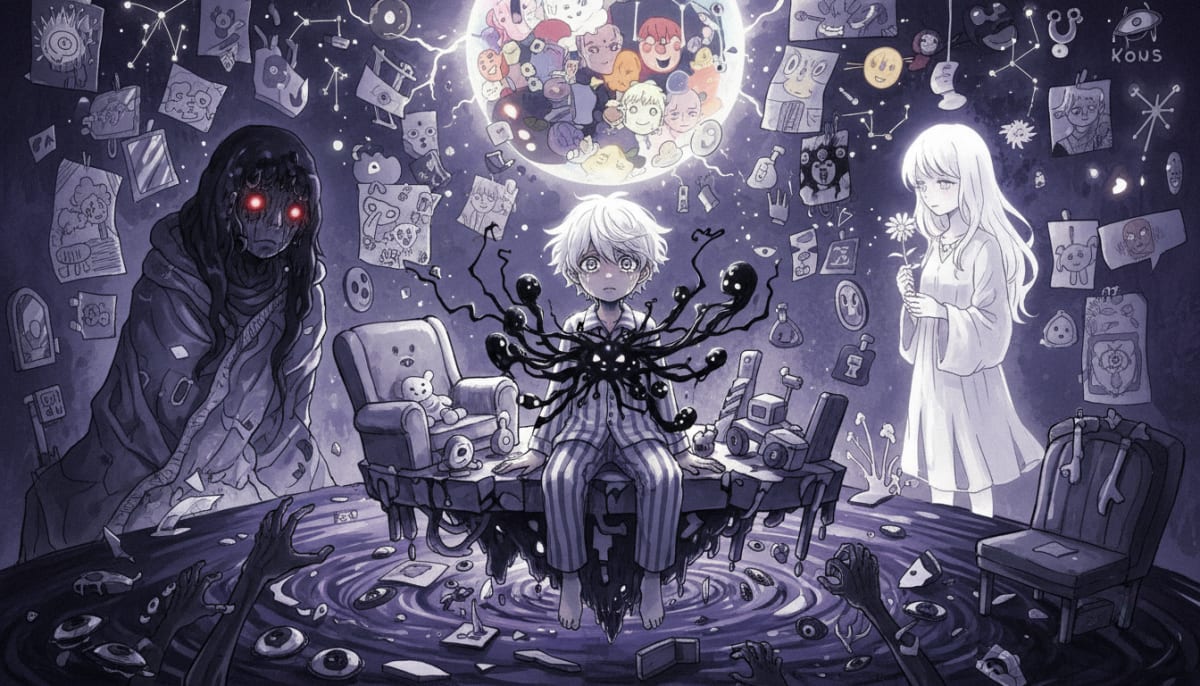
OMORI Manga: Complete Guide to Nui Konoito's Adaptation (Spring 2026)
The beloved indie game OMORI gets a manga adaptation, bringing its psychological horror to a new medium. Created by Nui Konoito and published by Kodansha, this adaptation brings the acclaimed story of Sunny and his journey through trauma, guilt, and healing to manga format. Serializing monthly since June 2024, this comprehensive 3,000+ word guide covers everything you need to know about the OMORI manga, from the game's profound themes to detailed character analysis, adaptation approach, and where to read this must-read psychological horror series.
Whether you're a longtime fan of the game or new to OMORI's world, this guide provides essential context, detailed plot previews, and expert insights into what makes this adaptation special. We'll explore the game's impact and themes, how the story translates to manga format, the confirmed release information, and why this adaptation represents a significant moment for game-to-manga transitions. This is your complete resource for understanding why the OMORI manga is being called a must-read for fans of psychological horror and emotional storytelling.
Why OMORI Matters: A Life-Changing Story
OMORI is one of the most critically acclaimed indie RPG Maker games of the last decade, with a massive emotional impact on its fanbase. The game has sold over a million copies and won DreamHack's "Daringly Dramatic" category in 2021. Its powerful, life-changing story, emotional impact, unique art style, and memorable soundtrack help it stand out among indie RPGs, with many fans describing it as a masterpiece that changed their lives and helped them process their own emotions.
For game fans, the manga adaptation offers a new way to experience this beloved story, with the opportunity to see iconic moments rendered in Nui Konoito's detailed manga art style. For newcomers, the manga provides a more accessible entry point to a story that might be overwhelming in its interactive game format. This is more than just an adaptation—it's a bridge between gaming and manga communities, bringing a powerful story about mental health, trauma, and healing to a wider audience.
Quick Navigation
Click to jump directly to a section:
- 1. Game Overview: OMORI's Story, Themes & Popularity
- 2. Manga Adaptation Info: Artist, Release & Format
- 3. Adaptation Approach: How Game Translates to Manga
- 4. Plot Preview: Story Overview & Key Events
- 5. Character Analysis: Omori, Sunny, Friends & Psychology
- 6. Themes & Philosophy: Mental Health, Trauma & Reality vs. Dreams
- 7. Art Style: Visual Approach & Game vs. Manga Comparison
- 8. Where to Read: Platform Guide & Availability
- 9. Game vs. Manga: Differences & What to Expect
- 10. FAQ: Common Questions
- 11. Future Outlook: Series Potential & Anime Hopes
1. Game Overview: OMORI's Story, Themes & Popularity
Before diving into the manga adaptation, it's essential to understand the game that inspired it—a surreal psychological horror RPG that has left an indelible mark on indie gaming.
What is OMORI?
OMORI is a surreal psychological horror RPG Maker game with turn-based combat that follows a teenage boy named Sunny, a "hikikomori" (shut-in) who has not left his house in four years after a traumatic incident. Players explore two main worlds: the vibrant, surreal Headspace dream world as Sunny's alter-ego Omori, and the more grounded real world (Faraway Town) as Sunny.
The story is about uncovering a forgotten, tragic past and confronting the psychological trauma and guilt associated with it, while attempting to reconnect with old friends before moving away. The game's unique aspects include the emotional turn-based battle system (where emotions like Happy, Sad, and Angry function as status effects in a rock-paper-scissors dynamic) and the deeply emotional, symbolic storytelling that tackles heavy themes with nuance.
The Game's Art Style
The game has a distinct look that blends multiple styles. The overworld uses a top-down pixel art style reminiscent of classic RPGs like EarthBound, while key scenes, items, and character portraits in battle feature detailed hand-drawn illustrations and anime-style cut-ins. The art style is memorable for its stark contrast: cute, colorful, and charming in the dream world, which makes the sudden shifts to dark, surreal, and unsettling psychological horror imagery even more impactful.
Why OMORI is Beloved
OMORI's popularity stems from its powerful, life-changing story, emotional impact, unique art style, and memorable soundtrack. Critics praised the game's art direction, soundtrack, narrative, and nuanced depiction of anxiety and depression. While some found the gameplay repetitive, the narrative quality of the finale was consistently lauded.
The game has a dedicated fanbase that loves its deep lore, characters, and emotional resonance. Many fans describe it as a masterpiece that changed their lives and helped them process their own emotions. The game's ability to evoke strong emotions and its subtle, symbolic storytelling contribute to its lasting impression on players.
Gameplay Mechanics
The gameplay features traditional turn-based RPG battles with an "emotion gimmick" that affects character stats in a rock-paper-scissors dynamic (Happy beats Angry, Angry beats Sad, Sad beats Happy). Outside of combat, players explore diverse environments, interact with NPCs, complete side quests, and manage items. The game offers player choices that lead to multiple endings, creating a personalized experience that the manga adaptation will translate into a linear narrative.
2. Manga Adaptation Info: Artist, Release & Format
The OMORI manga adaptation brings this acclaimed story to a new medium, with artist Nui Konoito translating the game's unique visual and narrative style into manga format.
Artist: Nui Konoito
Nui Konoito is a manga artist from Japan whose online presence and previous works are not widely known; it is possible the name is a pseudonym. Their social media accounts seem exclusively dedicated to the OMORI manga adaptation. Their art style for the manga is characterized by detailed character designs and a black and white aesthetic that effectively translates the game's unique visuals.
The developer OMOCAT likely selected them for an ability to capture the game's specific aesthetic and emotional tone for a manga format, appealing to both existing fans and newcomers. The manga artist renders the characters in their own style, making them feel slightly more "traditionally anime" while adhering closely to the original designs set by the game's creators.
Release Information
The manga began serialization in Japan on June 25, 2024, in Kodansha's Monthly Afternoon magazine. It is also simulpublished digitally in English on K MANGA (Kodansha's official manga app/website). New chapters are released monthly on the 25th in the magazine, with English digital chapters available simultaneously.
The chapters are being collected into tankōbon volumes, with at least two volumes released and a third announced as of late 2024/late 2025. The manga has both physical releases in Japanese and digital simulpubs available on platforms like K MANGA for English readers.
Publication Format
The OMORI manga is a serialized manga released monthly in Monthly Afternoon magazine. The series is published by Kodansha in Japan and internationally. Physical Japanese volumes are available in bookstores in Japan and internationally via import shops. English physical releases have been announced for the future, though specific dates have not been formally solicited as of late 2025.
Promotional Materials
Promotional materials include cover art for the magazine issues and the collected volumes, character birthday illustrations drawn by Nui Konoito, and a promotional video/trailer that showcased the art style prior to the initial serialization. These materials demonstrate the artist's ability to capture the game's aesthetic while adapting it to manga format.
3. Adaptation Approach: How Game Translates to Manga
Adapting OMORI from an interactive game to a linear manga format presents unique challenges and opportunities, requiring careful translation of gameplay elements and player agency into a directed narrative.
Adaptation Strategy
The manga is a direct adaptation of the game's story, but it takes a different narrative path, potentially offering a different experience. The goal is to make it accessible to both new readers and longtime fans. It follows the game's story but reportedly at a very fast pace, which some fans have noted affects the pacing compared to the game's slow burn.
Interactive gameplay elements, such as the turn-based battles and player choices, are translated into a linear narrative format, which changes how some plot points and character moments are experienced. The manga cannot represent player agency; the story follows a set path, likely the "true ending" route, which removes the player's personal connection to the decision of confronting trauma.
Changes Made for Manga
The core story and characters remain the same, but the linear nature of a manga format means some scenes and events are reordered or presented differently. The pacing is reportedly very fast in early chapters compared to the game's slow prologue, which is a significant change. The manga adds new interactions and events not present in the original game, while the non-essential "filler" content and side quests from the RPG Maker game are likely removed for narrative flow.
It is unclear if multiple routes or endings will be explored, but some fans speculate the manga might provide a definitive answer to the game's open ending or explore elements not fully detailed in the original game.
Challenges of Adaptation
The biggest challenge is translating the game's reliance on player interaction, choice, and immersion (e.g., how the player discovers the truth at their own pace) into a static, linear medium. The game's duality of real world and dream world, and the visual shifts, must be conveyed effectively in black and white manga panels, which is a different challenge than a video game with music and color.
Replicating the unique mix of pixel art and hand-drawn art in a consistent manga style is a key artistic challenge. The absence of color (which is highly symbolic in the game, especially the use of red, black, and white) is a major visual difference, as is the lack of pixel art segments.
Visual Translation
The manga features a more traditional manga art style compared to the game's indie, mixed-media approach. The black and white format means the vibrant color symbolism is lost, but Nui Konoito's art maintains the characters' original designs. Locations are adapted to manga panels, which changes how the vast "Headspace" and mundane "Faraway Town" feel. The artist uses techniques like abstract backgrounds and panel layouts to replicate the psychological atmosphere.
4. Plot Preview: Story Overview & Key Events
The plot of OMORI centers around Sunny, a young boy consumed by guilt and depression after accidentally killing his older sister, Mari, four years prior and covering it up with his friend Basil. He retreats into an elaborate dream world called Headspace, where his alter-ego Omori lives in an endless summer with their friends, perpetually avoiding the truth buried in his subconscious (Black Space).
The Main Story
The story begins as Sunny is preparing to move, forcing him to venture outside, reconnect with his now-estranged real-world friends (Kel, Aubrey, and Hero), and ultimately confront the traumatic "Truth" about Mari's death. The core conflict is Sunny's internal struggle with his trauma, guilt, and depression (personified by Omori and "Something") versus his need to face reality, seek forgiveness, and move on with his life.
Sunny's main goal is to overcome his fears and secrets to tell his friends the truth and find closure. In the dream world, Omori and friends search for the missing Basil. The protagonists face various psychological and physical challenges, including surreal monsters in Headspace and navigating strained relationships and painful memories in the real world.
Key Story Events
The story follows several major plot points:
- The Hikikomori State: Sunny becomes a hikikomori after Mari's death and creates Headspace as an escape
- Reconnection: Kel encourages Sunny to go outside and reconnect with Aubrey and Hero Memory Suppression: Events in the real world trigger suppressed memories and "Something" sightings
- The Truth Revealed: The truth about Mari's death (the 'staircase incident' and 'suicide' cover-up) is revealed through Basil's photo album and flashbacks
- Black Space: The player navigates the terrifying "Black Space" where repressed truths reside
- Final Confrontation: A final confrontation occurs in the real world with Basil and an internal battle between Sunny and Omori
- The Choice: Sunny chooses whether to "move on" by confessing the truth or stay trapped
Major Plot Twists
The primary twist is that Mari's death was not a suicide but an accident that Sunny and Basil covered up. This revelation is central to the story's emotional impact and drives the narrative toward its climax. The story builds slowly, juxtaposing whimsical dream adventures with somber real-world interactions, until the final act, where the psychological horror elements intensify and the truth is unavoidable.
The Setting: Two Worlds
The story takes place in two primary locations: the real-world Faraway Town (a seemingly normal suburban town) and the dream world Headspace (a vibrant, constantly changing, surreal landscape within Sunny's mind). The real world is mundane and melancholic, reflecting the state of the characters four years later. Headspace is colorful, imaginative, and a safe haven created by Sunny to repress the truth. "Black Space" is a dark, disturbing area where repressed memories and fears manifest as literal horrors.
Locations range from the colorful Sprout Mole Village and Sweetheart's Castle in Headspace to real-world places like Kel's and Aubrey's homes, the park, and Basil's house. The world-building is deeply symbolic, with every element representing aspects of Sunny's psyche, memories, or trauma.
5. Character Analysis: Omori, Sunny, Friends & Psychology
OMORI features a cast of deeply psychological characters, each representing different aspects of trauma, coping mechanisms, and the human response to tragedy.
Omori: The Emotionless Protector
Omori is the protagonist within the dream world, Headspace. He is Sunny's perfect, emotionless alter-ego, created as a vessel for escapism and to perpetually protect Sunny from the painful memories buried in his subconscious. He acts as the "hero" of the endless summer adventure.
Omori is largely a blank slate, designed to be expressionless and stoic. He rarely speaks and displays little emotion, which makes him reliable and unchanging within the safe confines of the dream world. He is a direct representation of Sunny's desire to repress the truth and remain in a state of innocent oblivion. His unique aspect is that he is ultimately an antagonistic force to Sunny's healing process. In the "true" ending path, Sunny must defeat Omori in a final internal battle to choose reality and healing over eternal escapism.
Sunny: The Traumatized Boy
Sunny is the real-world main character and the person the player actually controls during the day segments. He is a traumatized 16-year-old hikikomori preparing to move away, which forces a confrontation with his past. Omori is Sunny's creation and psychological protector. Omori is who Sunny wants to be (safe, emotionless, forever a child in an endless summer), while Sunny is who he is (depressed, guilty, and needing to grow up).
Sunny's actions in the real world (or lack thereof) directly influence events and emotions in the dream world. His journey is about finding the courage to reconcile the two parts of his life and personality. Sunny's arc is a journey from total isolation and repression to confession and the beginning of healing. He goes from being unable to face his friends or the truth to potentially telling them everything in the true ending.
The Friend Group
The supporting cast includes:
- Kel: The energetic and athletic friend who keeps trying to reconnect the group. He tries his best to bridge the growing gap, ultimately succeeding in getting Sunny out of the house.
- Aubrey: Initially kind in the dream world, but angry and a bully in the real world due to feeling abandoned. She joins a gang after feeling abandoned, representing anger and the shift of pain into outward aggression.
- Hero: Older brother of Kel, the kind and popular "perfect" friend who struggles deeply with Mari's death. He suppresses his emotions to maintain a "perfect" facade, representing the pressure of being "perfect" and suppressed grief.
- Basil: The timid, sensitive friend who holds the key to the truth and is the source of much anxiety for Sunny. His mental health deteriorates rapidly as the truth becomes harder to ignore, representing anxiety, paranoia, and a fragile mental state.
They all have dual personalities between the carefree dream world (where they are idealized versions of their past selves) and the jaded, hurt real world. In the dream world, they are Omori's loyal friends. In the real world, they interact with Sunny, and their strained relationships drive the real-world plot.
Psychological Aspects
The characters are deep psychological studies. Sunny represents deep depression and repression. Basil represents anxiety, paranoia, and a fragile mental state. Aubrey represents anger and the shift of pain into outward aggression. Hero represents the pressure of being "perfect" and suppressed grief. "Something," the recurring shadowy entity that haunts Sunny and Basil, symbolizes the buried truth and the guilt associated with Mari's death. Mari herself symbolizes the idealized past that the group is mourning.
The entire narrative is a masterclass in varied coping mechanisms for shared trauma. Sunny uses avoidance and dissociation (Headspace); Aubrey uses external anger; Hero uses denial and academic striving; Basil internalizes everything. The game is an intricate look at how trauma can fundamentally alter personalities and relationships, emphasizing that while some coping mechanisms work temporarily, facing the pain is the only path to genuine recovery.
6. Themes & Philosophy: Mental Health, Trauma & Reality vs. Dreams
OMORI explores profound themes about mental health, trauma, friendship, and the struggle between reality and escapism, creating a narrative that resonates deeply with readers dealing with similar issues.
Mental Health Themes
Depression is explored through Sunny's complete withdrawal from life (hikikomori state), lethargy, and the gray, muted atmosphere of his real-world home. Anxiety is personified by "Something," the physical manifestation of fear and guilt that pops up unexpectedly to scare the characters, particularly Basil and Sunny. The game also touches on self-harm (both non-lethal, as a way to "wake up" in the dream world, and implied in potential bad endings), suicidal ideation, and general dissociation from reality.
The message is nuanced but generally hopeful: mental illness is difficult and painful, but connection, confession, and processing emotions are necessary steps toward healing and recovery. The game's ability to accurately depict these experiences is a major reason for its profound impact on players.
Trauma and Grief
Trauma is depicted as a physical presence ("Something") that cannot be ignored forever. It's a weight that alters perception, friendships, and the ability to function normally. Central to the narrative is how characters process loss and grief, particularly the death of Sunny's sister, Mari. The game explores repression as an unhealthy coping mechanism and how buried trauma can fester.
The characters primarily cope through maladaptive mechanisms like denial, aggression, and escapism, highlighting that these methods fail to resolve the core issue. The core message is that healing requires honesty and vulnerability. The true ending only occurs when Sunny chooses to confess the truth to his friends, signifying the start of true recovery. Recovery isn't shown as a quick fix; the ending simply shows Sunny beginning the process of recovery, with the outcome of his friends' forgiveness left ambiguous but hopeful.
Friendship and Connection
The game explores the power of friendship—both its ability to bring immense joy and its fragility in the face of tragedy and betrayal. The friendships represent childhood innocence lost, found family, and the power of shared bonds. Friendships initially hinder recovery after Mari's death because the characters hide from each other. However, reconnecting in the real world is the essential catalyst for Sunny to face the truth.
The message is that relationships are vital for mental well-being; isolation allows trauma to fester, while connection facilitates healing. The story highlights the importance of friendship and the impact of personal problems on social relationships. The friend group falls apart after the tragedy, and a key part of the journey is reconnecting and navigating the complex dynamics of their shared history.
Reality vs. Dreams
The game constantly contrasts the idealized, unchanging, colorful dream world with the muted, difficult, and changing reality of Faraway Town. Headspace represents a safe, controlled memory space where pain doesn't exist and Mari is alive—a perfect, perpetual childhood escape. The real world represents adulthood, responsibility, pain, and the necessity of growth.
The narrative explores the lengths to which a person will go to escape from painful reality and the consequences of doing so. The dream world offers a safe, comforting fantasy, while the real world demands growth, forgiveness, and the difficult process of healing. The two worlds are deeply interconnected; events in the real world can influence the dream world, and items and memories found in the dream world provide clues to the real-world tragedy.
Sunny navigates between the two by sleeping to enter Headspace, and sometimes by self-harm (stabbing himself in the dream world) to wake up back in reality. The message is that one must face reality to truly live and grow. Escapism, while a useful temporary coping mechanism, ultimately traps a person and prevents them from moving forward.
7. Art Style: Visual Approach & Game vs. Manga Comparison
The visual translation from game to manga is one of the adaptation's most interesting aspects, requiring Nui Konoito to adapt the game's unique mixed-media aesthetic into traditional manga format.
Nui Konoito's Art Style
Nui Konoito's style is a traditional, high-quality Japanese manga style, which is different from the game's mixed-media approach (pixel art, hand-drawn digital art, watercolor sections). The manga art is more detailed and consistent in its black and white medium. The core character designs (hairstyles, clothing) and the general tone of the game's anime-style illustrations are well preserved.
The stark contrast between "cute" art and sudden "horror" panels is maintained effectively through shading and panel layout. The detailed, sometimes intense shading helps contribute to the necessary psychological horror atmosphere, making the sudden shifts in mood impactful even without color.
Character Redesigns
There are no major design changes but rather artistic interpretations. The manga artist renders the characters in their own style, making them feel slightly more "traditionally anime" while adhering closely to the original designs set by the game's creators. They look very similar to the hand-drawn sections of the game, rather than the simplified pixel sprites.
Key identifiers like Sunny's eye patch (after the ending events), Aubrey's pink hair and bow, and Kel's basketball are all preserved. The uniqueness lies in how they retain the emotional expressiveness of the original art while fitting seamlessly into the monthly serialization format.
Location Adaptations
Locations like Faraway Town, Basil's house, and the core rooms of Headspace are directly translated into detailed background art in the manga panels. The core visual architecture of locations is preserved so fans can recognize them instantly. The atmosphere is maintained through the use of dense blacks for "Black Space" and sparse, airy paneling for the more mundane Faraway Town segments.
The scale of the locations feels different in manga panels versus an explorable RPG map. The vastness of Headspace is conveyed through sequences of panels rather than exploration. The vibrant color symbolism (which is crucial in the game, e.g., the red hands, the different emotion colors) is inherently changed to black and white shading, requiring the artist to use other techniques to convey the same emotional impact.
8. Where to Read: Platform Guide & Availability
The OMORI manga is available through multiple platforms, making it accessible to readers worldwide.
Digital Platforms
The English digital version is available globally (excluding Japan) for simulpub release via K MANGA (Kodansha's official manga app/website). English chapters are released simultaneously with the Japanese magazine release (monthly on the 25th JST), making the series immediately accessible to international readers.
Physical Releases
Physical Japanese volumes are available in bookstores in Japan and internationally via import shops like Amazon Japan, CDJapan, and similar import sites. Readers can typically pre-order the collected volumes (tankōbon) once they are listed by retailers. As of late 2025, at least two volumes have been released, with a third announced.
International Availability
Currently, the English version is digital only via K MANGA. A physical English release is highly anticipated by fans but has not been formally solicited with a specific date by an English distributor as of late 2025. The manga is published by Kodansha, which handles both the Japanese publication and the English digital simulpublication through K MANGA.
Pre-Order Information
Pre-orders for Japanese volumes are available via major online retailers like Amazon Japan, CDJapan, and similar import sites. Pre-orders are for the physical, Japanese-language paperback volumes. English pre-orders will become available closer to the English physical release dates. There have been no announcements regarding special editions, limited variants, or merchandise bundles for the manga release as of yet.
9. Game vs. Manga: Differences & What to Expect
Understanding the differences between the game and manga is essential for both game fans and newcomers to set appropriate expectations.
Key Differences
The core narrative remains the same, but the manga has a much faster pace and reorders some events for a linear reading experience, potentially reducing the sense of player-driven discovery present in the game. Characters adhere to their original designs, but the manga format means internal monologues are presented differently, potentially changing how a reader connects with Sunny's silent protagonist nature.
The absence of color (which is highly symbolic in the game, especially the use of red, black, and white) is a major visual difference, as is the lack of pixel art segments. The game is non-linear, with exploration and player choice. The manga is a linear, sequential narrative that follows a single interpretation of the story (likely the true ending path), which removes the player's personal connection to the decision of confronting trauma.
Preserved Elements
The central tragic backstory, the major plot twists, the dual world structure (real world vs. Headspace), and the main events leading to the true ending are preserved. All main and most significant supporting characters are included. The core themes of trauma, guilt, mental health, and the power of friendship are central to the manga adaptation.
The specific character designs, iconic locations, and the general "cute yet unsettling" atmosphere are maintained by Nui Konoito's art style. The hand-drawn aesthetic of key game art is preserved in the manga's detailed illustrations, though the pixel art aspects are changed to fit the format.
What Game Fans Can Expect
Fans can expect a largely faithful adaptation of the overall story and emotional beats, though the pacing is different. The manga includes many direct visual references and iconic dialogue lines from the game. The linear format might provide a slightly different perspective, potentially offering new small interactions or filling in minor gaps that the interactive format left open.
It is a different experience. The game is slow, atmospheric horror that the player discovers; the manga is a faster, directed, visual narrative that tells the story to the reader. Some fans worry the fast pace will lose the game's atmospheric effect, while others are excited for new character interactions and detailed art.
How It Stands on Its Own
Yes, new readers can enjoy it. The manga is a complete, self-contained narrative that explains the plot clearly from the beginning. The linear format makes the complex, fragmented story structure of the game easier to follow for newcomers who might be overwhelmed by the game's non-linear nature. No prior context is needed; the manga is the story from scratch.
Non-game fans should read it for the acclaimed, powerful psychological horror story, the compelling character arcs, and Nui Konoito's strong art style. The manga provides a more accessible entry point to a story that might be overwhelming in its interactive game format.
10. FAQ: Common Questions
Q1: When did the OMORI manga start serialization?
A: The manga began serialization in Japan on June 25, 2024, in Kodansha's Monthly Afternoon magazine. It is also simulpublished digitally in English on K MANGA.
Q2: Who is Nui Konoito?
A: Nui Konoito is the manga artist adapting OMORI. Their online presence and previous works are not widely known, and their art style is characterized by detailed character designs and a black and white aesthetic that effectively translates the game's unique visuals.
Q3: Where can I read the OMORI manga?
A: The English digital version is available globally (excluding Japan) via K MANGA (Kodansha's official manga app/website). Physical Japanese volumes are available in Japan and through import shops.
Q4: Will there be an English physical release?
A: A physical English release is highly anticipated by fans but has not been formally solicited with a specific date by an English distributor as of late 2025. Currently, the English version is digital only.
Q5: How does the manga compare to the game?
A: The manga is a faithful adaptation of the overall story and emotional beats, but with a faster pace and linear narrative structure. It follows the true ending path and translates interactive gameplay elements into a directed narrative format.
Q6: Do I need to play the game to understand the manga?
A: No, the manga is a complete, self-contained narrative that explains the plot clearly from the beginning. The linear format makes the complex story structure easier to follow for newcomers.
Q7: What are the main themes of OMORI?
A: The main themes include mental health (depression, anxiety), trauma and grief, friendship, and the struggle between reality and escapism. The story explores how characters process loss and the importance of facing trauma to heal.
Q8: Who are the main characters?
A: The main characters are Sunny (the real-world protagonist) and Omori (his alter-ego in the dream world), along with their friends Kel, Aubrey, Hero, and Basil. Each character represents different aspects of trauma and coping mechanisms.
Q9: How often are new chapters released?
A: New chapters are released monthly on the 25th in Monthly Afternoon magazine, with English digital chapters available simultaneously on K MANGA.
Q10: Will the manga have multiple endings like the game?
A: The manga follows a linear narrative structure, likely following the "true ending" route from the game. It is unclear if multiple routes or endings will be explored, but some fans speculate the manga might provide a definitive answer to the game's open ending.
11. Future Outlook: Series Potential & Anime Hopes
The OMORI manga adaptation represents a significant moment for game-to-manga transitions and has substantial potential for future developments.
Series Potential
The series is significant because OMORI is one of the most critically acclaimed indie RPG Maker games of the last decade, with a massive emotional impact on its fanbase. It appeals to fans of emotional storytelling, psychological horror, coming-of-age stories, and niche RPGs. It crosses genres from wholesome slice-of-life (Headspace) to intense psychological horror.
Its strong existing IP status gives it a unique foothold in the manga market, bridging the gap between Western indie gaming fandom and Japanese manga readership. The main expectation is that the manga can maintain the high quality of storytelling and emotional impact while adapting to the monthly serialization format.
Fan Reactions and Expectations
Fans are extremely excited to see their favorite story officially immortalized in another medium, hoping it brings the game to a wider audience. Common theories center on whether the manga will offer a definitive ending (e.g., confirming whether Sunny's friends forgive him) or if it will stick to the game's ambiguous yet hopeful finale.
Popular discussion points include pacing concerns (some fans worry the fast pace will lose the game's atmospheric effect) versus excitement for new character interactions and detailed art. Fans are primarily interested in seeing how the sensitive, psychological elements and the unique art style translate to manga panels.
Anime Adaptation Hopes
While an anime adaptation has not been announced, given the game's popularity, critical acclaim, and the manga's success, fans are hopeful for a future anime adaptation. The combination of compelling story, memorable characters, and unique visual style would translate well to animation, potentially bringing the story to an even wider audience.
Cultural Impact
The manga demonstrates the increasing global reach and translation potential of successful indie games into Japanese media formats. It represents a high-profile, official game-to-manga adaptation, contrasting with many fan-made comics, setting a potential standard for future adaptations.
It fits into the trend of darker, emotionally resonant stories that tackle mental health issues head-on, which are gaining popularity in manga and anime (e.g., Chainsaw Man, A Silent Voice). It may normalize open discussions about difficult mental health themes within the manga ecosystem, making it an important work beyond entertainment.
Conclusion: Why OMORI Manga is a Must-Read
OMORI manga represents a significant adaptation of one of the most acclaimed indie games of the last decade, bringing its powerful story about mental health, trauma, and healing to a new medium. Whether you're a longtime fan of the game or new to OMORI's world, the manga offers a compelling way to experience this life-changing story.
Nui Konoito's adaptation successfully translates the game's unique visual and narrative style into manga format, maintaining the emotional core while adapting to the linear narrative structure. The manga provides a more accessible entry point for newcomers while offering game fans a new perspective on a beloved story.
With English chapters available monthly on K MANGA and physical volumes available in Japan, there's never been a better time to discover why OMORI has had such a profound impact on its fanbase. This is more than just an adaptation—it's a bridge between gaming and manga communities, bringing a powerful story about facing trauma and finding healing to a wider audience. The OMORI manga is here, and it's a must-read for anyone interested in psychological horror, emotional storytelling, and stories that tackle difficult themes with nuance and hope.