
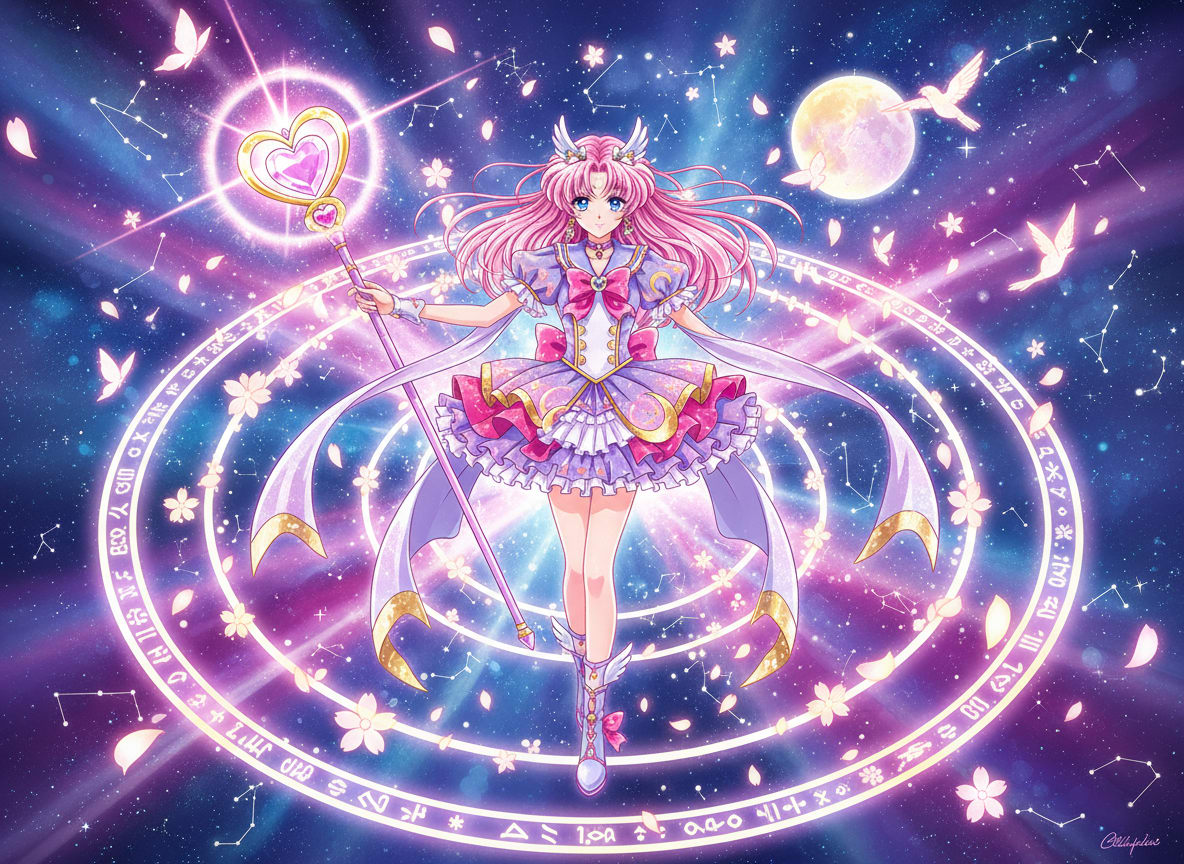
Magical Sisters LuluttoLilly: Studio Pierrot's Magical Girl Revival (April 2026)
Studio Pierrot, known for Naruto and Bleach, returns to magical girls in April 2026 with a fresh take on the genre. Magical Sisters LuluttoLilly marks the studio's first installment in the "Pierrot Magical Girl Series" in over two decades since Fancy Lala (1998), generating excitement among long-time fans of the original series. This comprehensive 2,500+ word guide covers everything you need to know about the Magical Sisters LuluttoLilly anime, from Studio Pierrot's legendary magical girl history to detailed character profiles, plot previews, and how this series fits into the magical girl genre's evolution.
Whether you're a longtime fan of Studio Pierrot's classic magical girl series like Magical Angel Creamy Mami or new to the magical girl genre, this guide provides essential context, detailed previews, and expert insights into what makes this adaptation special. We'll explore the studio's legacy in the genre, the confirmed production details, character relationships, and why this series represents a return to classic magical girl storytelling. This is your complete resource for understanding why Magical Sisters LuluttoLilly is being called one of the most anticipated magical girl revivals of 2026.
Why Magical Sisters LuluttoLilly Matters: A Classic Genre Returns
Magical Sisters LuluttoLilly represents Studio Pierrot's deliberate return to the "Pierrot Magical Girl Series" that helped define the genre in the 1980s. It demonstrates that classic, hopeful magical girl stories still have a place alongside the darker, more complex narratives prevalent today. The series has the potential to revitalize the classic, family-friendly magical girl subgenre while appealing to nostalgic adult fans, with its dual-protagonist, idol-focused plot offering strong merchandising and music potential.
For longtime fans, this adaptation offers a return to the studio's classic magical idol formula, focusing on dreams, transformation, and identity. For newcomers, the series provides an accessible entry point to one of anime's most beloved genres, with Studio Pierrot's acclaimed animation bringing the story to life in a visually stunning way. This is more than just another magical girl series—it's a revival that honors the past while bringing it to a new generation.
Quick Navigation
Click to jump directly to a section:
- 1. Studio Pierrot's Magical Girl History: Legacy & Previous Works
- 2. Series Overview: Plot, Characters & Story Elements
- 3. Release Information: April 2026 Premiere & Production Details
- 4. Character Profiles: Fuu, Rui & The Magical Sisters
- 5. Magical Girl Genre Context: Evolution & Current State
- 6. Animation & Production: Studio Pierrot Quality & Visual Style
- 7. Themes & Philosophy: Friendship, Transformation & Empowerment
- 8. Where to Watch: Platform Predictions & Availability
- 9. FAQ: Common Questions
- 10. Future Outlook: Series Potential & Genre Impact
1. Studio Pierrot's Magical Girl History: Legacy & Previous Works
Before diving into LuluttoLilly, it's essential to understand Studio Pierrot's rich history in the magical girl genre and why their return is so significant.
Studio Pierrot: A Renowned Animation Studio
Studio Pierrot is a renowned Japanese animation studio, established in 1979, primarily known for producing numerous globally popular anime series, often in the shonen and fantasy genres. Their most famous works include Naruto, Bleach, Tokyo Ghoul, Yu Yu Hakusho, Black Clover, and Mr. Osomatsu.
They typically work in popular long-running shonen action/fantasy series, but also have a significant legacy in the magical girl genre. Pierrot is known for developing distinct house styles, often focusing on character expressions and dynamic action, which has garnered critical and fan acclaim (e.g., winning the Animage Anime Grand Prix Award multiple times).
The Pierrot Magical Girl Series
Studio Pierrot is famous for its original "Pierrot Magical Girl Series" in the 1980s. These series are considered classics and were well-received, establishing a significant legacy for the studio within the magical girl genre, particularly known for their focus on themes of dreams, identity, and performance (often linking magic to show business like idol activities).
The previous series in the franchise include:
- Magical Angel Creamy Mami (1983-1984)
- Persia, the Magic Fairy (1984-1985)
- Magical Emi, the Magic Star (1985-1986)
- Pastel Yumi, the Magic Idol (1986)
- Fancy Lala, the Magic Stage (1998)
Studio Pierrot's Magical Girl Style
Their magical girl series often blend the magical girl and idol genres. They focus on original stories involving young girls who gain magic to transform into older, often idol-like, versions of themselves, exploring themes of growing up and pursuing dreams. The style typically involves bright, comforting colors (e.g., pinks and blues) and charming character designs.
Compared to studios like Toei Animation (known for Sailor Moon or Pretty Cure), Pierrot's classic works often have a more grounded, episodic feel centered on the protagonist's double life and personal growth, rather than large-scale battles against evil, although LuluttoLilly introduces a conflict and antagonists.
Why This Return is Significant
This new series, Magical Sisters LuluttoLilly, is the first installment in the "Pierrot Magical Girl Series" in over two decades since Fancy Lala (1998). It marks a major return to a beloved, classic franchise style for the studio amidst its modern focus on shonen hits, generating excitement among long-time fans of the original series.
It is an original project produced alongside Bandai Namco Filmworks, indicating a commitment to new creative ventures alongside ongoing shonen adaptations. The series represents the sixth installment in the official "Pierrot Magical Girl Series," a lineage that holds a significant place in the genre's history for pioneering the "magical idol" subgenre.
2. Series Overview: Plot, Characters & Story Elements
Magical Sisters LuluttoLilly tells the story of two sisters who have grown distant but each independently gains magical powers that allow them to transform into their ideal adult selves and begin secret lives as idols.
The Main Plot
The story centers on two sisters who have grown distant, but each independently gains magical powers that allow them to transform into their ideal adult selves and begin secret lives as idols. Fuu Nonoyama (elementary schooler) and Rui Nonoyama (middle schooler) used to be close but have recently drifted apart. They both unexpectedly receive magic powers on the same day, allowing them to become adults. They use these forms to start idol careers, unaware of each other's secret magical identities.
The central conflict involves balancing their double lives and keeping their magic a secret from everyone, including each other. The protagonists aim to succeed as idols while navigating their new powers and a one-year time limit on their magic. They must adhere to two strict conditions of their magic: it only lasts for one year, and no one must know about its existence.
Key Story Elements
Major plot points include:
- Sisters Fuu and Rui drift apart
- Both independently encounter magic and gain powers
- They transform into older, adult versions of themselves
- They start careers as idols, unknowingly becoming professional rivals or colleagues
Key turning points include the moment they gain powers and begin their secret double lives. A central mystery is if/when they will discover each other's secret identities. Also, the one-year limit on their magic and the implications of the magical world/antagonists are key plot drivers.
The Setting
The story takes place in a contemporary setting, presumably in Japan, where two sisters are living their daily lives as students and later, as idols. Magical elements are introduced through a mysterious spaceship encounter, leading to the characters obtaining powers. The mascot characters, Uguisu and Azuki, are from the "Kingdom of Magic." The world is presented with a sparkling and heartwarming visual style.
3. Release Information: April 2026 Premiere & Production Details
The series has been officially confirmed, with the original production first teased in June 2024, with more details and the official title revealed in March and October 2025. The announcements came from official Studio Pierrot and Bandai Namco Filmworks sources and social media channels.
Release Date
The series is scheduled to premiere in April 2026. A specific premiere date (day of the month) has not been specified yet. It is expected to be a weekly series. The series premieres in April 2026 in Japan. Specific premiere date, JST time, and international simulcast times have not been publicly confirmed yet.
Production Staff
The key staff members have been confirmed:
- Director: Shintarō Dōge, who also handled the original character design drafts
- Series Composition/Writer: Yūko Kakihara
- Character Designer (Animation): Namiko Torii, Hirono Nishiki, and Asami Sodeyama are credited with animation character designs
While specific magical girl history for all staff isn't detailed, the show is a direct installment in the classic Pierrot series lineage.
Voice Cast
The confirmed voice actors include:
- Fuu Nonoyama / CompatoLilly: Mei Tachibana (TV anime debut)
- Rui Nonoyama / MashuLulu: Nao Ojika
- Uguisu (mascot): Hiroki Nanami
- Azuki (mascot): Ai Kayano
- Toko Kandachi (idol): Fuka Izumi
- Sena Aozono (idol): Fuu Hirohara
Promotional Materials
A pilot film, teaser trailer(s), and key visuals have been released. The visuals showcase a bright, pastel aesthetic with pink and blue color schemes for the protagonists.
Episode Count
The exact episode count hasn't been widely specified in search results, but it is confirmed as a weekly TV series. More information will be available as the premiere date approaches.
4. Character Profiles: Fuu, Rui & The Magical Sisters
The "Magical Sisters" are Fuu Nonoyama and Rui Nonoyama, biological sisters who have grown distant but must secretly navigate their new magical lives, which ironically might bring them closer as they are doing the same thing without knowing it.
Fuu Nonoyama / CompatoLilly
Fuu Nonoyama (voiced by Mei Tachibana) is an energetic, innocent elementary school girl. Her transformed magical form is CompatoLilly. Fuu has blue hair and is energetic. Her transformed "adult" form is designed with a charming, idol-like outfit. The character designs follow a classic magical girl aesthetic with modern touches and feature prominent pastel color palettes.
Rui Nonoyama / MashuLulu
Rui Nonoyama (voiced by Nao Ojika) is a diligent, modest middle schooler who became hesitant after a childhood hospital stay. Her transformed magical form is MashuLulu. Rui has pink hair and is more reserved. Her transformed "adult" form is also designed with charming, idol-like outfits. The designs maintain the classic magical girl aesthetic with modern touches.
Magical Abilities
The core ability is transformation into older, adult versions of themselves. Fuu becomes CompatoLilly and Rui becomes MashuLulu. They gain powers through a mysterious encounter (Fuu with a spaceship). The specifics of the transformation sequence haven't been detailed beyond the visual reveal. The magic has two strict limitations: it only lasts for one year and must remain a secret.
Magical Companions
The sisters have magical creature companions:
- Uguisu (voiced by Hiroki Nanami): A cat-like magical creature from the Kingdom of Magic
- Azuki (voiced by Ai Kayano): Another magical creature companion
These mascot characters likely guide the sisters in their magical journeys and help them navigate their new powers.
Other Characters
Other idols in the series include:
- Toko Kandachi (voiced by Fuka Izumi)
- Sena Aozono (voiced by Fuu Hirohara)
These characters suggest potential rivalries in their idol careers, adding another layer of conflict to the story.
Character Relationships
Fuu and Rui are sisters who are currently distant, but their shared secret lives (unknowingly) drive the narrative. They have magical creature companions Uguisu and Azuki, who likely guide them. Other idols, Toko and Sena, are part of the cast, suggesting potential rivalries in their idol careers. The central mystery is if/when they will discover each other's secret identities, which could lead to emotional reunions and strengthened bonds.
5. Magical Girl Genre Context: Evolution & Current State
Understanding the magical girl genre's evolution helps contextualize why LuluttoLilly's return to classic tropes is significant.
Current State of the Magical Girl Genre
The magical girl genre remains vibrant and diverse, balancing both traditional, child-friendly series and darker, deconstructive titles aimed at older audiences. Notable recent titles include Magilumiere Magical Girls Inc. (featuring an adult working heroine), the long-running traditional series Pretty Cure (Wonderful Precure! is the latest iteration), the dark fantasy movie Puella Magi Madoka Magica the Movie - Walpurgisnacht: Rising (scheduled for 2026), and genre-bending shows like Gushing Over Magical Girls (an ecchi villain-protagonist story).
The genre evolved significantly with Puella Magi Madoka Magica in 2011, introducing darker, more psychological themes that subverted classic tropes and attracted a wider audience. The current trend sees self-aware series that either lean into classic, optimistic tropes (like Wonderful Precure!) or parody/deconstruct them entirely (Magilumiere Magical Girls Inc., The Demon Girl Next Door).
How LuluttoLilly Fits Into the Genre
Magical Sisters LuluttoLilly is positioned as a return to Studio Pierrot's classic 1980s magical idol formula, focusing on dreams, transformation, and identity, rather than the "grimdark" style of many recent shows. It follows classic conventions like transformation sequences, cute animal mascots from a "Kingdom of Magic," pastel visual aesthetics, and the dual-identity trope (school girl vs. idol).
It subverts the typical solo magical girl structure by featuring two protagonists who are sisters and initially unaware of each other's powers, adding a unique narrative layer. It is deliberately designed to evoke the "old school" feel of its predecessors (Creamy Mami, Fancy Lala), contrasting sharply with battle-focused or psychologically intense modern series like Madoka Magica or Magical Girl Spec-Ops Asuka.
The Series' Place in Magical Girl History
It is the sixth installment in the official "Pierrot Magical Girl Series," a lineage that holds a significant place in the genre's history for pioneering the "magical idol" subgenre. Its release after a 26-year hiatus is a notable event for long-time fans and the genre as a whole. The series represents a deliberate return to classic, hopeful magical girl stories that still have a place alongside the darker, more complex narratives prevalent today.
What Makes This Series Stand Out
The main distinguishing element is the sister dynamic and the shared, yet secret, magical life as rival/colleague idols. The plot revolves around their unknowingly shared journey of self-discovery and reconnecting their bond as sisters Fuu and Rui. This double layer of secrecy adds personal drama and potential heartfelt reveals, moving beyond the typical solo-heroine narrative.
6. Animation & Production: Studio Pierrot Quality & Visual Style
Studio Pierrot is a major studio known for high-quality, long-running shonen adaptations like Naruto and Bleach: Thousand-Year Blood War. They employ a flexible visual style that adapts to the source material, often featuring dynamic action and strong character expressions.
Animation Quality
Based on the pilot film, the transformation sequences for CompatoLilly and MashuLulu are expected to be classic, colorful, and visually charming, focusing on the character design reveals. The animation is expected to feature a bright, sparkling, and heartwarming visual style consistent with traditional magical girl aesthetics.
Production Approach
The production is a joint project between Studio Pierrot and Bandai Namco Filmworks, produced by director Shintarō Dōge and writer Yūko Kakihara. It is being developed for the global market, leveraging international partnerships. Production partnerships (e.g., with Asahi Production and Red Dog Culture) aim for stable, high-quality production.
Visual Style
The visuals showcase a bright, pastel aesthetic with pink and blue color schemes for the protagonists. The character designs follow a classic magical girl aesthetic with modern touches and feature prominent pastel color palettes. The world is presented with a sparkling and heartwarming visual style that aligns with traditional magical girl aesthetics.
7. Themes & Philosophy: Friendship, Transformation & Empowerment
Magical Sisters LuluttoLilly explores themes of sisterhood, transformation, identity, and pursuing dreams, typical of the classic magical girl genre.
Friendship and Sisterhood
The central theme is the importance of family and sisterhood, focusing on how Fuu and Rui, despite growing apart, are brought back together by their shared magical journey. The series explores the enduring strength of family bonds and the importance of reconnecting with loved ones, even when life pulls you in different directions.
Transformation and Identity
The power to transform into their "ideal adult selves" allows them to explore identity, self-image, and growing up. The series explores questions about identity (are they more "real" as their child selves or adult idol selves?), the nature of dreams, and the choices people make when given power and strict limits (the one-year time limit).
Dreams and Empowerment
Aligned with previous Pierrot series, pursuing dreams (specifically the dream of being an idol) is a core narrative driver. The core message is likely about the enduring strength of family bonds (sisterhood) and the importance of pursuing one's dreams and self-discovery. It promotes values of courage, self-acceptance, and collaboration (eventually), typical of the classic magical girl genre.
8. Where to Watch: Platform Predictions & Availability
Streaming platforms and specific regional availability are not yet finalized or announced. The series will broadcast in Japan starting April 2026. Announcements typically follow closer to the air date. English dub information is also pending.
Expected Streaming Platforms
Given the franchise's international popularity and the involvement of major production companies (Studio Pierrot and Bandai Namco Filmworks), the series is likely to be available on major streaming platforms. Potential platforms include:
- Crunchyroll: Often streams major anime series, especially those with international appeal
- Netflix: Has previously streamed various magical girl and Studio Pierrot content
- Other platforms: Depending on regional licensing agreements
Simulcast Expectations
If the series follows typical patterns for major anime releases, it will likely be available as a simulcast, meaning episodes will be available within hours of the Japanese broadcast. English subtitles should be available immediately, with potential for additional language options.
English Dub
An English dub is likely, though it may be released after the subtitled version. Given the franchise's history and international popularity, an English dub is almost certain, though the specific release schedule has not been confirmed.
9. FAQ: Common Questions
Q1: When does Magical Sisters LuluttoLilly premiere?
A: The series is scheduled to premiere in April 2026. A specific premiere date (day of the month) has not been specified yet. It is expected to be a weekly series.
Q2: Who is animating the series?
A: Studio Pierrot is producing the series in collaboration with Bandai Namco Filmworks. The director is Shintarō Dōge, with series composition by Yūko Kakihara.
Q3: What is the series about?
A: The story follows two sisters, Fuu and Rui Nonoyama, who have grown distant but each independently gains magical powers that allow them to transform into their ideal adult selves and begin secret lives as idols, unaware of each other's secret magical identities.
Q4: Who are the main characters?
A: The main characters are Fuu Nonoyama (CompatoLilly) and Rui Nonoyama (MashuLulu), two sisters who become magical girls and idols. They are joined by magical companions Uguisu and Azuki from the Kingdom of Magic.
Q5: How does it relate to Studio Pierrot's previous magical girl series?
A: It is the sixth installment in the official "Pierrot Magical Girl Series," following classics like Magical Angel Creamy Mami and Fancy Lala. It marks the studio's return to the genre after over two decades.
Q6: What are the magical abilities?
A: The core ability is transformation into older, adult versions of themselves. The magic has two strict limitations: it only lasts for one year and must remain a secret.
Q7: Where can I watch it?
A: Streaming platforms and specific regional availability are not yet finalized or announced. The series will broadcast in Japan starting April 2026, with international streaming details to be announced closer to the release date.
Q8: Will there be an English dub?
A: An English dub is likely, though it may be released after the subtitled version. Specific details have not been confirmed yet.
Q9: How many episodes will it have?
A: The exact episode count hasn't been widely specified, but it is confirmed as a weekly TV series. More information will be available as the premiere date approaches.
Q10: What makes this series unique?
A: The main distinguishing element is the sister dynamic and the shared, yet secret, magical life as rival/colleague idols. It represents a return to classic, hopeful magical girl stories that contrast with darker modern series.
10. Future Outlook: Series Potential & Genre Impact
Magical Sisters LuluttoLilly represents a significant moment for both Studio Pierrot and the magical girl genre, potentially revitalizing classic storytelling while appealing to a new generation.
Series Potential
The series has the potential to revitalize the classic, family-friendly magical girl subgenre while appealing to nostalgic adult fans. Its dual-protagonist, idol-focused plot offers strong merchandising and music potential. Fan reactions are highly positive, with fans excited about the return of Studio Pierrot to its classic magical girl roots after a two-decade gap.
Expectations are high for a heartwarming, visually appealing show that embraces classic tropes without resorting to modern deconstructions. The character designs are already receiving positive reactions for their cuteness, and the series' return to classic magical girl storytelling is generating significant interest.
Genre Impact
The series demonstrates that classic, hopeful magical girl stories still have a place alongside the darker, more complex narratives prevalent today. Its release after a 26-year hiatus is a notable event for long-time fans and the genre as a whole, potentially influencing future magical girl series to return to more optimistic storytelling.
Cultural Significance
The series heavily references its own lineage, specifically Magical Angel Creamy Mami and Fancy Lala. It draws upon the Japanese idol culture and classic magical girl tropes such as animal mascots and transformation sequences. Key emotional moments are expected to center around the sisters' realization of their shared secret, potential conflicts arising from the one-year time limit, and the overarching theme of mending their distant relationship.
Conclusion: Why Magical Sisters LuluttoLilly Matters
Magical Sisters LuluttoLilly represents Studio Pierrot's deliberate return to the "Pierrot Magical Girl Series" that helped define the genre in the 1980s. By returning to classic magical girl storytelling with a fresh sister dynamic, the series promises to offer something both nostalgic and new. The combination of Studio Pierrot's acclaimed animation, the classic magical idol formula, and the franchise's timeless themes creates a series with tremendous potential.
Whether you're a longtime fan of Studio Pierrot's classic magical girl series or new to the genre, LuluttoLilly offers an opportunity to experience one of anime's most beloved genres in a new way. With its return to the studio's classic magical idol formula and focus on sisterhood, transformation, and pursuing dreams, this adaptation promises to be both faithful to the franchise's legacy and visually stunning.
Mark your calendars for April 2026 and prepare for a magical girl revival that honors the past while looking toward the future. This is Studio Pierrot's return to magical girls, and it's a moment that fans have been waiting for over two decades. The magical sisters are coming, and they're ready to transform the genre once again.