
Look Back Live-Action: Complete Guide to Kore-eda's Fujimoto Adaptation (2026)
Acclaimed director Hirokazu Kore-eda adapts Tatsuki Fujimoto's Look Back in 2026, bringing the emotional manga to live-action. The live-action film has been officially confirmed, with the announcement made on December 2, 2025, revealed in the pages of Shonen Jump Plus and confirmed by K2 Pictures, the production studio. This comprehensive 3,000+ word guide covers everything you need to know about the Look Back live-action film, from the manga's powerful story to detailed character profiles, adaptation approach, and how this collaboration between two acclaimed Japanese creators will bring Fujimoto's emotional one-shot to life.
Whether you're a longtime fan of Tatsuki Fujimoto's work like Chainsaw Man or new to Look Back's emotional story, this guide provides essential context, detailed previews, and expert insights into what makes this adaptation special. We'll explore the manga's themes of art, friendship, and loss, Hirokazu Kore-eda's acclaimed directorial style, the confirmed production details, and why this film represents a significant moment for manga-to-film adaptations. This is your complete resource for understanding why Look Back live-action is being called one of the most anticipated film adaptations of 2026.
Why Look Back Live-Action Matters: A Legendary Collaboration
Look Back live-action represents a significant collaboration between two major Japanese creators: Tatsuki Fujimoto, the creator of the global phenomenon Chainsaw Man, and Hirokazu Kore-eda, the Palme d'Or-winning director known for his humanistic films. This adaptation brings together a master of subtle, live-action human drama with a manga creator known for both wild genre fare (Chainsaw Man) and deeply moving one-shots (Look Back). Kore-eda's grounded, realistic style is expected to treat the manga's sensitive and deeply personal story with the care it deserves.
For longtime fans, this film offers Kore-eda's interpretation of a beloved emotional story, with expectations high for a deeply emotional experience, possibly even more devastating in live-action due to the grounded realism. For newcomers, the film provides an accessible entry point to one of manga's most powerful stories about art, friendship, and loss, with a director whose films are universally acclaimed for their nuanced storytelling and profound humanism. This is more than just another manga adaptation—it's a prestigious entry into manga-to-film adaptations, moving away from the often-maligned Hollywood attempts.
Quick Navigation
Click to jump directly to a section:
- 1. Manga Overview: Look Back Story, Themes & Impact
- 2. Tatsuki Fujimoto Background: Chainsaw Man Creator & Style
- 3. Hirokazu Kore-eda Background: Director's Previous Works & Style
- 4. Film Adaptation Info: Release Timeline, Cast & Production Details
- 5. Adaptation Approach: How Manga Translates to Live-Action
- 6. Character Analysis: Main Characters, Relationships & Development
- 7. Themes & Philosophy: Art, Friendship, Loss & Creativity
- 8. Manga vs. Film: What to Expect, Differences & Fidelity
- 9. Where to Watch: Release Info & Streaming Predictions
- 10. FAQ: Common Questions
- 11. Future Outlook: Film Reception & Fujimoto Adaptations
1. Manga Overview: Look Back Story, Themes & Impact
Before diving into the live-action adaptation, it's essential to understand the powerful manga that inspired it and why it resonates so deeply with readers.
The Look Back Story
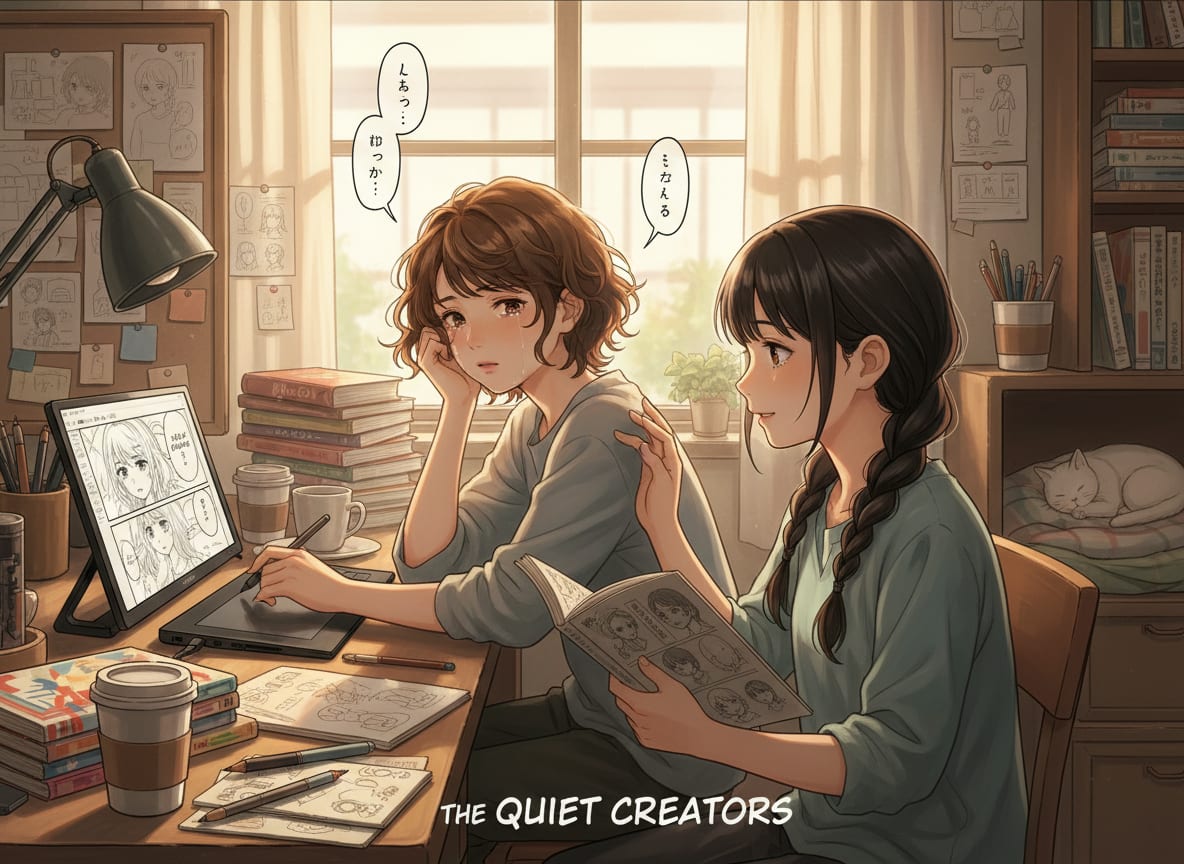
Look Back is a 143-page one-shot manga that follows the coming-of-age story of Ayumu Fujino and Kyomoto, two young girls who share a passion for drawing manga. Fujino is an outgoing, confident artist who draws a popular four-panel manga for the school newspaper, while Kyomoto is a reclusive, truant classmate with superior artistic skill who inspires both rivalry and friendship in Fujino. Their relationship develops into a creative partnership that spans their middle and high school years.
The central conflict shifts from an artistic rivalry to the characters confronting a tragic event (which mirrors the real-life Kyoto Animation arson attack) that shatters their world. Fujino is forced to grapple with guilt, loss, and the meaning of their art in the face of such a devastating reality. The story explores themes of artistic ambition, the joy and pain of creation, the power of friendship, loss, grief, and the "what if?" scenarios in life. It is also a deeply personal reflection by the author on his own creative journey and finding purpose after tragedy.
Original Release & Significance
It was originally released as a web manga on Shueisha's Shōnen Jump+ online platform on July 19, 2021. It is considered significant for its poignant, emotional storytelling that diverges from Fujimoto's usual high-action style, its exploration of the creative life, and its powerful meditation on tragedy and resilience.
Cultural Significance
The manga had a powerful emotional impact on readers, many of whom related to the themes of creation, collaboration, and loss. The story's connection to the Kyoto Animation tragedy made it all the more poignant, resonating deeply within the creative community. It was an immediate sensation upon release, garnering over 2.5 million views on its first day. It was later published in 37 countries and sold well both domestically and internationally.
Look Back has a strong legacy as a powerful standalone work (one-shot) that showcases Fujimoto's versatility. It's considered one of the great works about art and a touching tribute to lost creators. It is remembered for its emotional depth, its unique blend of personal autobiography and societal reflection, and its universal story of growing up and the lasting connections forged through shared passions.
Main Themes
The main themes include:
- Art and Creativity: The story is a love letter to creators, exploring the passion, challenges, loneliness, and raw energy involved in the artistic process
- Friendship: At its core, it is about the "undying friendship" and codependency between Fujino and Kyomoto, and how they push each other to improve and pursue their dreams
- Loss and Grief: The narrative takes a tragic turn that forces characters to confront loss, grief, and the fragility of life, exploring how art can help heal and immortalize memories
- Ambition and Dreams: The manga delves into the complexities of youthful ambition, self-doubt, and the difficult choices artists make on their path to becoming professionals
What Makes Look Back Unique
Its uniqueness lies in being a deeply personal and possibly autobiographical story for Fujimoto, using the main characters' names (Fuji-no and Kyo-moto) to hint at this. It also uses time shifts and subtle visual cues effectively to convey emotion, something that made it stand out in manga form. Unlike Fujimoto's more famous chaotic and violent works like Chainsaw Man and Fire Punch, Look Back is a quieter, more restrained character study.
Its power comes from its subtle, humanistic approach to difficult themes and its connection to a real-world tragedy (Kyoto Animation arson attack), which adds immense emotional weight and invites reflection on the value of art versus life.
2. Tatsuki Fujimoto Background: Chainsaw Man Creator & Style
Understanding Tatsuki Fujimoto's background and style is essential to appreciating Look Back's place in his body of work.
Who is Tatsuki Fujimoto?
Born in Nikaho, Akita, Japan, in the early 1990s, Fujimoto started drawing at an early age and graduated with a degree in Western painting from Tohoku University of Art and Design. He is best known for the global hits Fire Punch and Chainsaw Man, as well as the acclaimed one-shots Look Back and Goodbye, Eri.
His style is characterized by detailed and expressive character designs, a raw energy, cinematic paneling, and a unique, surrealistic approach to storytelling. He is considered a notable creator for pushing the boundaries of shōnen manga, inspiring a new wave of mangaka, and for his unconventional, emotionally impactful narratives.
Fujimoto's Relationship to Chainsaw Man
Chainsaw Man was his second major serialized work, running in Weekly Shōnen Jump from 2018 to 2020 before moving to Shōnen Jump+ for Part 2. The vision was a wild, action-packed story with dark and comedic elements. It is a global phenomenon, with over 26 million copies in print globally, multiple Harvey Awards, and a successful anime adaptation.
Look Back is tonally very different from Chainsaw Man, being a quiet, introspective drama compared to the latter's chaotic violence. The success of Chainsaw Man, however, likely gave Fujimoto the creative freedom and platform to release a more personal, experimental one-shot like Look Back.
Other Works
His other works include the serialized Fire Punch and several one-shots collected in Tatsuki Fujimoto Before Chainsaw Man and later single volumes like Goodbye, Eri and Just Listen to the Song. While many of his other major works are dark fantasies or vengeance stories, Look Back and Goodbye, Eri are more grounded, character-driven dramas that explore themes of creativity and loss in a quieter, more delicate way.
Fujimoto's Style and Approach
His art style is known for its raw, sketchy lines in the manga panels, detailed backgrounds, and highly expressive character designs that can switch between simple and incredibly detailed as needed for emotional impact. He employs cinematic paneling, unconventional narrative structures (like the shifting perspectives in Goodbye, Eri), and avoids explicit melodrama, instead allowing quiet moments and visual storytelling to land emotional punches.
He handles emotions with a sensitive yet unflinching approach, often juxtaposing moments of joy and creativity with sudden, harsh tragedy. He forces both his characters and readers to "wrestle with the values of art versus life itself." His work is distinctive for its ability to shock and move audiences, his unique voice, and his knack for creating stories that resonate on both an emotional and philosophical level.
3. Hirokazu Kore-eda Background: Director's Previous Works & Style
Understanding Hirokazu Kore-eda's acclaimed career helps explain why he's the perfect director for Look Back.
Who is Hirokazu Kore-eda?
Born in Tokyo in 1962, Kore-eda graduated from Waseda University and began his career directing prize-winning television documentaries, which heavily influenced his realistic style. His most famous films include Nobody Knows, Still Walking, Like Father, Like Son, and the Palme d'Or-winning Shoplifters.
His style is characterized by a gentle, observational, and almost documentary-like approach, focusing on the small, everyday moments of life, often using long takes and natural performances from actors, including children. He is an internationally acclaimed director, often compared to Yasujiro Ozu, known for his humanistic films that explore family, loss, and memory with subtlety and depth.
Kore-eda's Previous Works
He has directed numerous acclaimed films, including Maborosi (1995), After Life (1998), Nobody Knows (2004), Still Walking (2008), Like Father, Like Son (2013), Our Little Sister (2015), After the Storm (2016), Shoplifters (2018), Broker (2022), and Monster (2023). He has also worked on TV series like The Makanai and Asura.
He commonly explores themes of family (both traditional and found families), memory, death, loss, and social issues in contemporary Japan. He is a major award winner, including the Palme d'Or for Shoplifters (2018), the Jury Prize for Like Father, Like Son (2013), and the Best Screenplay Award for Monster (2023), all at the Cannes Film Festival. His films are universally acclaimed for their nuanced storytelling, emotional acuity, and profound humanism, receiving high critical ratings and numerous nominations.
Kore-eda's Style
Kore-eda's approach is gentle, patient, and observational, often avoiding heavy melodrama or exposition in favor of quiet moments that reveal character depth. He often develops natural performances by spending long filming periods with actors, especially children. He handles emotions with great restraint and subtlety, allowing heartbreaking moments to land without sweeping music or dramatic close-ups, which makes the emotional impact even stronger.
His films are distinctive for their quiet realism, focus on everyday details like shared meals, and the ability to find beauty and dignity in the lives of ordinary or marginalized people. While he usually writes his own screenplays, he has adapted novels and manga. When adapting, he brings his signature stillness and emotional precision to the source material.
Why Kore-eda is a Good Fit for Look Back
Kore-eda's focus on friendship, collaboration, loss, and the meaning of creation in Look Back matches seamlessly with the director's existing thematic interests in family (found family dynamic), grief, and the human condition. Both Fujimoto and Kore-eda explore profound social issues and complex emotions with depth and authenticity, making them a good match despite their different primary styles.
This collaboration is interesting because it brings together a master of subtle, live-action human drama with a manga creator known for both wild genre fare (Chainsaw Man) and deeply moving one-shots (Look Back). Kore-eda's grounded, realistic style is expected to treat the manga's sensitive and deeply personal story with the care it deserves. Kore-eda reportedly picked up the manga "without thinking" and felt the "desperate resolve" and creative urgency behind the work, resonating deeply as a fellow creator who also couldn't move forward without creating this piece.
4. Film Adaptation Info: Release Timeline, Cast & Production Details
The live-action film has been officially confirmed, with the announcement made on December 2, 2025, revealed in the pages of Shonen Jump Plus and confirmed by K2 Pictures, the production studio.
Official Confirmation
Fujimoto provided a brief, characteristic statement: "If director Kore-eda is going to film Look Back, I have nothing more to say." Kore-eda mentioned sensing "the desperate resolve behind this work" and feeling a connection as a fellow creator. The news was also confirmed by Screen Daily and other outlets.
Release Date
The film is set for a "late 2026" release. A specific day and month has not been announced yet. Industry speculation points to a possible premiere at the Cannes Film Festival in May 2026. The film will be distributed by K2 Pictures in Japan and has secured distribution in Taiwan and South Korea. Goodfellas is handling international sales outside Asia. The release format (theatrical vs. streaming) for all regions is not fully detailed yet beyond a general theatrical release plan.
Format
It is expected to be a feature-length film. The expected runtime is currently unknown, but the original manga is a single, long one-shot. It is planned for a theatrical release. No special formats have been announced.
Creative Team
The key staff members include:
- Director, Screenplay & Editor: Hirokazu Kore-eda
- Producer: Daiju Koide (K2 Pictures)
- Cinematographer/Composer: Not publicly announced yet
Kore-eda is serving as the director, screenwriter, and editor to maintain a singular vision, which is typical of his approach to filmmaking.
Cast
As of now, the cast details remain under wraps and there have been no official casting announcements. The cast for the live-action film has not been announced as of December 2025.
Promotional Materials
Two teaser visuals/posters have been unveiled. No teaser trailers or PVs have been released yet. No character photos have been released. An exhibition is scheduled for Tokyo's Azabudai Hills Gallery from January to March 2026, which may offer an early look into the visual direction. The production has used renowned still photographer Hideaki Hamada to create key visuals that emphasize core motifs, suggesting a focus on evocative, realistic visuals.
5. Adaptation Approach: How Manga Translates to Live-Action
Understanding how Kore-eda plans to adapt Look Back helps set expectations for what will be preserved and what will be transformed.
Adaptation Strategy
Hirokazu Kore-eda is taking an approach that aims to translate the essence of the story into a "lived-in reality" using live actors and real locations, rather than relying on the animated film's visual flair. He is serving as the director, screenwriter, and editor to maintain a singular vision. The film is expected to be largely faithful in narrative and tone, capturing the quiet heartbreak and artistic bond at the core of the story.
The production filmed in Nikaho City, Akita Prefecture, to capture the changing seasons as depicted in the manga's arc, suggesting a strong commitment to the source material's atmosphere. This location choice also connects to Fujimoto's own background, as he was born in Nikaho, adding another layer of authenticity to the adaptation.
Challenges of Adaptation
One challenge is translating the manga's unique visual style, with its highly detailed backgrounds and raw character sketches, into live-action without losing the artistic focus that defines the story. The sudden, abrupt tonal shift in the second half of the story is also a challenge to handle effectively in live-action.
Instead of trying to mimic the drawing style literally, the production has used renowned still photographer Hideaki Hamada to create key visuals that emphasize core motifs, suggesting a focus on evocative, realistic visuals. The biggest challenge is maintaining the emotional tone and profound impact of the manga's climax without relying on melodrama, a task uniquely suited to Kore-eda's subtle and restrained directorial style.
The biggest challenge is likely meeting the high expectations of fans who loved the original manga and the critically acclaimed 2024 anime film, which was lauded for its specific animation style.
Changes Being Made
No specific changes to the core story, characters (Fujino and Kyomoto's 13-year journey from elementary school), setting (Nikaho City), or timeline have been officially announced. The goal is to maintain the narrative arc of the original. Given it's a feature-length film and the anime was less than an hour, the live-action may include more 'slice of life' moments and quiet character interactions that build a deeper "lived-in" world.
How Kore-eda's Style Fits
Kore-eda's observational, humanistic approach perfectly matches Look Back's intimate, character-driven narrative about friendship and the creative life. He will likely handle the themes of loss, grief, and ambition with his characteristic subtlety, avoiding overt sentimentality in favor of quiet, impactful moments, much like his work in Shoplifters or Nobody Knows.
His focus on the inner lives and psychology of young characters makes him an ideal choice to capture the complexities of Fujino and Kyomoto's relationship. The main difference will be the translation from manga panels/animation to a grounded, live-action reality, using natural performances and real-world cinematography instead of the manga's expressionistic visual language.
6. Character Analysis: Main Characters, Relationships & Development
Look Back features two main characters whose relationship drives the entire narrative, exploring themes of friendship, rivalry, and creative partnership.
Ayumu Fujino (Main Character)
Ayumu Fujino (whose name inspires "Fuji-no") is an outgoing, confident elementary school student who draws a popular 4-panel manga for the school paper. She has a strong competitive streak and serves as the primary driver of their creative partnership. Fujino is motivated by the desire to be the best artist in her school, driven by the knowledge of Kyomoto's talent.
Fujino is energetic, proud, and sometimes self-doubting. Her character arc sees her go from a confident amateur with a big ego to a professional artist who learns humility and resilience after tragedy. She experiences immense personal and artistic growth, pushing past creative blocks and life-altering events, learning that shared dreams and friendship can provide strength and purpose.
Kyomoto (Main Character)
Kyomoto (whose name inspires "Kyou-moto") is a reclusive, truant classmate with anxiety who possesses a truly masterful and professional-level artistic skill, particularly in backgrounds. She is the reserved counterpart to Fujino's boldness. Kyomoto is motivated by her love for drawing and eventually, by her deep connection with Fujino and her desire to see Fujino's stories come to life.
Kyomoto is quiet, introverted, incredibly talented, but fragile. She grows from a shy shut-in to a professional artist working alongside her friend (in the "what-if" reality) or a victim of tragedy (in the main reality's timeline). What makes them unique is how their contrasting personalities and artistic talents complement each other, forming a powerful, almost symbiotic creative bond that drives the entire narrative.
Character Relationships
The core relationship is a deep, enduring, and complex friendship between Fujino and Kyomoto, built entirely on their shared passion for manga creation. Initially, there is a strong artistic rivalry, where Fujino's ego is challenged by Kyomoto's superior talent, pushing both of them to grow. There are no explicit romantic relationships in the manga; the story focuses purely on friendship and professional partnership.
The manga touches briefly on family life, showing the contrast between Fujino's supportive but hands-off parents and Kyomoto's reclusiveness, but the focus remains on the two girls. Both characters learn that art has the power to connect people across time and tragedy, and that the bonds we form and the art we create leave a lasting impact that can help us keep moving forward.
Character Development
Fujino goes from a confident amateur with a big ego to a professional artist who learns humility and resilience after tragedy. Kyomoto grows from a shy shut-in to a professional artist working alongside her friend. Both characters experience immense personal and artistic growth, pushing past creative blocks and life-altering events. They learn that shared dreams and friendship can provide strength and purpose, and that art has the power to connect people across time and tragedy.
7. Themes & Philosophy: Art, Friendship, Loss & Creativity
Look Back explores profound themes about art, friendship, loss, and creativity, making it a deeply moving and thought-provoking work.
Art and Creativity
The story is a love letter to creators, exploring the passion, challenges, loneliness, and raw energy involved in the artistic process. It explores the joy, pain, and dedication involved in the creative process; the value of art versus life; and finding purpose through creation. The story raises philosophical questions like "Why do we draw?" and does art have value when compared to the value of a human life?
The core message suggests that art is a vital part of the human experience, a way to process the world, and a legacy we leave behind. It explores the nature of talent vs. hard work, and what sacrifices are made in the name of ambition.
Friendship
At its core, it is about the "undying friendship" and codependency between Fujino and Kyomoto, and how they push each other to improve and pursue their dreams. The story raises questions about whether a relationship built on a shared passion is stronger than blood ties. True friendship involves pushing each other to grow and supporting each other through life's darkest moments.
The core message is that the bonds we form and the art we create leave a lasting impact that can help us keep moving forward. It promotes values of resilience, compassion, the importance of genuine connection, and the enduring power of creation.
Loss and Grief
The narrative takes a tragic turn that forces characters to confront loss, grief, and the fragility of life, exploring how art can help heal and immortalize memories. The story explores how we cope with random, immense loss, and can we "look back" on our lives without regret? The connection to the real-world Kyoto Animation tragedy adds immense emotional weight and invites reflection on the value of art versus life.
Ambition and Dreams
The manga delves into the complexities of youthful ambition, self-doubt, and the difficult choices artists make on their path to becoming professionals. It explores the pursuit of dreams, dealing with success and failure, and the choices made to achieve one's goals.
How Kore-eda Will Handle These Themes
Kore-eda typically approaches similar themes (family, loss, social issues) with quiet realism and profound empathy, allowing the audience to observe rather than be told how to feel. We can expect a deeply emotional but restrained film, free of cinematic clichés, that uses the "lived-in reality" of live-action to magnify the human element of the story.
His approach will likely be less stylized visually than the manga/anime, but equally (if not more) impactful emotionally due to his masterful handling of character dynamics. His sensitive direction is perfectly suited to a story that deals with such delicate and powerful themes.
8. Manga vs. Film: What to Expect, Differences & Fidelity
Understanding how the film compares to the manga helps set appropriate expectations for both longtime fans and newcomers.
How the Film Compares to the Manga
The core narrative, character arcs of Fujino and Kyomoto, major emotional beats, and the setting (Nikaho City) are expected to be preserved. The film also aims to capture the original's intimate visual tone. The format itself is a major change from a one-shot manga to a feature-length live-action film. The visual style will be grounded in reality rather than Fujimoto's raw artistic style.
The film is expected to be a faithful adaptation, with Fujimoto giving Kore-eda creative freedom due to his trust in the director. The live-action may introduce new subtle moments of daily life to build a sense of time and place that the manga's fixed panels couldn't fully capture.
What Manga Fans Can Expect
Fans can expect a powerful emotional impact, delivered through Kore-eda's subtle direction and natural performances, likely necessitating tissues. The story will be highly faithful in its core narrative and message. Fans should be prepared for a different visual experience, moving from high-energy anime/manga visuals to a more realistic, quiet cinematic approach.
Fans should be excited about a prestigious director handling a beloved story, especially given Kore-eda's track record of critically acclaimed, humanistic films. Many fans expect a deeply emotional experience, possibly even more devastating in live-action due to the grounded realism.
What Makes the Adaptation Unique
It is unique for bringing together an acclaimed arthouse director and one of the world's most popular contemporary mangakas. Kore-eda's direction adds a layer of quiet realism and emotional depth that is rarely seen in manga adaptations. It offers a new perspective on the story, emphasizing the "lived-in reality" of the characters' struggles and triumphs.
The use of a renowned still photographer to create key promotional visuals suggests a highly curated visual approach. It appeals to both manga fans and arthouse cinema fans, representing a prestigious entry into manga-to-film adaptations, moving away from the often-maligned Hollywood attempts.
9. Where to Watch: Release Info & Streaming Predictions
K2 Pictures will distribute the film in Japan, and distribution is secured in Taiwan and South Korea. Goodfellas is handling international sales outside of Asia.
Theater Release
The film is slated for a "late 2026" release. A specific date is not yet available. Industry speculation points to a possible premiere at the Cannes Film Festival in May 2026. A broader global rollout is being prepared for a late 2026 release.
International Availability
No streaming platform information has been released for the live-action film yet, unlike the anime which went to Prime Video. Information on English subtitles or dubbing is not yet available, but likely for the international release. No specific global release times have been announced.
Expected Platforms
Given the film's production by K2 Pictures, its festival potential (Cannes speculation), and Kore-eda's international acclaim, it is likely to receive broader international distribution. Potential platforms include major streaming services after its theatrical run, depending on licensing agreements. The film's prestige and emotional story make it an attractive property for international streaming and film festivals.
10. FAQ: Common Questions
Q1: When does Look Back live-action release?
A: The film is set for a "late 2026" release. A specific day and month has not been announced yet. Industry speculation points to a possible premiere at the Cannes Film Festival in May 2026.
Q2: Who is directing the film?
A: Hirokazu Kore-eda is directing, writing the screenplay, and editing the film. He is the Palme d'Or-winning director known for films like Shoplifters, Nobody Knows, and Like Father, Like Son.
Q3: Who is Tatsuki Fujimoto?
A: Tatsuki Fujimoto is the creator of Chainsaw Man, Fire Punch, and the acclaimed one-shots Look Back and Goodbye, Eri. He is known for pushing the boundaries of shōnen manga with emotionally impactful narratives.
Q4: What is Look Back about?
A: Look Back is a 143-page one-shot manga about two young girls, Ayumu Fujino and Kyomoto, who share a passion for drawing manga. Their friendship and creative partnership is tested by a tragic event that forces them to confront loss, grief, and the meaning of art.
Q5: Who is in the cast?
A: As of December 2025, the cast details remain under wraps and there have been no official casting announcements.
Q6: How faithful will the adaptation be?
A: The film is expected to be largely faithful in narrative and tone, capturing the quiet heartbreak and artistic bond at the core of the story. Fujimoto has given Kore-eda creative freedom due to his trust in the director.
Q7: Where was it filmed?
A: The production filmed in Nikaho City, Akita Prefecture, to capture the changing seasons as depicted in the manga's arc. This location also connects to Fujimoto's own background, as he was born in Nikaho.
Q8: How does it relate to Chainsaw Man?
A: Both Look Back and Chainsaw Man explore characters dealing with intense emotions and the complexities of human connection. However, Chainsaw Man is a chaotic, supernatural action story, while Look Back is a quiet, grounded drama. Look Back's success showcased Fujimoto's versatility to a global audience.
Q9: Where can I watch it?
A: The film will be distributed by K2 Pictures in Japan, with distribution secured in Taiwan and South Korea. Goodfellas is handling international sales outside of Asia. No streaming platform information has been released yet.
Q10: What makes this adaptation special?
A: It brings together an acclaimed arthouse director (Kore-eda) and one of the world's most popular contemporary mangakas (Fujimoto), representing a prestigious entry into manga-to-film adaptations with a focus on emotional depth and humanistic storytelling.
11. Future Outlook: Film Reception & Fujimoto Adaptations
Look Back live-action represents a significant moment for both Tatsuki Fujimoto's career and manga-to-film adaptations, potentially influencing how emotional manga stories are adapted in the future.
Film Reception Expectations
Fans are excited to see how Kore-eda handles the intimate story and the tonal shift. Many fans expect a deeply emotional experience, possibly even more devastating in live-action due to the grounded realism. The film has broad appeal for those who appreciate human drama, coming-of-age stories, and thoughtful discussions about art.
It is significant as a collaboration between two major Japanese creators, blending popular manga with high-brow cinema. The film's potential for festival recognition (Cannes speculation) and critical acclaim could elevate the status of manga-to-film adaptations in the international film community.
Cultural Significance
It further solidifies Fujimoto's status as a creator capable of diverse, impactful storytelling beyond action-packed series. It represents a prestigious entry into manga-to-film adaptations, moving away from the often-maligned Hollywood attempts. The story's connection to the real-world Kyoto Animation tragedy gives it immense real-world gravity, making it a touching tribute to lost creators.
Potential for Future Fujimoto Adaptations
Look Back's success as both a manga and anime, combined with this prestigious live-action adaptation, could pave the way for more Fujimoto works to be adapted. However, each of his works has a unique tone and style, so future adaptations would need to be carefully matched with appropriate directors and creative teams.
Key Emotional Moments
Key scenes from the manga include the first time Kyomoto comes out of her room, the intense drawing sessions, the tragic news of the attack on the art school, and the final "what-if" sequence where Fujino returns to the empty room. These moments are expected to be preserved in the film, with Kore-eda's subtle direction likely making them even more impactful in live-action.
Conclusion: Why Look Back Live-Action Matters
Look Back live-action represents a landmark collaboration between two of Japan's most acclaimed creators: Tatsuki Fujimoto, the creator of Chainsaw Man, and Hirokazu Kore-eda, the Palme d'Or-winning director. By bringing together a master of subtle, live-action human drama with a manga creator known for emotionally impactful narratives, this adaptation promises to treat Fujimoto's sensitive and deeply personal story with the care it deserves.
Whether you're a longtime fan of Look Back's emotional story or new to Tatsuki Fujimoto's work, this film offers an opportunity to experience one of manga's most powerful stories about art, friendship, and loss through the lens of one of cinema's most acclaimed directors. With its exploration of creativity, the bonds we form through shared passions, and how we cope with tragedy, this adaptation promises to be both emotionally devastating and profoundly moving.
Mark your calendars for late 2026 and prepare for a film that honors the original manga while bringing it to life in a new, powerful way. This is Look Back as it was meant to be seen—through the eyes of a master filmmaker who understands the delicate balance between art and life, friendship and loss, and the enduring power of creation. The legendary collaboration is here, and it's ready to break hearts and inspire audiences worldwide.