
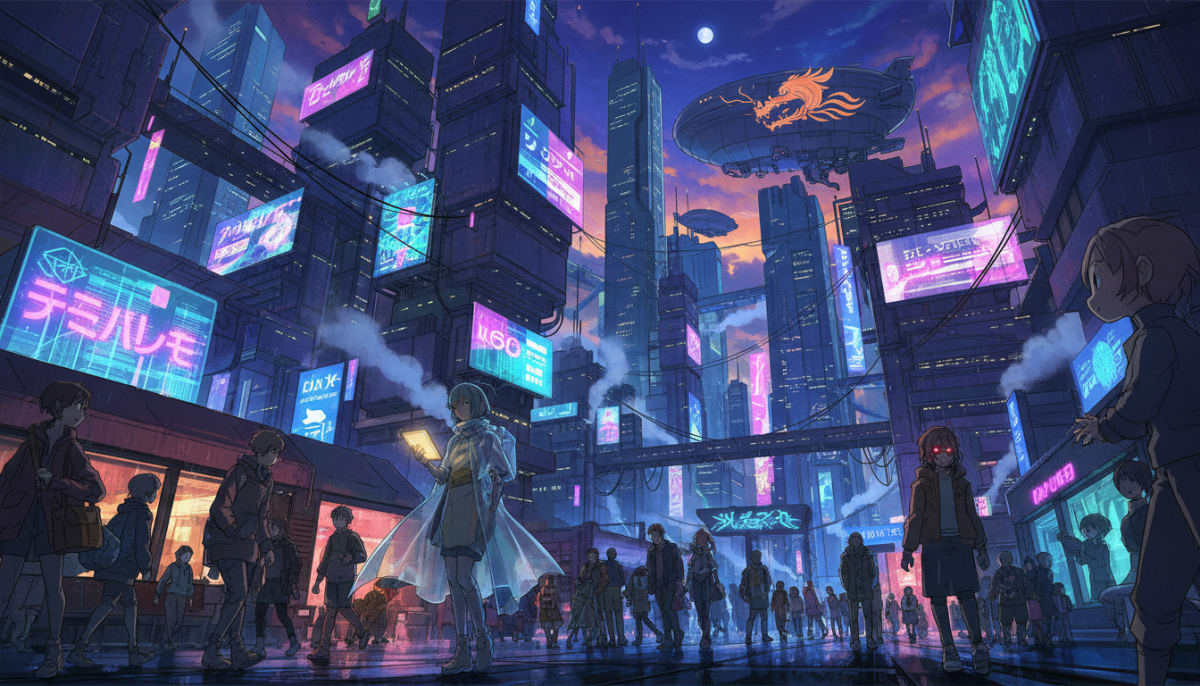
Ghost in the Shell 2026 TV Series: Complete Guide to Science Saru's New Adaptation
Ghost in the Shell gets a fresh take in 2026 from Science Saru, bringing the cyberpunk classic to a new generation. The upcoming TV series, tentatively titled The Ghost in the Shell, has been officially confirmed for a 2026 release, with a creative vision to return to the style and tone of the original manga by Masamune Shirow. This comprehensive 3,500+ word guide covers everything you need to know about the Ghost in the Shell 2026 TV series, from the franchise's legendary history to detailed production information, character analysis, and how this adaptation compares to previous versions.
Whether you're a longtime fan of the franchise or new to the world of Major Motoko Kusanagi and Public Security Section 9, this guide provides essential context, detailed previews, and expert insights into what makes this adaptation special. We'll explore the franchise's impact on cyberpunk media, Science Saru's unique animation style, the confirmed production details, and why this series represents a "second generation" of adaptations that returns to the source material's roots. This is your complete resource for understanding why Ghost in the Shell 2026 is being called one of the most anticipated anime revivals of the decade.
Why Ghost in the Shell 2026 Matters: A Cyberpunk Classic Returns
Ghost in the Shell is one of the most influential cyberpunk works ever created, exploring transhumanism and what it means to be human in an increasingly digital world. Its visual style and themes have impacted numerous works in the cyberpunk genre, including The Matrix film series and other prominent anime and films. The 2026 TV series represents a "second generation" of adaptations that goes back to the roots of the franchise, potentially redefining how the original manga is perceived.
For longtime fans, this adaptation offers a return to the original manga's style and tone, including the more dynamic character expressions and balance of serious philosophical themes with a "punk" and even sometimes humorous edge. For newcomers, the series provides an accessible entry point to one of cyberpunk's foundational works, with Science Saru's acclaimed animation bringing the story to life in a visually stunning way. This is more than just another adaptation—it's a revival that honors the source material while bringing it to a new generation.
Quick Navigation
Click to jump directly to a section:
- 1. Franchise History: Original Manga & Previous Adaptations
- 2. 2026 Series Info: Studio, Release & Production Details
- 3. Plot & Direction: Story Overview & Creative Vision
- 4. Character Designs: Motoko Kusanagi & Section 9
- 5. Science Saru's Style: Studio Background & Animation Approach
- 6. Cyberpunk Themes: Identity, Technology & Humanity in 2026
- 7. Comparison to Previous Adaptations: How It Differs
- 8. Animation & Production: Visual Style & Quality Expectations
- 9. Where to Watch: Platform Predictions & Availability
- 10. FAQ: Common Questions
- 11. Future Outlook: Series Potential & Franchise Future
1. Franchise History: Original Manga & Previous Adaptations
Before diving into the 2026 series, it's essential to understand the rich history of Ghost in the Shell and how previous adaptations have shaped the franchise's legacy.
The Original Manga
Created by Masamune Shirow, the manga was serialized from 1989 to 1990. It is a cyberpunk story set in mid-21st century Japan, following Public Security Section 9, a counter-cyberterrorist organization, led by Major Motoko Kusanagi. The plot involves investigating various cybercrimes, most notably the "Puppet Master" hacker, which leads to existential questions about humanity, consciousness, and identity in a world where cybernetics are commonplace.
It's considered a cyberpunk classic for its detailed world-building, intricate technological concepts, and philosophical depth, influencing many subsequent works in the genre. The manga features a more dynamic, expressive art style with a balance of serious philosophical themes and a "punk" edge, sometimes even humorous, which differs from the more consistently somber tone of later film adaptations.
The 1995 Film: An Iconic Adaptation
Directed by Mamoru Oshii, the 1995 film focused on the "Puppet Master" storyline with a more serious, philosophical tone than the manga, and is widely considered an iconic and influential piece of anime cinema. The film's stark, photorealistic world design and contemplative pacing created a distinct visual and narrative identity that has become synonymous with Ghost in the Shell for many fans.
The film's approach was Oshii's auteur vision, emphasizing the philosophical questions about identity and consciousness while maintaining a consistently somber atmosphere. This adaptation, along with its sequel Innocence, established a continuity that differs from both the manga and other adaptations.
Stand Alone Complex: A New Continuity
This TV series presented a new continuity, independent from the manga and films, focusing on different story arcs across two seasons and a TV film, known for its political intrigue and world-building. Stand Alone Complex used a mix of episodic "stand alone" stories and overarching "complex" arcs, featuring the full Section 9 team and their counter-terrorism operations.
The series maintained a more uniform, detailed animation style and focused on procedural storytelling and political themes. It also introduced the Tachikoma tanks (different from the manga's Fuchikomas) and developed the relationships between Section 9 members in ways that differed from the source material.
Arise: A Prequel Series
Arise was a series of OVAs (original video animations) and a TV series that served as a prequel, exploring the origins of Section 9 members with yet another distinct art style and continuity. The series also aimed for a more serious tone, differing from the expected lighter, more "punk" tone of the Science Saru version. Arise provided a different perspective on the characters' backgrounds while maintaining the franchise's core themes.
Other Adaptations
The franchise also includes:
- 2017 Live-action film: A controversial American-produced live-action film starring Scarlett Johansson that received mixed reviews and faced "whitewashing" accusations for casting a non-Asian actress in the lead role.
- SAC_2045: A fully 3DCG ONA (original net animation) series released on Netflix, which also had mixed reactions due to its animation style.
The Franchise's Legacy
Ghost in the Shell is highly influential for its exploration of transhumanism and what it means to be human in an increasingly digital world. Its visual style and themes have impacted numerous works in the cyberpunk genre, including The Matrix film series and other prominent anime and films. The franchise has several distinct, largely separate continuities, each offering a different interpretation of Shirow's original vision.
2. 2026 Series Info: Studio, Release & Production Details
The Ghost in the Shell 2026 TV series was officially announced on May 25, 2024, by the official social media accounts of the franchise and the studio. A special trailer and teaser visual were released with the announcement, and more information will be available on the official global site.
Release Information
The series is slated for a 2026 premiere, scheduled to air on the "Ka-Anival!!" programming block on Kansai TV, Fuji TV, and their affiliates in Japan. No specific month or day has been announced yet. Only the year 2026 has been confirmed for the premiere date. Specific premiere times (JST) and international simulcast times will be announced closer to the release date.
Animation Studio: Science Saru
Science Saru (known for Keep Your Hands Off Eizouken!, Inu-Oh, and Scott Pilgrim Takes Off) is producing the series in a production committee with Bandai Namco Filmworks, Kodansha, and Production I.G. Their distinctive, often hand-drawn, visual style and acclaimed previous works suggest a fresh take that will visually align more with the original manga.
Science Saru is an award-winning animation studio founded by director Masaaki Yuasa and producer Eunyoung Choi in 2013, known for their innovative and experimental approach to animation. They are acclaimed for their distinctive "digitally assisted animation" style that combines hand-drawn key animation with digital in-betweening and coloring using software like Adobe Animate.
Confirmed Production Staff
The key staff members have been confirmed:
- Director: Moko-chan (who served as an assistant director on Dandadan)
- Series Composition/Script: Toh EnJoe (Godzilla Singular Point, Space Dandy)
- Character Designer/Chief Animation Director: Shuhei Handa (Scott Pilgrim Takes Off, Spriggan)
- Title Logo Designer: Hajime Sorayama
Voice Cast
As of now, specific voice actors (seiyuu) have not been officially announced for the 2026 series. This information will likely be revealed closer to the premiere date.
Promotional Materials
Teaser trailers (PVs) and key visuals have been released. The visuals released so far suggest a visual style that is closer to Masamune Shirow's original manga, featuring the Fuchikomas (the original tank designs from the manga) and a more expressive Motoko Kusanagi. The character designs by Shuhei Handa aim for a visual style reminiscent of the original manga, with early visuals showing a hand-drawn look with potentially more exaggerated, expressive faces compared to other anime iterations.
Episode Count
The expected episode count or the length of the series (e.g., single or split cour) has not been announced. More information will be available as the premiere date approaches.
3. Plot & Direction: Story Overview & Creative Vision
The plot is expected to adapt the original 1989-1991 manga by Masamune Shirow. It will follow Major Motoko Kusanagi and Public Security Section 9 as they combat cyberterrorism and encounter a major hacker, the Puppet Master. It aims to capture the philosophical depth and the specific, sometimes comedic, tone of the original source material.
The Main Story
The series will follow the original manga's narrative, focusing on Public Security Section 9's counter-cyberterrorist operations. The primary antagonist is expected to be the "Puppet Master" hacker, following the original manga's main storyline. The story will explore the existential questions about humanity, consciousness, and identity that arise when investigating cybercrimes in a world where cybernetics are commonplace.
The creative vision is to faithfully depict the manga's style, which includes its more dynamic character expressions and a balance of serious philosophical themes with a "punk" and even sometimes humorous edge, a departure from the consistently somber tone of the 1995 film.
Relation to Previous Adaptations
The series will be a new adaptation of the original manga, a "second generation" of adaptations as described by the creator. It is a standalone continuity that goes back to the source material, differentiating itself from the Oshii films or Stand Alone Complex versions. It is designed to be accessible to newcomers while offering a fresh take for long-time fans.
Unlike previous adaptations that created their own continuities, this series returns directly to Shirow's original work, promising a more faithful representation of the manga's tone, style, and narrative approach.
Creative Direction
The creative vision is to faithfully depict the manga's style, which includes its more dynamic character expressions and a balance of serious philosophical themes with a "punk" and even sometimes humorous edge. This represents a significant departure from the consistently somber tone of the 1995 film, returning to the source material's original spirit.
Expectations are high for an anime that balances action, intricate world-building, and Shirow's complex themes of identity and consciousness, all within Science Saru's acclaimed animation style. The series aims to capture both the philosophical depth and the specific, sometimes comedic, tone of the original source material.
4. Character Designs: Motoko Kusanagi & Section 9
The character designs for the 2026 series aim to return to the original manga's visual style, featuring more expressive and dynamic characterizations compared to previous anime adaptations.
Motoko Kusanagi: The Major
Motoko Kusanagi is the main protagonist, a fully cybernetic police operative and the leader of Public Security Section 9. In this adaptation, she is expected to be portrayed closer to her manga counterpart, which is described as more "sarcastic, greedy, catty, [and] lovable" than her often straight-laced, contemplative film counterpart.
This represents a significant shift from previous adaptations, particularly the 1995 film, where Motoko was portrayed as more serious and philosophical. The manga version of Motoko has more personality and expressiveness, which Science Saru's animation style is well-suited to capture. Early visuals show a more expressive Motoko Kusanagi, aligning with the original manga's character design.
Section 9 Members
Specific character details for the other members are limited, but teasers have shown designs for Aramaki ("Old Ape Face") and Batou that are closer to the original manga style. The full Section 9 team is expected to appear, including:
- Batou: The cyborg operative and Motoko's trusted partner
- Aramaki: The chief of Section 9, known as "Old Ape Face"
- Togusa: The least cyberized member of the team, often serving as the "everyman" perspective
- Other Section 9 members: The full team from the manga
Character Design Style
The character designs are by Shuhei Handa and aim for a visual style reminiscent of the original manga. Early visuals show a hand-drawn look with potentially more exaggerated, expressive faces compared to other anime iterations. This approach aligns with Science Saru's style and the original manga's more dynamic character expressions.
The designs maintain the cyberpunk aesthetic through detailed world-building and character designs closer to the original manga (e.g., Fuchikomas instead of Tachikomas), suggesting a strong emphasis on the "punk" element of the genre. The visual style is closer to Masamune Shirow's original manga, featuring the Fuchikomas and a more expressive Motoko Kusanagi.
Visual Comparison
The character designs will differ from previous adaptations in several ways:
- More expressive faces: Compared to the stoic, contemplative expressions of the 1995 film
- Manga-accurate designs: Closer to Shirow's original character designs
- Dynamic expressions: Science Saru's style allows for more exaggerated, expressive characterizations
- Fuchikomas: The original tank designs from the manga, rather than the Tachikomas from Stand Alone Complex
5. Science Saru's Style: Studio Background & Animation Approach
Understanding Science Saru's unique approach to animation is essential to understanding what makes this adaptation special.
Science Saru's Background
Science Saru is an award-winning animation studio founded by director Masaaki Yuasa and producer Eunyoung Choi in 2013, known for their innovative and experimental approach to animation. Their most famous works include the feature films Inu-Oh and Lu Over the Wall, and TV series such as Keep Your Hands Off Eizouken! and DEVILMAN crybaby.
They are acclaimed for their distinctive "digitally assisted animation" style that combines hand-drawn key animation with digital in-betweening and coloring using software like Adobe Animate. This hybrid method allows for highly fluid motion, dynamic perspectives, and rapid production with a smaller team, resulting in visuals that can range from surreal and stylized to grounded and expressive.
Artistic Style
Science Saru typically works in diverse genres, often handling mature, introspective themes while blending in quirky humor and surrealism. Their style is characterized by:
- Fluid animation: Highly dynamic motion and expressive character movement
- Loose linework: A distinctive hand-drawn aesthetic that feels organic and expressive
- Dynamic perspectives: Creative camera work and visual storytelling
- Digital efficiency: Using digital tools to enhance traditional animation techniques
How Science Saru's Style Fits Ghost in the Shell
The studio's style is considered a perfect fit for the original manga, as both the manga and Science Saru's typical work lean into a more surreal and expressive aesthetic compared to previous anime adaptations. Science Saru's approach will enable more dynamic character expressions and a visual charm present in Masamune Shirow's original work, which was largely absent in the more serious, somber films.
It will depart from the starker, photorealistic world design of the 1995 film and the detailed but more uniform style of Stand Alone Complex. They maintain the cyberpunk aesthetic through detailed world-building and character designs closer to the original manga (e.g., Fuchikomas instead of Tachikomas), suggesting a strong emphasis on the "punk" element of the genre.
What to Expect
We can expect a faithful adaptation of the manga that blends the studio's technical prowess with the source material's creative vision. Their approach is director-led and prioritizes authentic storytelling, likely bringing a fresh balance of action, philosophical depth, and the original manga's specific, sometimes humorous, tone.
The studio is known for handling complex, mature themes like identity and loss through innovative staging and emotional layering, which bodes well for a series fundamentally about consciousness. The animation is expected to be superb, leveraging their digital tools for fluid and expressive sequences as seen in works like Dandadan and Scott Pilgrim Takes Off.
6. Cyberpunk Themes: Identity, Technology & Humanity in 2026
Ghost in the Shell is a foundational cyberpunk work that explores "high tech, low life" scenarios and the philosophical implications of advanced technology. These themes have become even more prescient in the current technological era.
Identity: The Core Theme
The core theme of identity is central to Ghost in the Shell, particularly regarding what defines a person when their body is entirely cybernetic and their memories can be hacked or altered. The series raises fundamental questions: If memories can be fabricated, what makes an identity real or meaningful? At what point does an artificial intelligence become a sentient being with rights?
Major Motoko Kusanagi, who has a full-body prosthesis, is placed in situations that challenge her understanding of her own existence. Her ultimate choice to merge with the Puppet Master AI represents transcending her physical form to evolve into a new entity within the network, exploring the limits of the "ghost" and "shell" duality.
Technology and Society
The series explores the pervasive integration of technology (cyberbrains, prosthetics) into daily life and society, blurring the lines between human and machine. It delves into political intrigue, corporate control, mass surveillance, and government manipulation within a hyper-connected, technologically advanced society.
In 2026, these themes have become even more relevant. The ideas of cyberbrains being hacked parallel modern concerns with data breaches, AI-driven disinformation, and brain-computer interfaces like Neuralink. Real-world debates about AI sentience, personhood, deepfakes, and the pervasive nature of smart devices mirror the world envisioned in the manga decades ago.
Humanity and Consciousness
The series raises the question of what constitutes a "human" and the nature of the soul ("ghost") within a synthetic body ("shell"). Does a fully cybernetic body diminish one's humanity, or is consciousness independent of the physical form? These philosophical questions remain central to the franchise and are more relevant than ever as technology advances.
The franchise's questions about identity in a digital age resonate strongly today as personal data and narrative control are under threat in an age of virtual reality and AI-generated media. The series will incorporate references to real-world technology concerns like brain-computer interfaces, AI personhood, and data privacy, reflecting contemporary societal anxieties.
The "Ghost" and "Shell" Concept
The "ghost" refers to the human soul, consciousness, or spirit, while the "shell" is the physical, often cybernetic, body or prosthetic that houses it. The story explores this duality by placing Major Motoko Kusanagi, who has a full-body prosthesis, in situations that challenge her understanding of her own existence.
Her ultimate choice to merge with the Puppet Master AI represents transcending her physical form to evolve into a new entity within the network, exploring the limits of this duality. This concept is central to understanding the series' philosophical exploration of what it means to be human in a world where the boundaries between human and machine are increasingly blurred.
Relevance in 2026
These themes have become even more prescient in the current technological era. The ideas of cyberbrains being hacked parallel modern concerns with data breaches, AI-driven disinformation, and brain-computer interfaces like Neuralink. Real-world debates about AI sentience, personhood, deepfakes, and the pervasive nature of smart devices mirror the world envisioned in the manga decades ago.
The franchise's questions about identity in a digital age resonate strongly today as personal data and narrative control are under threat in an age of virtual reality and AI-generated media. How can individuals protest or maintain anonymity in a world of total surveillance and technological control? These questions are more relevant than ever.
7. Comparison to Previous Adaptations: How It Differs
Understanding how the 2026 series compares to previous adaptations helps set expectations and highlights what makes this version unique.
Comparison to the 1995 Film
Differences: The 2026 series will be more faithful to the original manga, incorporating the manga's humor and dynamic character expressions, while the 1995 film was notably more serious, somber, and philosophical in tone. The film was Oshii's auteur vision, while the 2026 series is a studio-driven adaptation with a directive to be closer to the original source material's spirit.
Similarities: Both adaptations use the "Puppet Master" storyline as a central narrative device and explore deep philosophical questions about identity, consciousness, and humanity. Both maintain the core cyberpunk aesthetic and world-building.
Approach: The film emphasized contemplative pacing and philosophical depth, while the 2026 series aims to balance these elements with the manga's more dynamic, expressive style and occasional humor.
Comparison to Stand Alone Complex
Differences: SAC was its own continuity with a focus on political procedural and serial storytelling across two seasons. The 2026 series will adapt the manga directly, focusing on the original "Puppet Master" arc. SAC used a mix of episodic "stand alone" stories and overarching "complex" arcs, while the 2026 series structure is yet unknown but presumed to follow the manga's flow more closely.
Similarities: Both feature the full Section 9 team and their counter-terrorism operations. Both maintain the franchise's core themes and cyberpunk aesthetic.
Visual Differences: SAC used a more uniform, detailed animation style, while the 2026 series will use Science Saru's more expressive, hand-drawn aesthetic. SAC featured Tachikomas, while the 2026 series will feature the original Fuchikomas from the manga.
Comparison to Arise
Differences: Arise was a prequel series exploring the origins of the team with a distinct art style and tone. The 2026 series is not a prequel but an adaptation of the main manga story. Arise also aimed for a more serious tone, differing from the expected lighter, more "punk" tone of the Science Saru version.
Approach: Arise provided backstory and character origins, while the 2026 series returns to the original manga's main narrative, focusing on the "Puppet Master" storyline and the core themes of identity and consciousness.
What Makes the 2026 Series Unique
The primary unique factor is that this will be the first adaptation to share its artistic style and tone with the original manga, including the Fuchikoma tanks and a more expressive Major Kusanagi. Science Saru's hybrid animation techniques will bring a modern, fluid visual experience while staying true to the source material's "punk" energy that previous adaptations largely omitted.
This adaptation represents a "second generation" of adaptations that goes back to the roots of the franchise, potentially redefining how the original manga is perceived. It showcases Science Saru's growing influence and ability to handle iconic intellectual property while maintaining their distinctive artistic vision.
8. Animation & Production: Visual Style & Quality Expectations
Given Science Saru's track record with acclaimed works like Inu-Oh and DEVILMAN crybaby, the production quality is expected to be very high, with a strong focus on artistic vision over formulaic production.
Animation Style
The style is "digitally assisted" hand-drawn animation, which allows for loose linework, dynamic camera movements, and efficiency in production. This results in expressive visuals that capture the feel of the original manga. The hybrid method combines hand-drawn key animation with digital in-betweening and coloring using software like Adobe Animate.
This approach allows for creative and flexible use of digital elements and potentially some CGI elements where appropriate for the world's technology. The animation is expected to be superb, leveraging their digital tools for fluid and expressive sequences as seen in works like Dandadan and Scott Pilgrim Takes Off.
Visual Approach
The visual style will be closer to Masamune Shirow's original manga, featuring the Fuchikomas and a more expressive Motoko Kusanagi. The character designs by Shuhei Handa aim for a visual style reminiscent of the original manga, with early visuals showing a hand-drawn look with potentially more exaggerated, expressive faces compared to other anime iterations.
It will depart from the starker, photorealistic world design of the 1995 film and the detailed but more uniform style of Stand Alone Complex. The cyberpunk aesthetic is maintained through detailed world-building and character designs closer to the original manga, suggesting a strong emphasis on the "punk" element of the genre.
Production Quality
Given Science Saru's track record with acclaimed works like Inu-Oh and DEVILMAN crybaby, the production quality is expected to be very high, with a strong focus on artistic vision over formulaic production. The studio's director-led approach prioritizes authentic storytelling, likely bringing a fresh balance of action, philosophical depth, and the original manga's specific, sometimes humorous, tone.
9. Where to Watch: Platform Predictions & Availability
The series is scheduled to premiere on the "Ka-Anival!!" programming block on Kansai TV, Fuji TV, and their affiliates in Japan. International streaming information, including specific platforms (e.g., Netflix, Crunchyroll), regional availability, simulcast details, and English dub availability, has not been officially confirmed yet.
Expected Streaming Platforms
Given the franchise's international popularity and the involvement of major production companies (Bandai Namco Filmworks, Kodansha, Production I.G), the series is likely to be available on major streaming platforms. Potential platforms include:
- Netflix: Has previously streamed SAC_2045 and other Ghost in the Shell content
- Crunchyroll: Often streams major anime series, especially those with international appeal
- Other platforms: Depending on regional licensing agreements
Simulcast Expectations
If the series follows typical patterns for major anime releases, it will likely be available as a simulcast, meaning episodes will be available within hours of the Japanese broadcast. English subtitles should be available immediately, with potential for additional language options.
English Dub
An English dub is likely, though it may be released after the subtitled version. Given the franchise's history and international popularity, an English dub is almost certain, though the specific release schedule has not been confirmed.
10. FAQ: Common Questions
Q1: When does Ghost in the Shell 2026 premiere?
A: The series is slated for a 2026 premiere, scheduled to air on the "Ka-Anival!!" programming block on Kansai TV, Fuji TV, and their affiliates in Japan. No specific month or day has been announced yet.
Q2: Who is animating the series?
A: Science Saru is producing the series in a production committee with Bandai Namco Filmworks, Kodansha, and Production I.G. The director is Moko-chan, with series composition by Toh EnJoe and character design by Shuhei Handa.
Q3: How does it compare to the 1995 film?
A: The 2026 series will be more faithful to the original manga, incorporating the manga's humor and dynamic character expressions, while the 1995 film was notably more serious, somber, and philosophical in tone.
Q4: Will it follow the manga or previous adaptations?
A: The series will be a new adaptation of the original manga, a "second generation" of adaptations that goes back to the source material. It is a standalone continuity that differentiates itself from the Oshii films or Stand Alone Complex versions.
Q5: Who is Motoko Kusanagi in this adaptation?
A: Motoko is expected to be portrayed closer to her manga counterpart, which is described as more "sarcastic, greedy, catty, [and] lovable" than her often straight-laced, contemplative film counterpart.
Q6: What are Fuchikomas?
A: Fuchikomas are the original tank designs from the manga, which will appear in this adaptation. They differ from the Tachikomas featured in Stand Alone Complex.
Q7: Where can I watch it?
A: International streaming information has not been officially confirmed yet. The series will premiere on Japanese TV in 2026, with international streaming details to be announced closer to the release date.
Q8: Will there be an English dub?
A: An English dub is likely, though it may be released after the subtitled version. Specific details have not been confirmed yet.
Q9: How many episodes will it have?
A: The expected episode count or the length of the series (e.g., single or split cour) has not been announced. More information will be available as the premiere date approaches.
Q10: What makes this adaptation different?
A: This will be the first adaptation to share its artistic style and tone with the original manga, including the Fuchikomas and a more expressive Major Kusanagi. Science Saru's hybrid animation techniques will bring a modern, fluid visual experience while staying true to the source material's "punk" energy.
11. Future Outlook: Series Potential & Franchise Future
The Ghost in the Shell 2026 TV series represents a significant moment for the franchise, potentially redefining how the original manga is perceived and bringing the cyberpunk classic to a new generation.
Series Potential
The series has the potential to attract both long-time fans and newcomers. Its appeal lies in the timeless and increasingly relevant cyberpunk themes, the unique visual style of Science Saru, and a "back to basics" approach that promises something different from previous versions.
Fan reactions are a mix of excitement and cautious optimism. Many fans are excited about Science Saru's involvement and the return to the original manga's style, especially for a more "sarcastic, catty" Motoko. Some longtime fans of the Oshii films are worried about the shift in tone, but the general consensus is positive, hoping for a faithful and high-quality adaptation.
Franchise Future
This adaptation represents a "second generation" of adaptations that goes back to the roots of the franchise, potentially redefining how the original manga is perceived. It showcases Science Saru's growing influence and ability to handle iconic intellectual property while maintaining their distinctive artistic vision.
The series' success could influence future adaptations of the franchise, potentially leading to more manga-faithful interpretations or exploring other storylines from Shirow's original work. The franchise's timeless themes ensure it will remain relevant as technology continues to advance.
Cultural Impact
The series will incorporate references to real-world technology concerns like brain-computer interfaces, AI personhood, and data privacy, reflecting contemporary societal anxieties. As these technologies become more prevalent, Ghost in the Shell's exploration of their implications becomes increasingly relevant.
The franchise's questions about identity in a digital age resonate strongly today as personal data and narrative control are under threat in an age of virtual reality and AI-generated media. This adaptation has the opportunity to introduce these themes to a new generation while honoring the original work's legacy.
Conclusion: Why Ghost in the Shell 2026 Matters
Ghost in the Shell 2026 represents a significant moment for one of cyberpunk's most influential franchises. By returning to the original manga's style and tone, Science Saru's adaptation promises to offer something fresh while honoring the source material's legacy. The combination of the studio's acclaimed animation style, the original manga's dynamic storytelling, and the franchise's timeless themes creates a series with tremendous potential.
Whether you're a longtime fan of the franchise or new to the world of Major Motoko Kusanagi and Public Security Section 9, the 2026 series offers an opportunity to experience one of cyberpunk's foundational works in a new way. With its return to the manga's more expressive, dynamic style and Science Saru's innovative animation approach, this adaptation promises to be both faithful to the source material and visually stunning.
Mark your calendars for 2026 and prepare for a cyberpunk revival that honors the past while looking toward the future. This is Ghost in the Shell as it was meant to be seen—dynamic, expressive, and true to Masamune Shirow's original vision. The Major is back, and she's never looked better.