
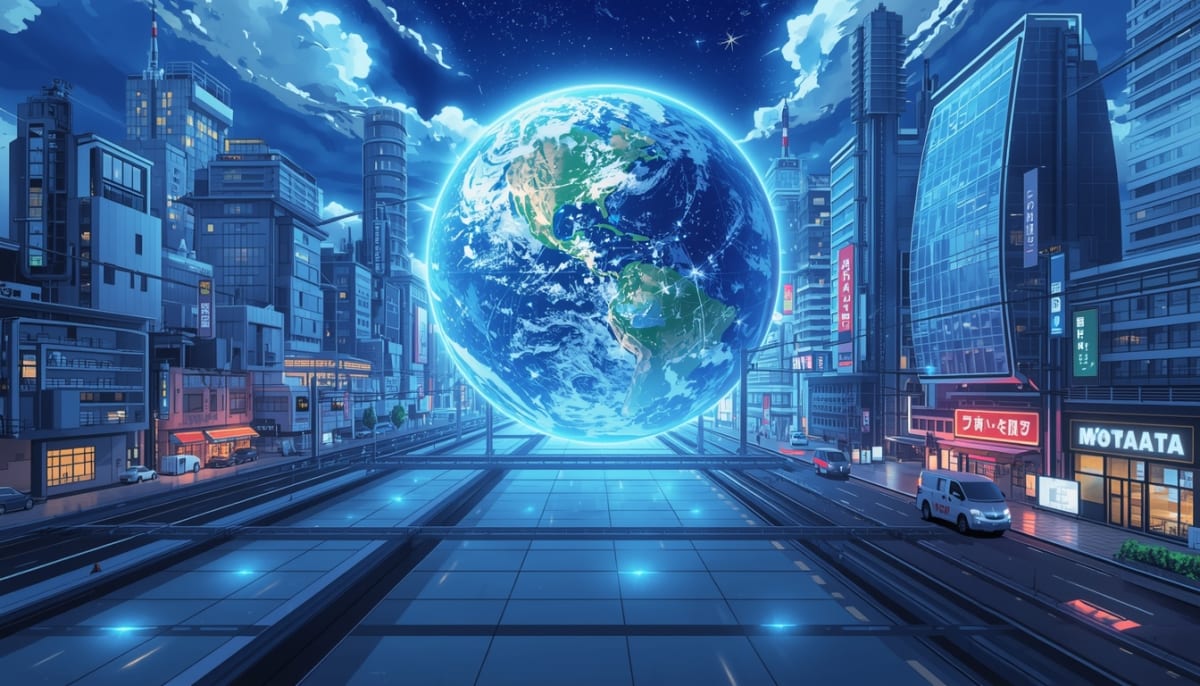
Anime Predictions 2027-2030: Future Trends, Technology & Industry Evolution
Predicting the future of anime is vital for an industry transitioning from a niche medium to a $60+ billion global cultural force by 2030. In 2025, the industry is already undergoing a digital transformation, where advanced technologies like AI and VR are shifting from experimental tools to core production and consumption pillars. This comprehensive guide explores how anime will evolve from 2027-2030, covering technology, genres, industry structure, streaming, content, global markets, and the challenges ahead.
As the industry approaches 2030, it faces a paradox: record-breaking global revenue alongside systemic internal pressures. The transition from traditional hand-drawn methods to a tech-heavy, globally distributed workflow will define the next five years. Understanding these predictions helps stakeholders prepare for critical shifts and opportunities.
Introduction: The Strategic Importance of Predictions
Predicting the future of anime allows stakeholders to prepare for several critical shifts:
Industry Planning: Studios use forecasts to manage rising production costs and address the acute shortage of skilled animators. Understanding future trends enables better resource allocation and strategic planning.
Technology Impact: Early adoption of tools like AI-assisted in-betweening and real-time rendering is essential for maintaining global competitiveness. Studios that embrace technology early will have significant advantages.
Market Shifts: Identifying high-growth regions like India (10.5% CAGR) or the Middle East helps distributors tailor localization and licensing strategies. Market intelligence drives successful global expansion.
Anime Evolution in 2025–2026
In 2025, the industry is focused on AnimeTech—the integration of machine learning and CGI to streamline workflows.
Market Growth: The global market is valued at approximately $37.7 billion in 2025, with internet distribution growing at an accelerated rate of 13.8%. This growth demonstrates the industry's robust health and expansion potential.
Global Expansion: International revenue has overtaken domestic Japanese sales, making the medium a primary tool for "soft power" and cultural diplomacy. Anime has become a global cultural export.
Recent Developments: Collaborations between studios and gaming giants (e.g., Toei Animation and Epic Games) are creating cross-media ecosystems. These partnerships represent the future of entertainment convergence.
Significance of the 2027–2030 Period
This window represents a "maturity phase" where experimental tech becomes standard:
Economic Milestones: The market is projected to reach $60–$63 billion by 2030. This growth represents a fundamental shift in the industry's scale and importance.
Production Shifts: Profit-driven studios are expected to move from "subtle" AI assistance to replacing entire production roles with AI tools by 2030. This transformation will reshape how anime is created.
Immersive Content: VR and AR are predicted to move beyond novelties into mainstream formats, offering interactive storytelling where viewers can influence plot outcomes. This represents a fundamental shift in consumption.
Technology Predictions (2027–2030)
The 2027–2030 period is projected to be a transformative era for anime, marked by a blurring of traditional demographics and a shift toward tech-driven global production models.
AI in Production
Automation: AI will handle repetitive tasks such as lip-syncing, character rigging, and in-betweening, allowing humans to focus on conceptual and creative aspects. This automation will significantly increase production efficiency while maintaining quality.
Efficiency & Cost: AI-generated backgrounds and asset creation will significantly reduce the financial burden on smaller studios. By 2030, AI is expected to automate up to 50% of routine animation tasks, such as coloring, background art, and in-betweening.
Collaboration: A "human-AI partnership" is expected to emerge, where LLMs assist in storyboarding and script adaptation. Experts largely view AI as a "creative co-pilot" that will allow smaller teams to produce high-budget-quality visuals.
Industry Adoption: By 2027, AI tools for in-betweening and background art become standard in over 50% of major productions. The "Generative AI in Animation" market is expected to surge to $15.9 billion by 2030.
VR/AR and Consumption
Immersive Experiences: Fans will increasingly engage with characters in 3D environments through VR, blurring the lines between watching a show and living in it. Technologies like Virtual Reality (VR) and Augmented Reality (AR) will move from experimental to standard.
Interactive Formats: Real-time rendering will enable non-linear narratives, where viewers can change the story as they watch. VR and AR will become commonplace, allowing for fully interactive "branching" narratives where viewers influence the story.
VR Anime Seasons: By 2028, "VR Anime Seasons" will launch, where viewers can watch episodes from inside the 3D environment. This represents a fundamental shift in how anime is consumed.
AR Integration: By 2030, mainstream adoption of AR (Augmented Reality) glasses will allow fans to "summon" life-sized anime characters into their physical living spaces for interactive companion experiences.
Streaming and Production Tools
Global Synchronization: Advances in streaming technology will facilitate simultaneous worldwide releases with real-time, AI-driven translation. By 2027, the first "Real-Time Translated" simulcast will offer subtitles and dubs available in 50+ languages at the exact second of the Japanese broadcast.
Production Optimization: Cloud-based collaboration and real-time rendering software (e.g., Unreal Engine) will allow global teams to work on the same scene simultaneously. By 2029, cloud-based real-time rendering (e.g., Unreal Engine 6) will allow for near-zero production latency between global teams in Japan, France, and Korea.
Technical Standards: 8K & HFR (High Frame Rate) animation (60fps+) will become more common for action sequences to cater to high-end OLED and micro-LED displays. Spatial audio (360-degree) will be standard for all major releases, designed specifically for the growing VR/AR headset market.
Genre Evolution (2027–2030)
The 2027–2030 period will see significant genre evolution, with clear boundaries between traditional demographics dissolving in favor of hybrid genres and new categories.
Rising & Dominant Genres
Sci-Fi & Fantasy: Expected to register the fastest growth through 2030, driven by technical advancements that allow for more immersive world-building. These genres benefit from technological capabilities that enhance storytelling.
Supernatural & Demons: Data-driven projections suggest a continued upward trend in popularity for these themes through the late 2020s. These genres continue to resonate with global audiences.
Action & Adventure: Remains the dominant market leader due to its broad demographic appeal and strong merchandising potential. This genre maintains its position as the most commercially successful category.
New & Evolving Categories
Hybridization: Clear boundaries between shōnen (boys) and shōjo (girls) are dissolving in favor of hybrid genres that blend psychological depth with unconventional narratives. This evolution reflects changing audience preferences and creative innovation.
"Liminal Horror": An emerging subgenre using abstract animation and surreal visuals to explore complex internal themes like grief and identity. This represents a new approach to psychological storytelling.
Climate Fiction (Cli-Fi): Increasing integration of environmental concerns and ecological messaging into mainstream plots. This genre reflects growing global awareness of environmental issues.
Genre-Specific Shifts
Isekai Evolution: Moving away from standard tropes toward "deconstruction" (e.g., adding realistic consequences or blending with culinary themes) to combat market saturation. The genre will innovate to maintain relevance and freshness.
Shōnen Maturity: Future protagonists are predicted to be more morally ambiguous and relatable, with stories shifting toward shorter, high-quality runs rather than decade-long epics. This reflects changing audience preferences and production models.
Mecha Revival: While traditional mecha remains harder to produce, a "real robot" revival is anticipated, potentially fueled by successful cross-media ties like Armored Core. The genre will adapt to modern production capabilities and audience interests.
Industry Structure & Production Models
The anime industry structure will undergo significant changes from 2027-2030, with consolidation, specialization, and new business models reshaping how content is created and distributed.
Studio Consolidation & Specialization
Major Players: Large entities like Toei Animation, Production I.G, and Sony's Crunchyroll will likely dominate through acquisitions, while smaller studios may survive by specializing in high-end visual niches. Industry consolidation will create a tiered market structure.
International Hubs: To address labor shortages, studios will increasingly rely on foreign production teams. By 2030, a significant portion of "Japanese anime" may be animated entirely outside Japan. The traditional "subcontracting" model is breaking down in favor of stable employment and specialized in-house teams.
Studio Specialization: Studios will move towards stable employment, focusing on building strong, specialized in-house teams with expertise in specific animation technology (e.g., one studio specializing only in Unreal Engine/CGI integration).
Emerging Business Models
Streaming-First & Standalone: Anime is shifting from being "advertisements for manga" to a standalone industry focused on full adaptations and global-first release schedules. This represents a fundamental shift in the industry's economic model.
Gaming Integration: Direct collaborations between anime studios and game developers (e.g., Studio Trigger and CD Projekt Red) will create unified IPs that launch simultaneously across media. These cross-media ecosystems represent the future of entertainment.
Production Schedules: Traditional seasonal patterns are evolving into flexible release models that prioritize "event-style" drops on platforms like Netflix and Crunchyroll to maximize global engagement. This shift reflects changing consumption patterns and platform strategies.
International Collaborations
Partnerships with Western IP holders (Marvel, Star Wars) will become routine, creating cross-cultural content designed for immediate global appeal. These collaborations will expand anime's reach and cultural influence.
Streaming & Platform Evolution (2027–2030)
In the late 2020s, the anime consumption and content landscape will shift from passive viewing toward an interactive, globally synchronized ecosystem driven by ultra-high-speed connectivity and AI-enhanced storytelling.
Market Consolidation & Super-Apps
By 2027, the "Streaming Wars" are expected to settle into a few dominant "Super-Apps." Platforms like Crunchyroll and Netflix will likely integrate social hubs, e-commerce for merchandise, and digital manga readers into a single interface. These platforms are moving toward "next-gen hybrid models" that combine subscriptions with interactive gaming, ad-supported tiers, and direct-to-fan merchandise ecosystems.
The End of Localization Delays
Simultaneous global releases (simulcasts) will become the absolute standard. AI-driven dubbing and subbing will allow for near-instant language options in dozens of dialects at launch. "Subs vs. Dubs" debates may fade as both become instant and high-quality. AI will perfect real-time dubbing that matches voice characteristics and emotional context, while cultural adaptation will ensure local jokes and nuances are understandable in foreign markets.
Interactive Features
Streaming will move beyond the play button. Expect features like "Watch Party 2.0" with integrated VR avatars, real-time character stats overlays, and "POV" camera switches for 3D-rendered scenes. These interactive features will transform passive viewing into active engagement.
Pricing & Access
Subscription fatigue will likely lead to "Hybrid Models"—lower-cost tiers supported by non-intrusive, interactive ads (FAST channels) or pay-per-view "Event Cinema" for major series finales. This pricing evolution will provide more options for consumers while maintaining revenue streams for platforms.
Content & Storytelling Evolution
Anime content and storytelling will evolve significantly from 2027-2030, with new formats, interactive narratives, and global themes reshaping how stories are told and consumed.
Format Shifts
The traditional 12-episode season is evolving. We will see more "Modular Content"—shorter 6-episode "arcs" released frequently to keep social media engagement high, alongside "Mega-Movies" that serve as canon bridges between seasons. This format evolution reflects changing consumption patterns and platform strategies.
Originals vs. Adaptations
While manga adaptations remain the backbone, "Original Net Animation" (ONA) will grow. Studios will use AI to test pilot shorts on social media; if a short goes viral, it will be greenlit for a full series, reversing the traditional production committee model. By 2028, an anime-original IP (not based on manga) will break the global top 5 most-watched shows across all platforms for the year.
Interactive & Branching Narratives
Influenced by gaming, "Choose Your Own Adventure" anime episodes will emerge, where viewers use their remotes or VR headsets to decide character fates, leading to multiple canonical endings. This interactive storytelling represents a fundamental shift in narrative structure and audience engagement.
Narrative Maturity
Storytelling in 2027–2030 will likely lean into Global Themes. As the audience becomes more international, plots will move away from Japan-centric settings to diverse, multicultural worlds to maximize global relatability. This evolution reflects the industry's global expansion and diverse audience base.
Global Market Expansion & Cultural Influence (2027–2030)
The anime industry is poised for significant international growth, cementing its status as a major global entertainment force. The market is projected to reach approximately $60–$63 billion by 2030, driven primarily by digital distribution and emerging markets.
Market Growth Projections
The industry is expected to sustain a Compound Annual Growth Rate (CAGR) of around 9.5% through the end of the decade, shifting revenue focus from physical media (DVD/Blu-ray) entirely to streaming and licensing. The global anime market is projected to reach approximately $60.3 billion by 2030, with estimates for 2026 valuing the industry at roughly $40.75 billion.
Key Growth Regions
While the US and China remain massive markets, the highest growth rates will come from:
India and Southeast Asia: Rapid internet penetration and a large youth demographic make these regions critical expansion areas. India is projected to surpass Japan in total number of active anime viewers by 2028.
Latin America: Growing disposable income and high engagement with streaming platforms present significant market potential. North America is identified as the fastest-growing major region.
Asia Pacific: Remains the largest market share (over 62%), while North America shows the fastest growth at 16.3% CAGR.
Localization Maturity
"Subs vs. Dubs" debates may fade as both become instant and high-quality. AI will perfect real-time dubbing that matches voice characteristics and emotional context, while cultural adaptation will ensure local jokes and nuances are understandable in foreign markets.
Cultural Exchange
Anime will serve as a primary vehicle for global cultural exchange. We will see more international creatives (writers from the US, animators from South Korea, background artists from Europe) collaborating on Japanese IPs, leading to truly globalized storytelling. This exchange will enrich the medium while expanding its global appeal.
Mainstream Integration
Anime is set to shed any remaining "niche" perception, becoming a standard entertainment pillar alongside Hollywood blockbusters. Its aesthetic will continue to influence global fashion, music, and general media production. Anime-inspired creative output is rising, with 11% of consumers now creating and selling their own designs on marketplaces like Etsy, indicating anime's shift into a participatory culture.
Creator & Studio Evolution (2027–2030)
The industry's talent structure will professionalize, moving away from notoriously poor working conditions toward sustainable, globally integrated models.
Studio Models
The traditional "subcontracting" model is breaking down. Studios will move towards stable employment, focusing on building strong, specialized in-house teams with expertise in specific animation technology (e.g., one studio specializing only in Unreal Engine/CGI integration). This shift will improve working conditions and production quality.
International Collaborations
Partnerships with Western IP holders (Marvel, Star Wars) will become routine, creating cross-cultural content designed for immediate global appeal. These collaborations will expand anime's reach and introduce new creative perspectives.
The Rise of the Indie Creator
Crowdfunding: Platforms like Kickstarter and Japan-specific alternatives will enable independent directors to fully fund highly experimental projects, bypassing traditional production committees. This democratization of funding will enable more diverse and innovative content.
Direct Distribution: Independent creators will leverage YouTube, Twitch, and decentralized web platforms to build direct fan bases and monetize content outside of major studio systems. This direct-to-fan model will create new pathways for creators.
Talent Visibility: Creator recognition will increase significantly. Directors and lead animators will become global brands in their own right, similar to film directors today, with fan expectations centered on their specific creative identity and studio reputation (e.g., the distinct visual style associated with Studio TRIGGER).
Industry Challenges & Sustainability (2027–2030)
As the industry approaches 2030, it faces a paradox: record-breaking global revenue alongside systemic internal pressures. The transition from traditional hand-drawn methods to a tech-heavy, globally distributed workflow will define the next five years.
Labor Crisis & Reform
The "animator shortage" will reach a critical peak by 2027. Studios must choose between radical automation via AI or implementing substantial wage increases and better working conditions to retain talent. International labor unions may begin influencing production standards for global co-productions. Despite market growth, chronic labor shortages and low wages remain significant hurdles.
Quality vs. Volume
With massive market demand, "production fatigue" remains a threat. The industry will likely split into two tiers: Mass-Produced AI-Assisted Content for seasonal streaming and High-Artisan Productions with longer cycles and premium branding. This bifurcation will create distinct market segments.
Economic Pressures
Inflation and rising production costs (already exceeding $300k–$500k per episode for top-tier shows in 2025) will force more studios into mergers or reliance on massive tech conglomerates like Sony or Disney. Economic pressures will drive industry consolidation.
Piracy & Copyright
As 2030 approaches, AI-generated "deepfake" anime (where users create their own episodes of existing shows) will present a legal nightmare for copyright holders, requiring new blockchain-based digital rights management. New legal frameworks will be required by 2030 to address "ethical AI" usage, protecting human artists' IP from unauthorized data scraping for automated models.
Green Production
Sustainability will move from a secondary concern to a requirement. Studios will shift toward carbon-neutral server farms for rendering and eco-friendly digital workflows to meet global ESG (Environmental, Social, and Governance) standards. This shift reflects growing environmental awareness and regulatory requirements.
Creative Stagnation
Some producers warn that a "risk-averse" corporate culture focused on safe, proven hits (like isekai) could limit long-term creative growth. Balancing commercial success with creative innovation will be a key challenge.
2027–2030 Timeline Predictions
Here's a year-by-year breakdown of key predictions and milestones:
| Year | Key Predictions & Milestones |
|---|---|
| 2027 | The AI Integration Year: AI tools for in-betweening and background art become standard in over 50% of major productions. First major AI-assisted feature film wins a global award. The first "Real-Time Translated" simulcast—subtitles and dubs available in 50+ languages at the exact second of the Japanese broadcast. |
| 2028 | Virtual Reality Boom: "VR Anime Seasons" launch, where viewers can watch episodes from inside the 3D environment. India surpasses Japan in total number of active anime viewers. An anime-original IP (not based on manga) breaks the global top 5 most-watched shows across all platforms for the year. |
| 2029 | Production Revolution: Cloud-based real-time rendering (e.g., Unreal Engine 6) allows for near-zero production latency between global teams in Japan, France, and Korea. Advanced Virtual Production techniques and cloud-based collaboration tools become industry standards. |
| 2030 | The $60 Billion Milestone: The global market hits its projected $60B+ valuation. "Anime" is no longer defined by geography (Japan) but by aesthetic style and global production committees. Mainstream adoption of AR (Augmented Reality) glasses allows fans to "summon" life-sized anime characters into their physical living spaces for interactive companion experiences. |
Key Milestones
2027: The first "Real-Time Translated" simulcast—subtitles and dubs available in 50+ languages at the exact second of the Japanese broadcast.
2028: An anime-original IP (not based on manga) breaks the global top 5 most-watched shows across all platforms for the year.
2030: Mainstream adoption of AR (Augmented Reality) glasses allows fans to "summon" life-sized anime characters into their physical living spaces for interactive companion experiences.
Future Outlook & Long-Term Predictions (2030+)
As the industry looks toward 2030 and beyond, anime is transitioning from a regional craft to a high-tech, globalized pillar of mainstream entertainment.
Market Dominance
The global anime market is projected to reach between $40.8 billion and $60.3 billion by 2030. Overseas revenue has already begun to dwarf domestic Japanese sales, with North America identified as the fastest-growing major region. The industry is expected to sustain a Compound Annual Growth Rate of 9.3% to 9.8% between 2025 and 2030.
The AI Revolution
By 2030, AI is expected to automate up to 50% of routine animation tasks, such as coloring, background art, and in-betweening. While this raises significant job security concerns—particularly for entry-level roles—experts largely view AI as a "creative co-pilot" that will allow smaller teams to produce high-budget-quality visuals. The "Generative AI in Animation" market is expected to surge to $15.9 billion by 2030.
Immersive Content
Technologies like Virtual Reality (VR) and Augmented Reality (AR) will move from experimental to standard, offering fans interactive "living world" experiences where they can summon characters into their physical spaces. This represents a fundamental shift from passive viewing to active participation.
Genre & Demographic Shifts
Sci-fi and fantasy are expected to see the fastest technical growth. While young adults remain the core audience, content for children is expanding rapidly to ensure long-term franchise health. The industry will continue to diversify its content to serve all age groups.
Market Projections & Statistics
The anime market is entering a phase of exponential global growth, driven by digital accessibility and high-speed internet penetration in emerging markets.
Market Size Projections
The global anime market is projected to reach approximately $60.3 billion by 2030. Estimates for 2026 value the industry at roughly $40.75 billion. The industry is expected to sustain a Compound Annual Growth Rate of 9.3% to 9.8% between 2025 and 2030.
Revenue Growth (CAGR)
The industry is expected to sustain a Compound Annual Growth Rate of 9.3% to 9.8% between 2025 and 2030. Internet Distribution is forecasted to be the fastest-growing segment with a CAGR of 13.8% as streaming becomes the primary consumption method.
Sector Highlights
Internet Distribution: Forecasted to be the fastest-growing segment with a CAGR of 13.8% as streaming becomes the primary consumption method.
Merchandising: Currently the largest revenue generator, holding over 31.6% of market share as of 2024, a dominance expected to continue through 2030.
Sci-Fi & Fantasy: Projected to be the fastest-growing genre due to technological advancements in immersive storytelling.
Technology Adoption Timeline
2025–2026 (Widespread Integration): Adoption of Real-Time Animation using game engines like Unreal Engine and Unity to eliminate long rendering times. Increased use of AI for "in-betweening" and automated colorization.
2027–2028 (Interactive Maturity): Advanced Virtual Production techniques and cloud-based collaboration tools become industry standards, enabling 100% remote production for global teams.
2029–2030 (AI & Immersive Standard): The "Generative AI in Animation" market is expected to surge to $15.9 billion by 2030. VR and AR will become commonplace, allowing for fully interactive "branching" narratives where viewers influence the story.
FAQ: Common Future Questions
Will AI replace human animators?
AI is expected to automate up to 50% of routine animation tasks by 2030, but experts largely view AI as a "creative co-pilot" that will allow smaller teams to produce high-budget-quality visuals. Human creativity and oversight will remain essential, with AI handling repetitive tasks while humans focus on creative direction.
How will anime quality change?
Quality will improve significantly through technology, with 8K resolution, high frame rates (60fps+), and spatial audio becoming standard. However, the industry may split into two tiers: mass-produced AI-assisted content and high-artisan productions with premium branding.
Will anime become more global?
Yes. By 2030, "Anime" will no longer be defined by geography (Japan) but by aesthetic style and global production committees. International revenue has already overtaken domestic Japanese sales, and we'll see more international creatives collaborating on Japanese IPs.
What will happen to streaming platforms?
Platforms will evolve into "Super-Apps" that integrate social hubs, e-commerce, and interactive features. Simultaneous global releases with AI-driven translation will become standard, and hybrid pricing models will emerge to address subscription fatigue.
How will genres evolve?
Sci-fi and fantasy will see the fastest growth. Traditional genre boundaries will dissolve in favor of hybrid genres. Isekai will evolve through deconstruction, shōnen will mature with morally ambiguous protagonists, and mecha will see a "real robot" revival.
Will production schedules change?
Yes. Traditional seasonal patterns are evolving into flexible release models that prioritize "event-style" drops. We'll see more modular content (shorter arcs) and mega-movies serving as canon bridges between seasons.
What will happen to traditional anime studios?
Studios will consolidate, with major players dominating through acquisitions. Smaller studios will survive by specializing in high-end visual niches. The industry will move toward stable employment and specialized in-house teams, addressing labor shortages through international collaboration.
How accessible will anime become?
Anime will become highly accessible globally. Simultaneous worldwide releases with instant AI-driven translation will eliminate delays. Pricing models will diversify to include ad-supported tiers and pay-per-view options, making content more affordable.
Conclusion
The period from 2027-2030 represents a transformative era for anime, marked by technological integration, global expansion, and industry evolution. The market is projected to reach $60+ billion by 2030, driven by streaming, emerging markets, and technological innovation.
Key trends include AI automation reaching 50% of routine tasks, VR/AR becoming mainstream, simultaneous global releases with instant translation, and the industry splitting into mass-produced and premium tiers. Challenges remain, including labor shortages, economic pressures, and the need for sustainable production practices.
However, the future is bright. Anime is transitioning from a regional craft to a global entertainment pillar, with mainstream integration, cultural exchange, and innovative storytelling driving continued growth. The industry's evolution will create new opportunities for creators, studios, and fans alike, ensuring anime remains a vibrant and influential medium for years to come.
As we look toward 2030 and beyond, anime's future is defined by technology, globalization, and innovation. The industry that emerges will be more accessible, more diverse, and more integrated into global culture than ever before.